
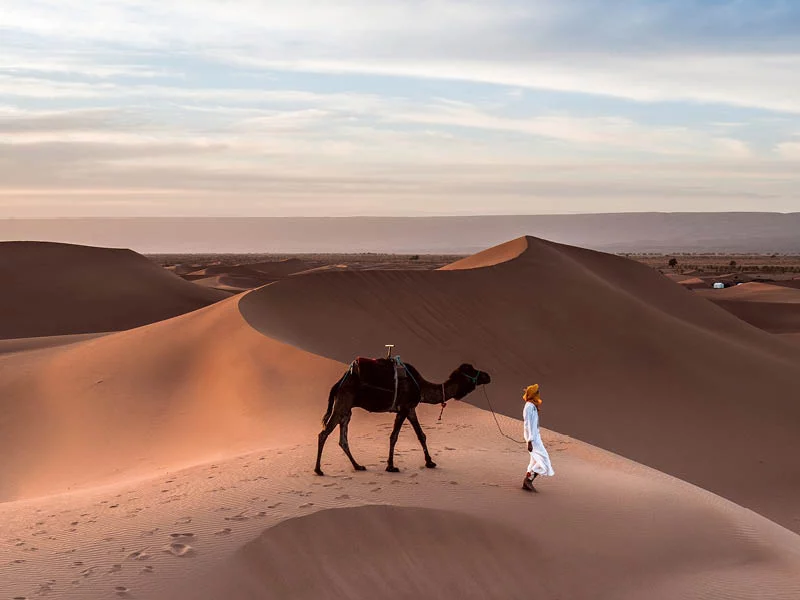
Magical Variety
Between the Atlas Mountains and Atlantic coast, Africa and Europe … fascinating, enchanting and vibrant
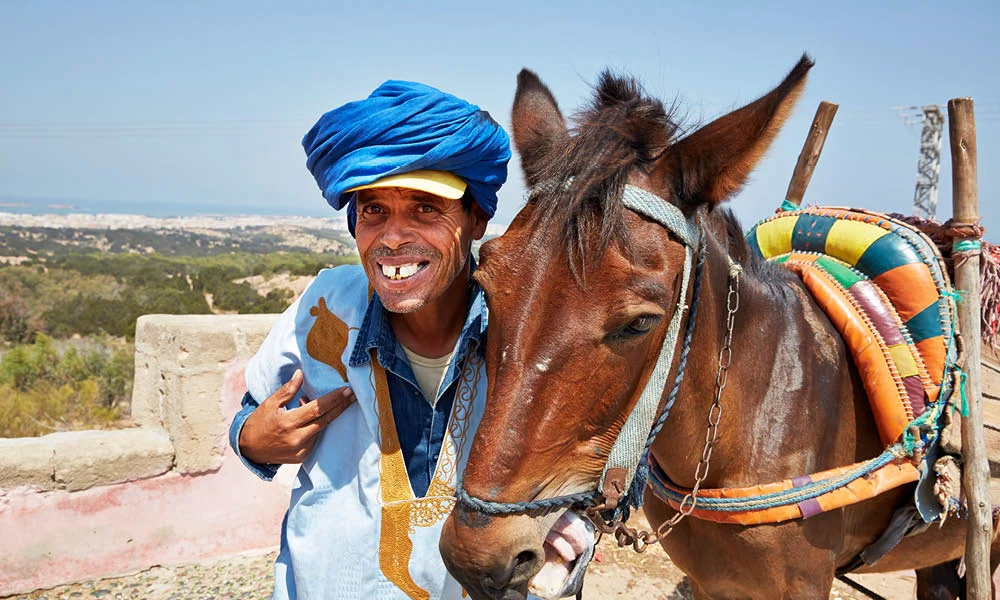
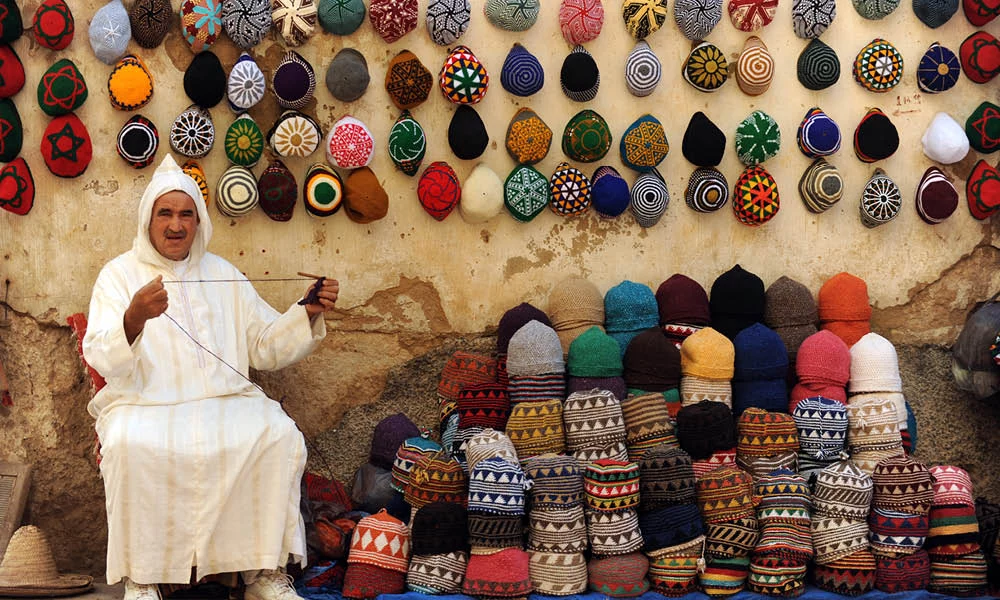
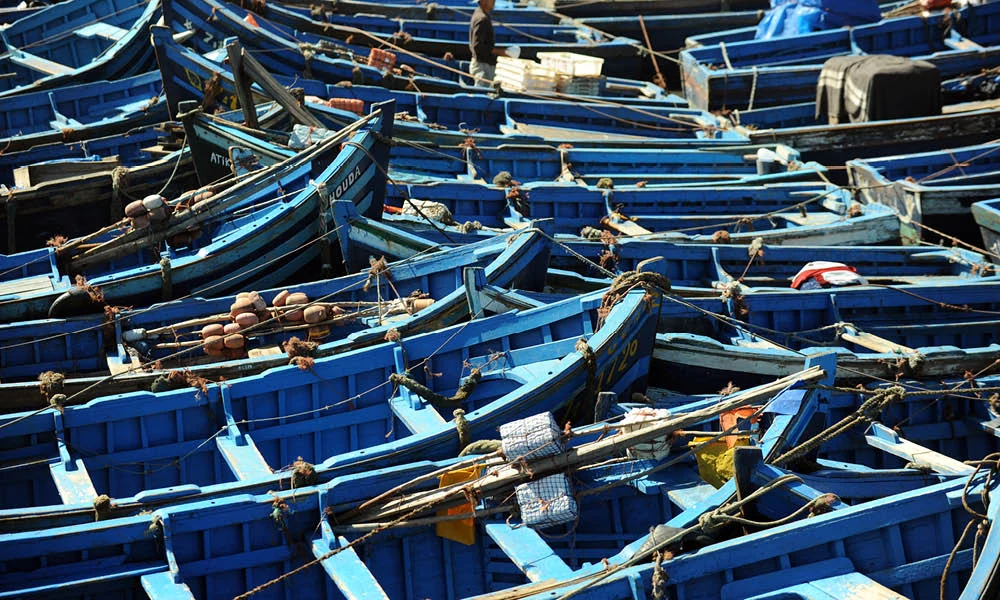
A feast for the senses. Royal cities. Colourful markets. The world’s largest desert. Palm-filled oases. Breathtaking beaches. Rugged mountains. UNESCO-protected medinas (old towns). Aromatic spices. Tagine. Couscous. Snake charmers. Faith healers. Cliffs and caves. Camels beneath a beautiful starry sky …
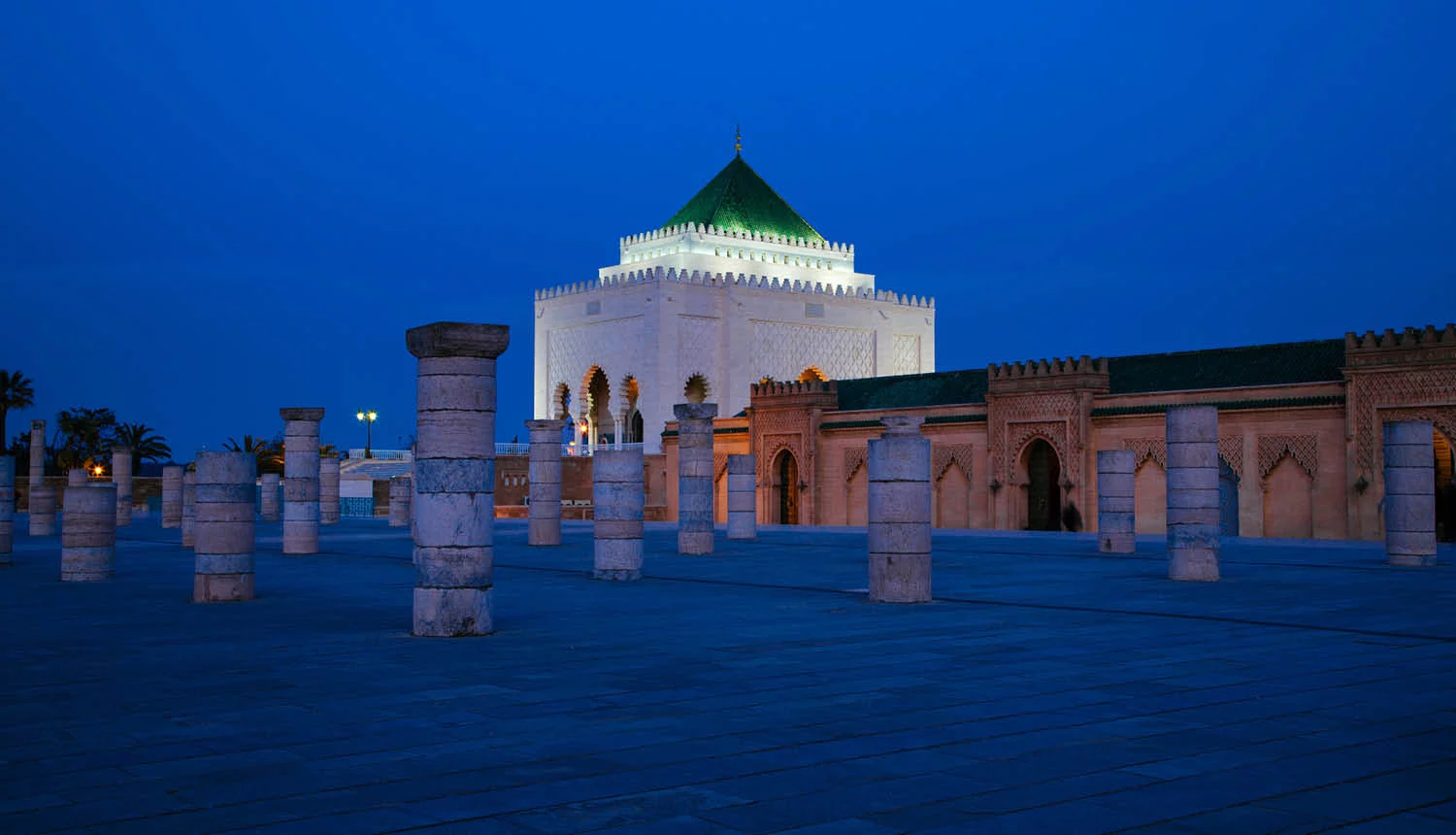
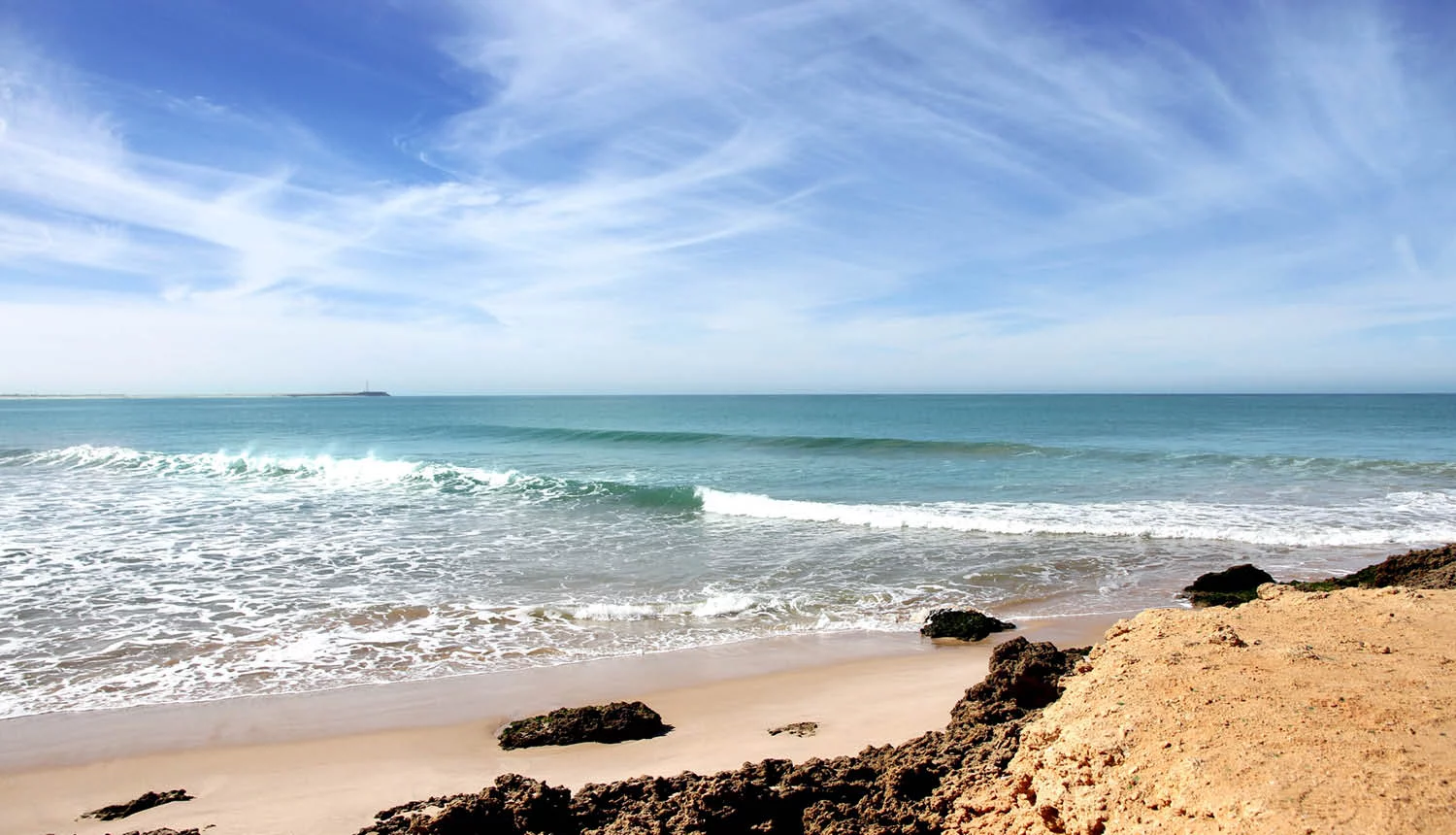
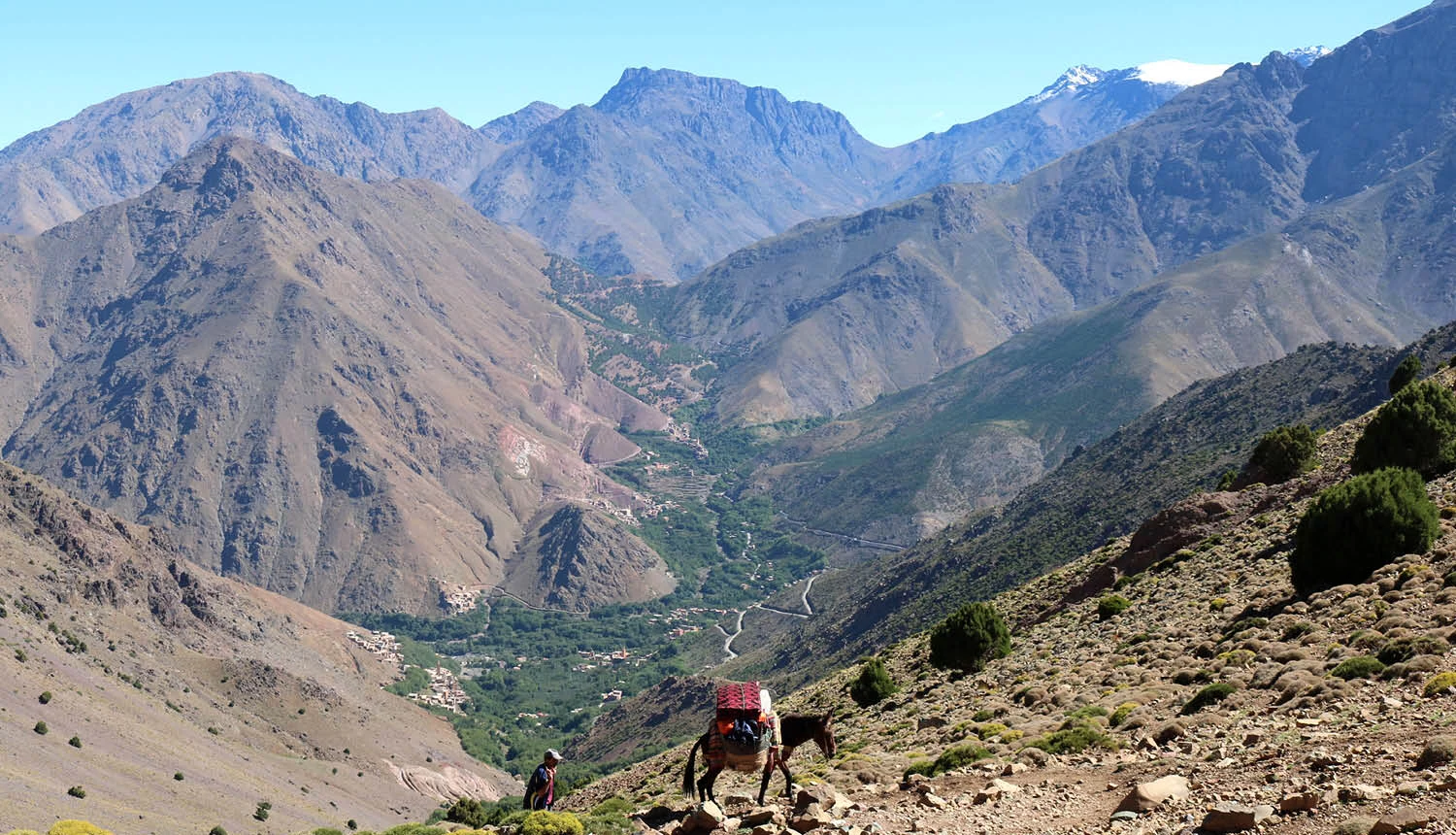
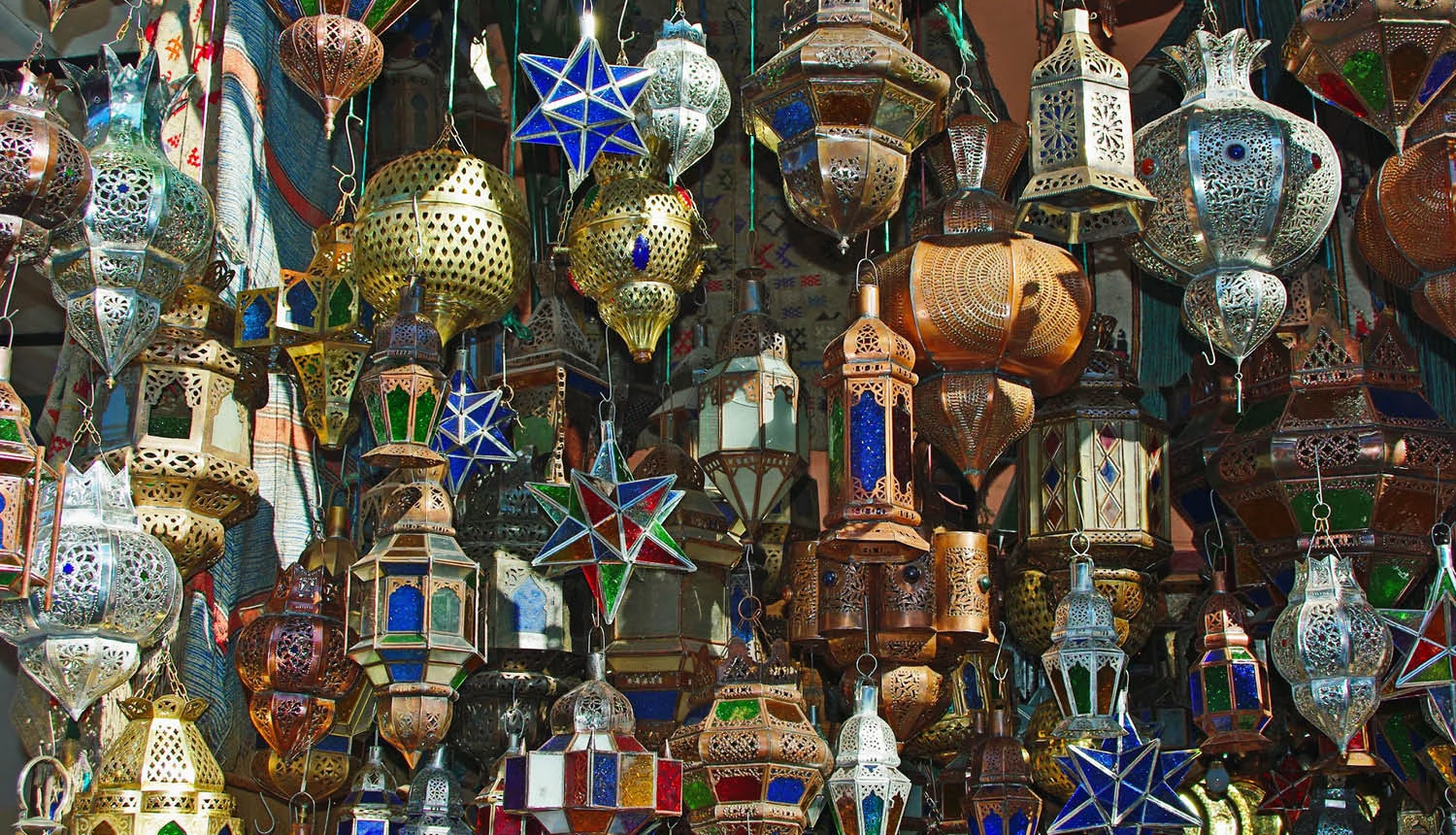
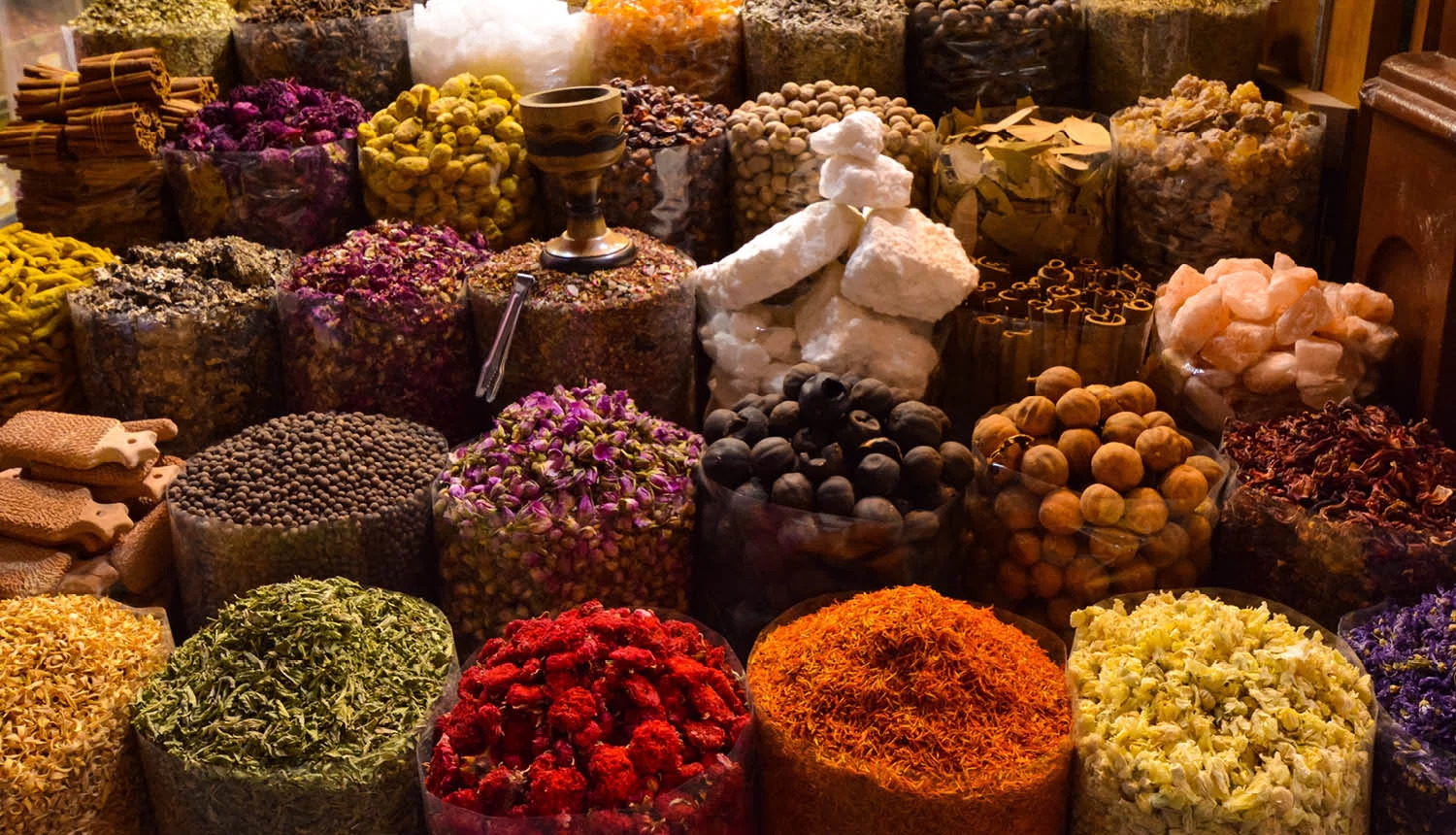
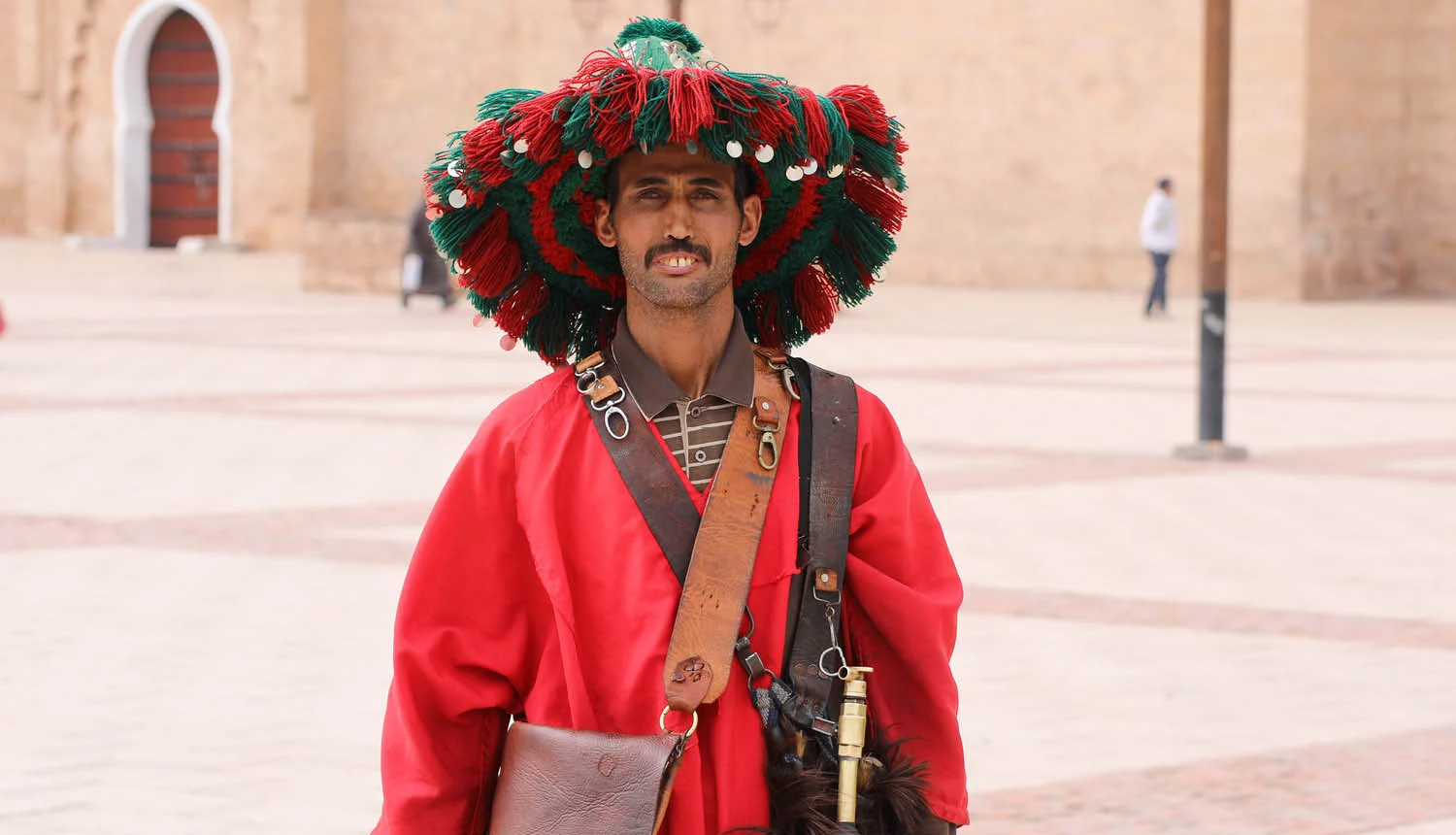
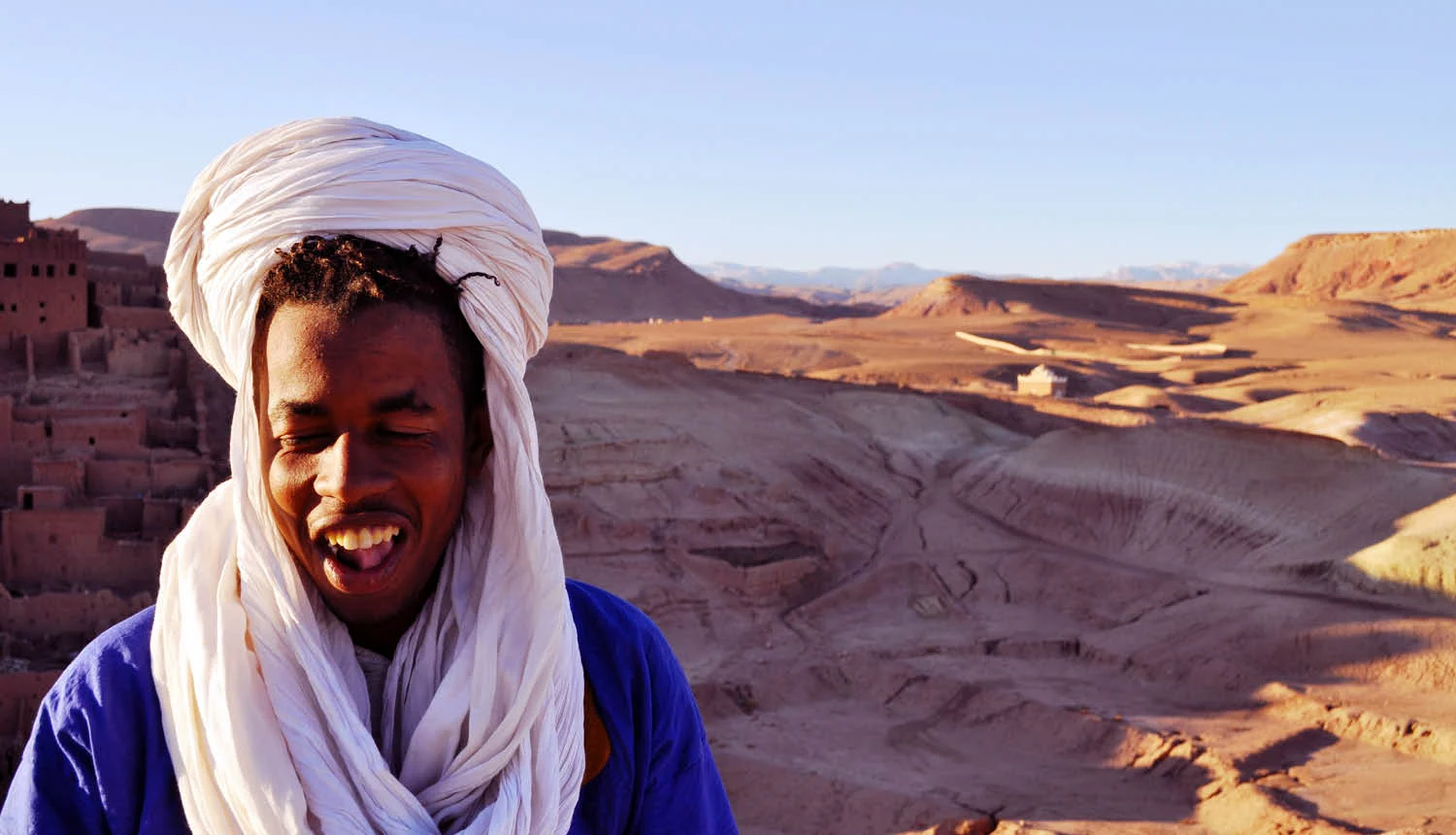
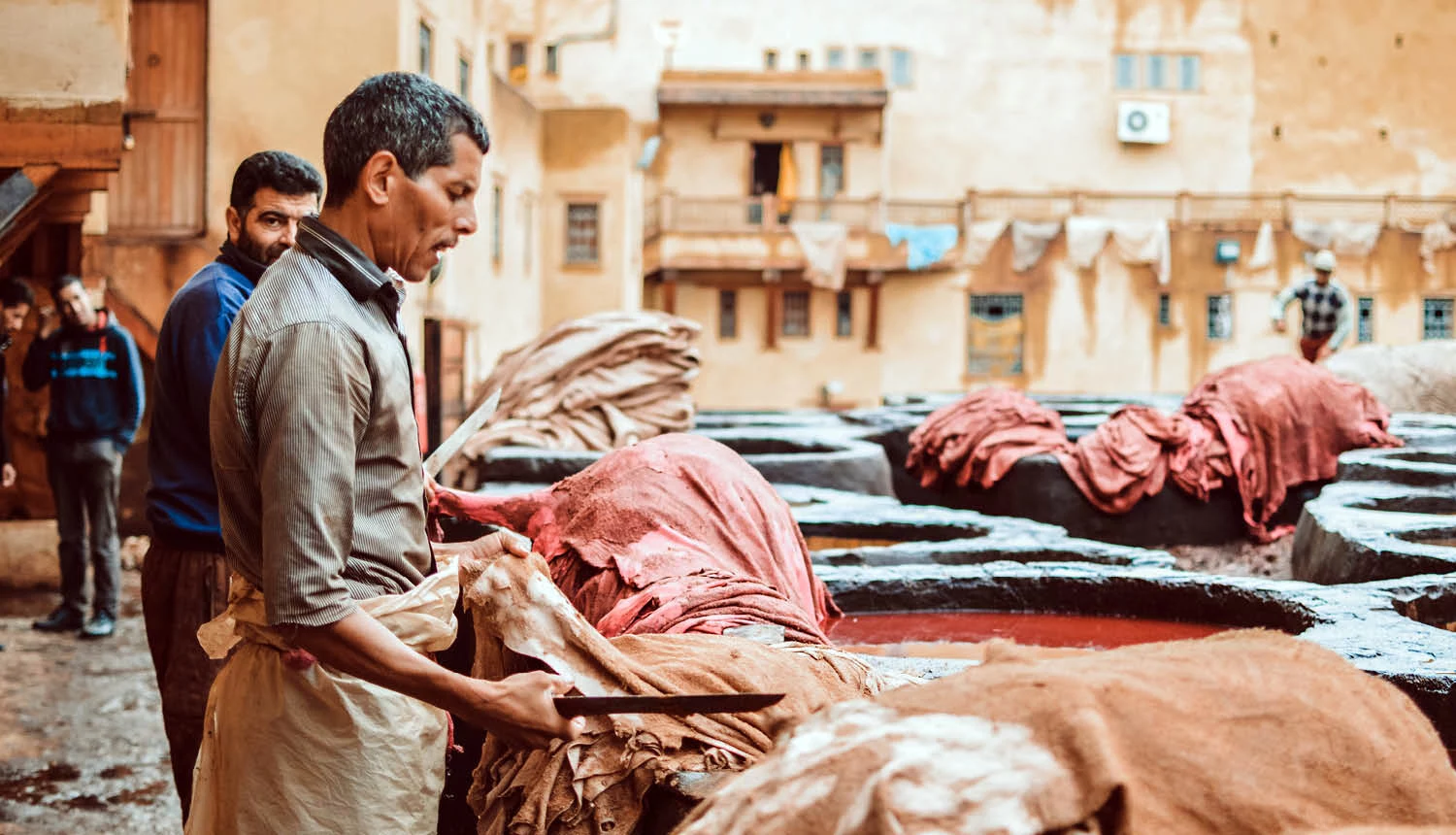
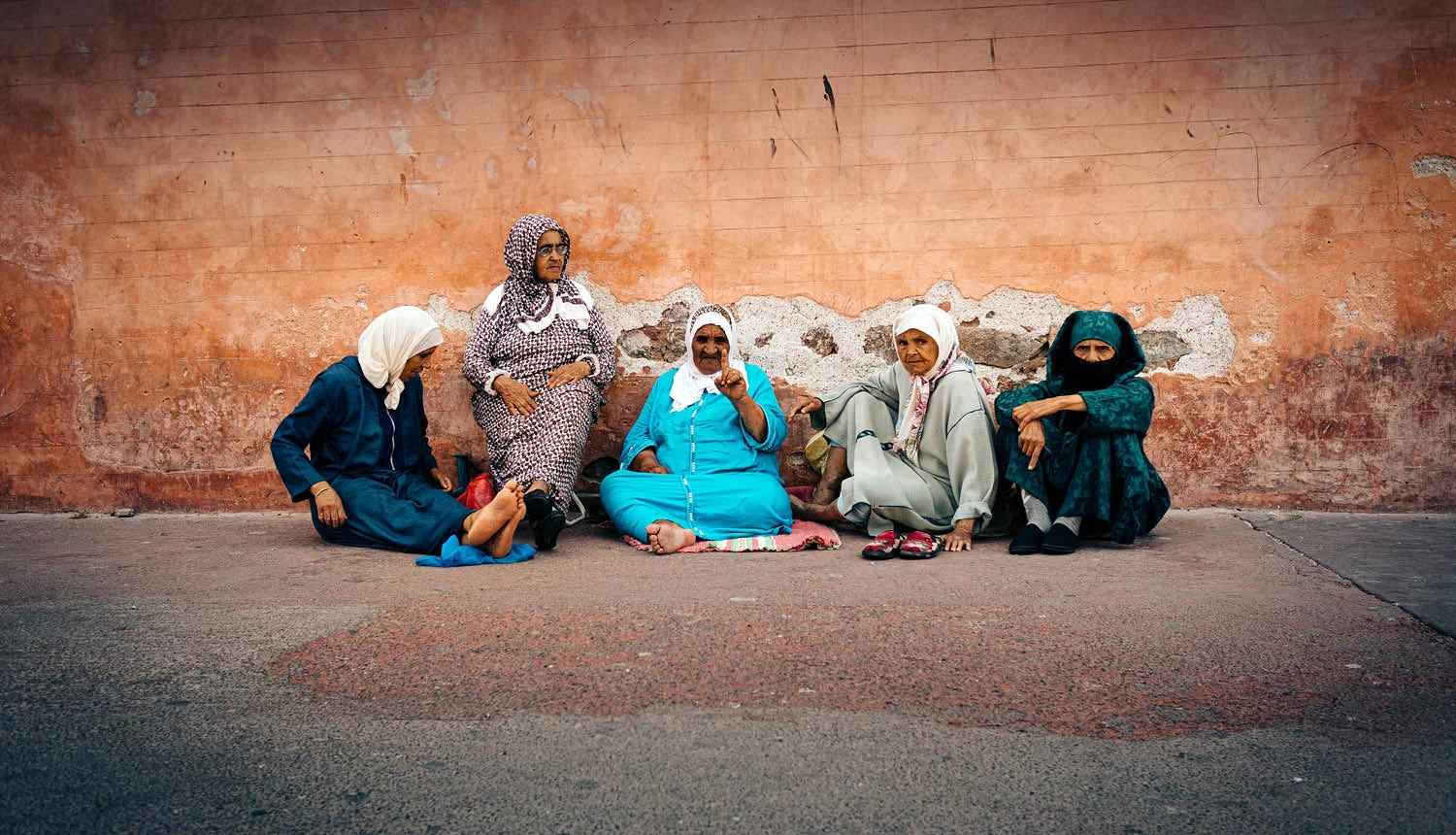
Bedouins, Berbers, a bridge …… between Africa and Europe. Echoes of the Berbers, the Roman Empire, of French and Spanish colonies that tried to take for themselves the magical land by the Atlantic and Mediterranean. Over the millennia, Morocco has been shaped by many different peoples. This is reflected in its culture, art, music, cuisine and architecture.
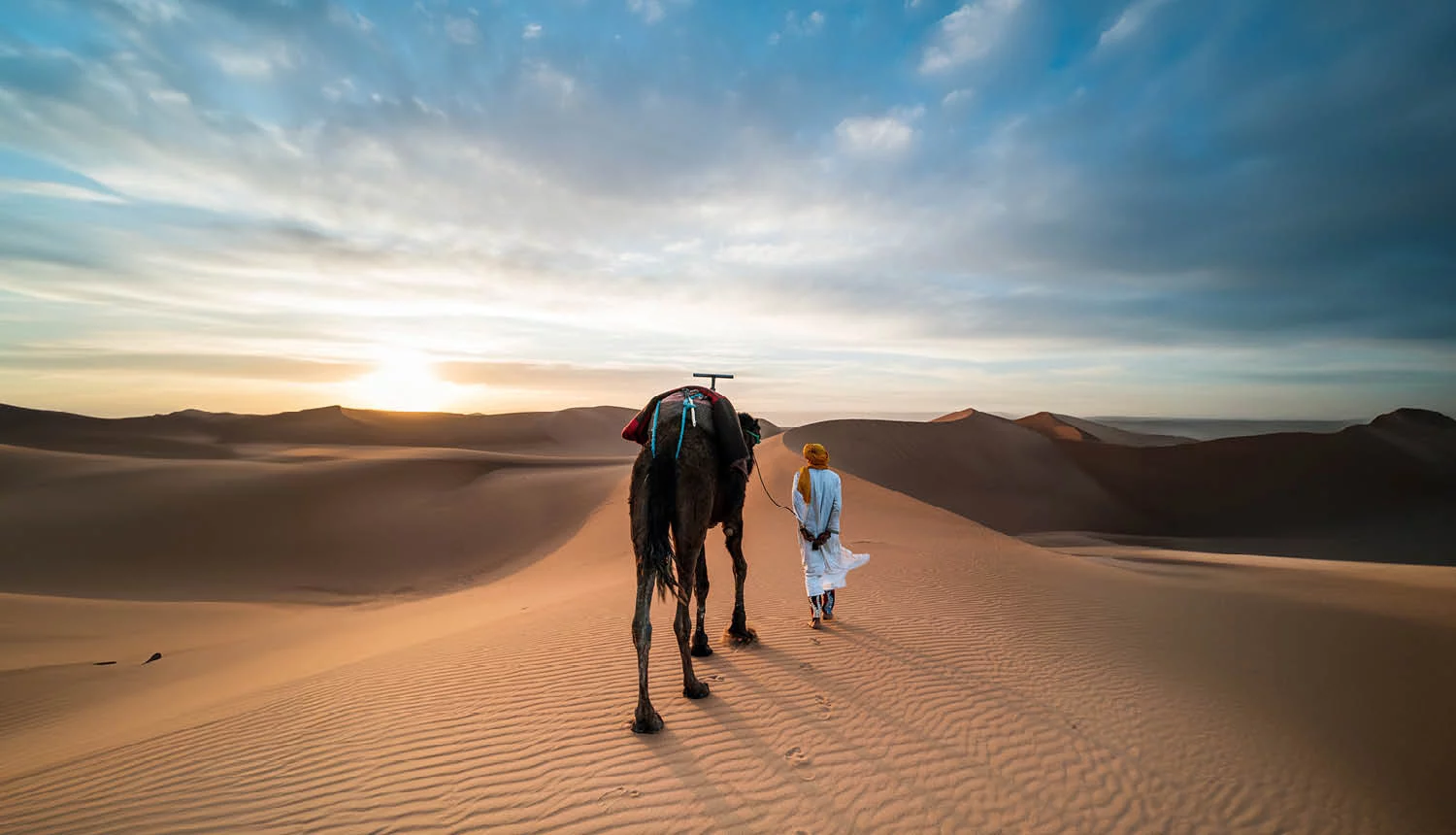
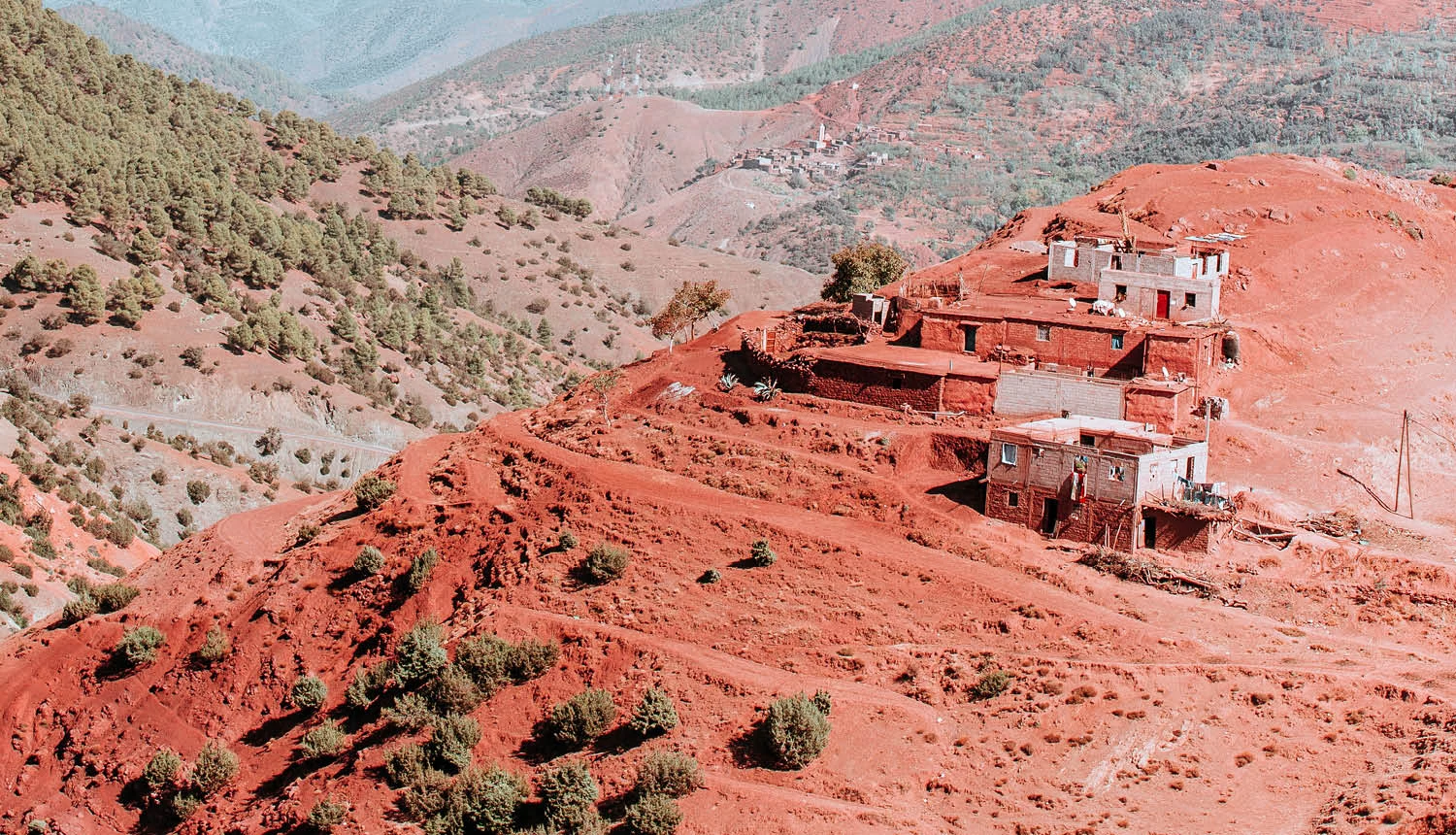
Simply breathtaking. Explore. Admire. Switch off and soak up contrasting landscapes. Cast your gaze over the Sahara sands. Delve into the Atlantic Ocean – and the Mediterranean. Ascend the endless expanse of the Atlas Mountains. Discover centuries-old forests, oases, idyllic pastures and palm gardens. Explore Morocco. A dream in blue wherever you go …
Morocco climate &
top destinations
It’s hot in the city
Discover Morocco’s hottest sides
The Moroccan climate is Mediterranean to continental. The hot, dry heat poles, especially in summer, can be found in the interior of the country, for example in Marrakesh. The Atlantic coast is Mediterranean: warm summers and mild winters. Continental climate prevails in the Atlas Mountains – here it can certainly snow in winter. The best time to travel to Morocco? Along the coasts from April to November, inland from October to May. Discover Morocco – and be well prepared for all top destinations! From swimming trunks to hiking boots …
The average annual temperature in the coastal city of Aghadir is 21 degrees. The sun shines 340 days a year. There is an exceptionally mild climate for the region throughout the year.
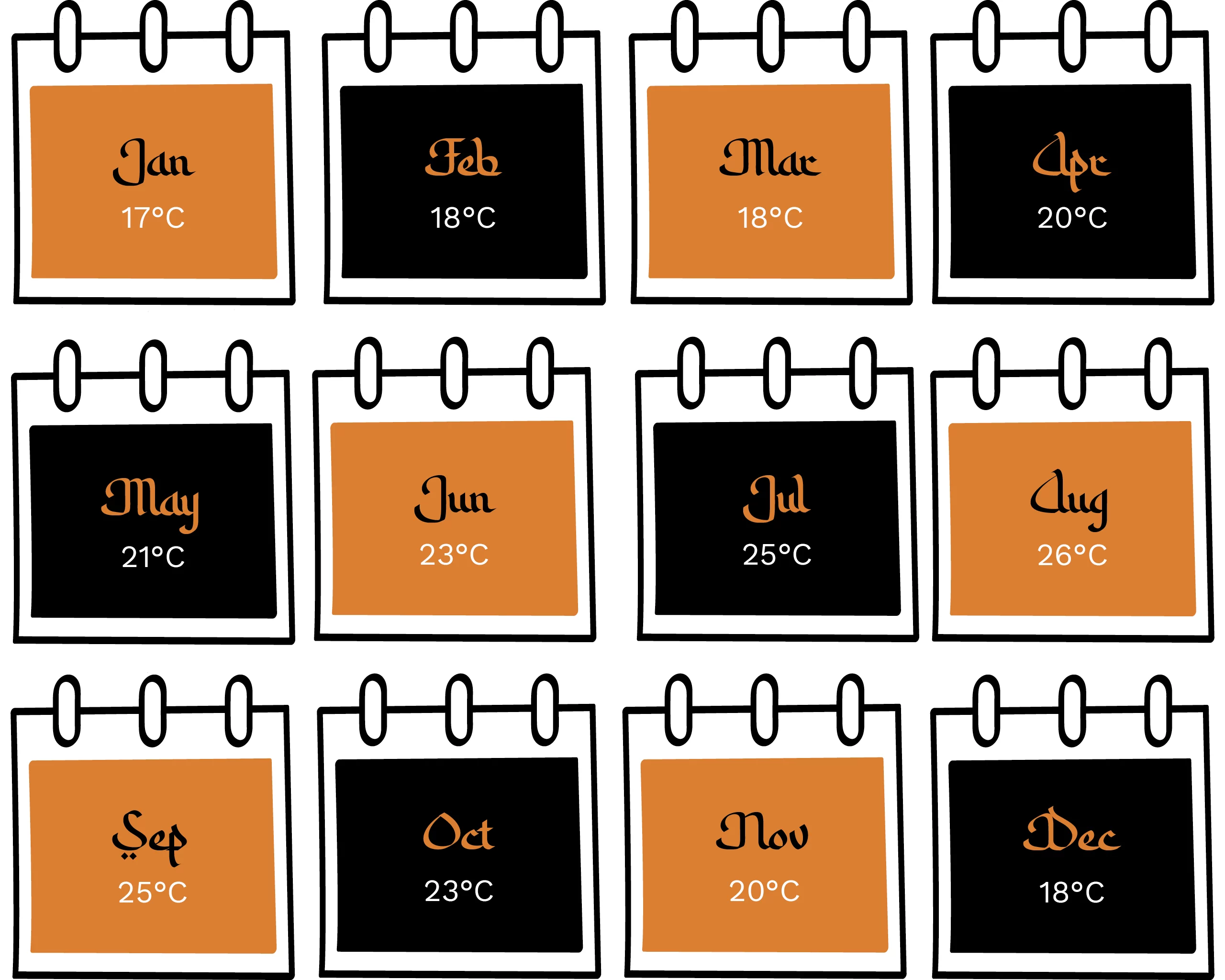
The Agafay Desert has a warm desert climate, with hot summers, mild winters, low rainfall (about 191 mm/year) and strong day-night fluctuations. The best times to travel are spring and autumn.
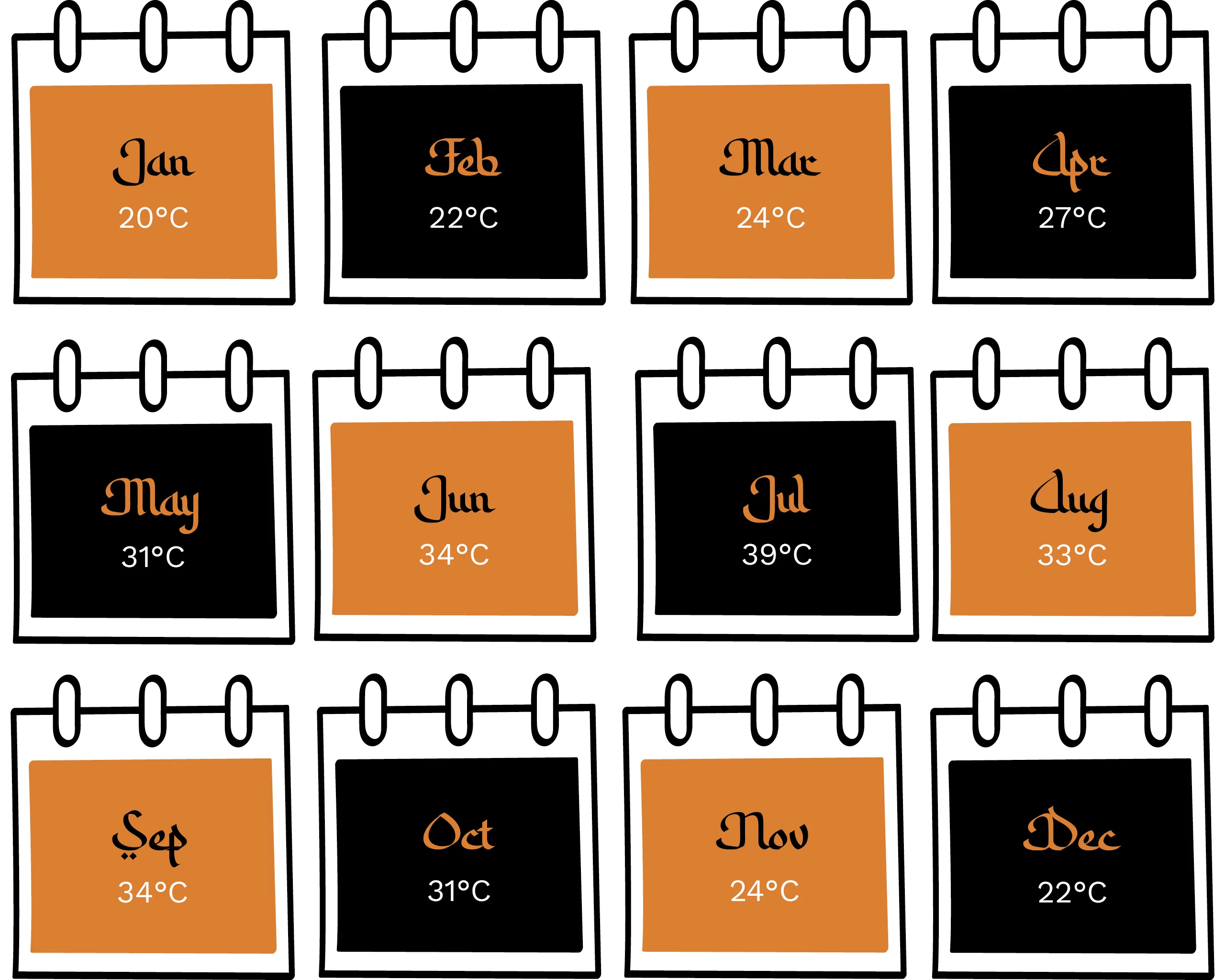
Boumalne in the Dadès Valley has a steppe climate with hot summers, cool winters and very little rainfall throughout the year. It is sunny and dry, with strong fluctuations: warm to hot during the day, often cool to cold at night. Spring (March–May) and autumn (September–November) are ideal.
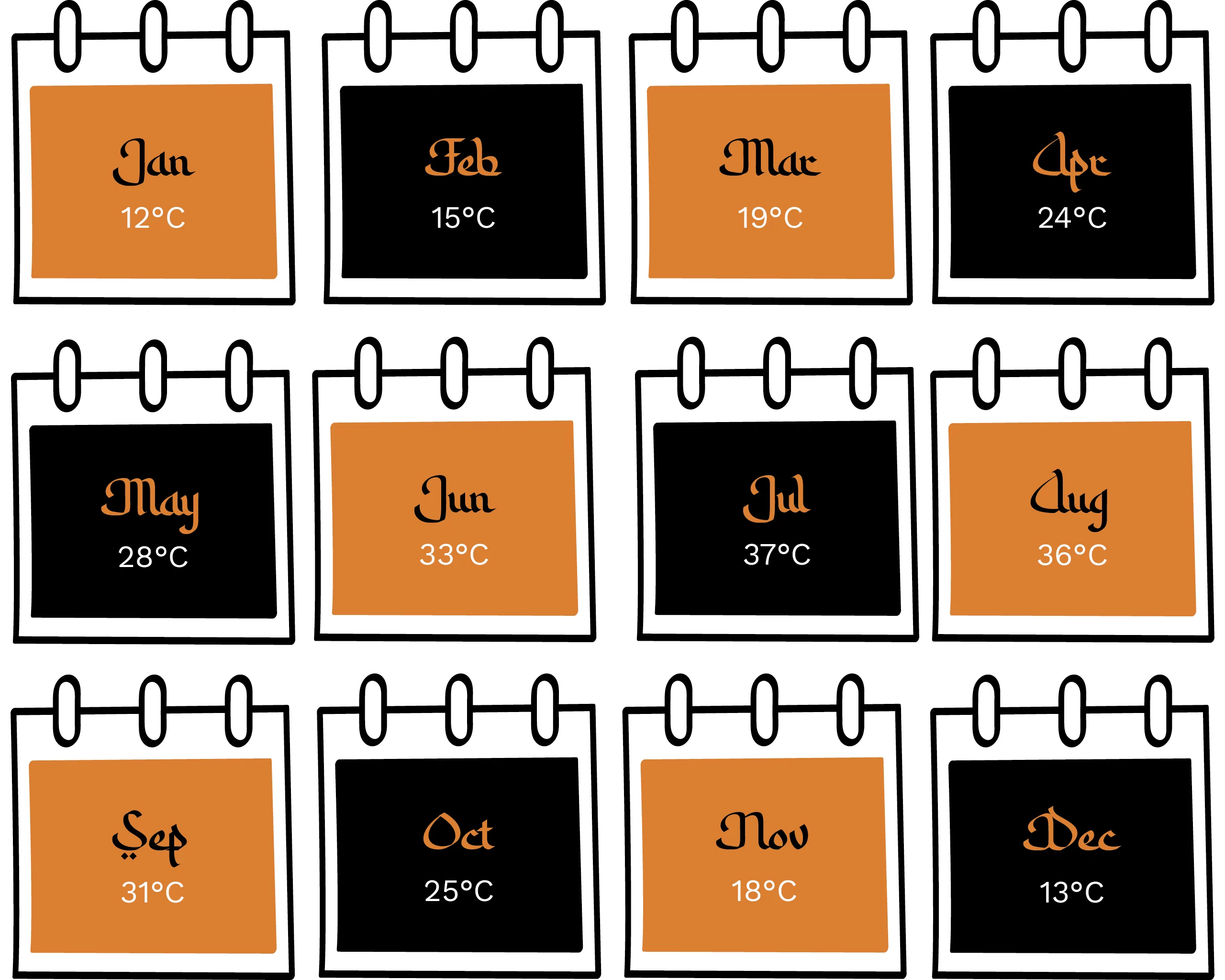
The white city Casablanca has a particularly pleasant Mediterranean climate with oceanic influence. This means: mild winters and moderately warm summers without rain.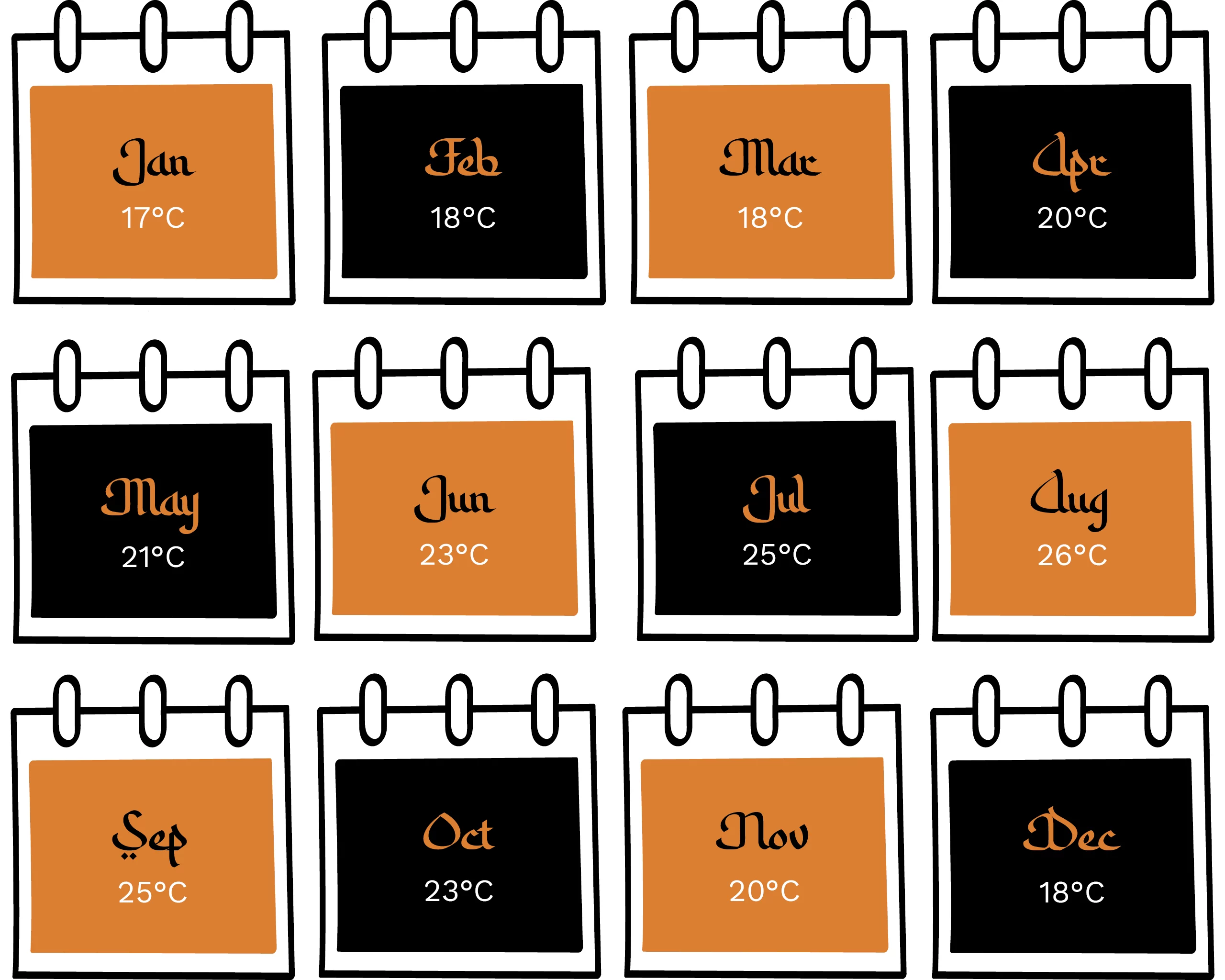
The Chefchaouen climate is moderate to warm. Rain falls almost exclusively in the winter months. In summer, tourists especially appreciate the slightly cooler temperatures of the mountain area.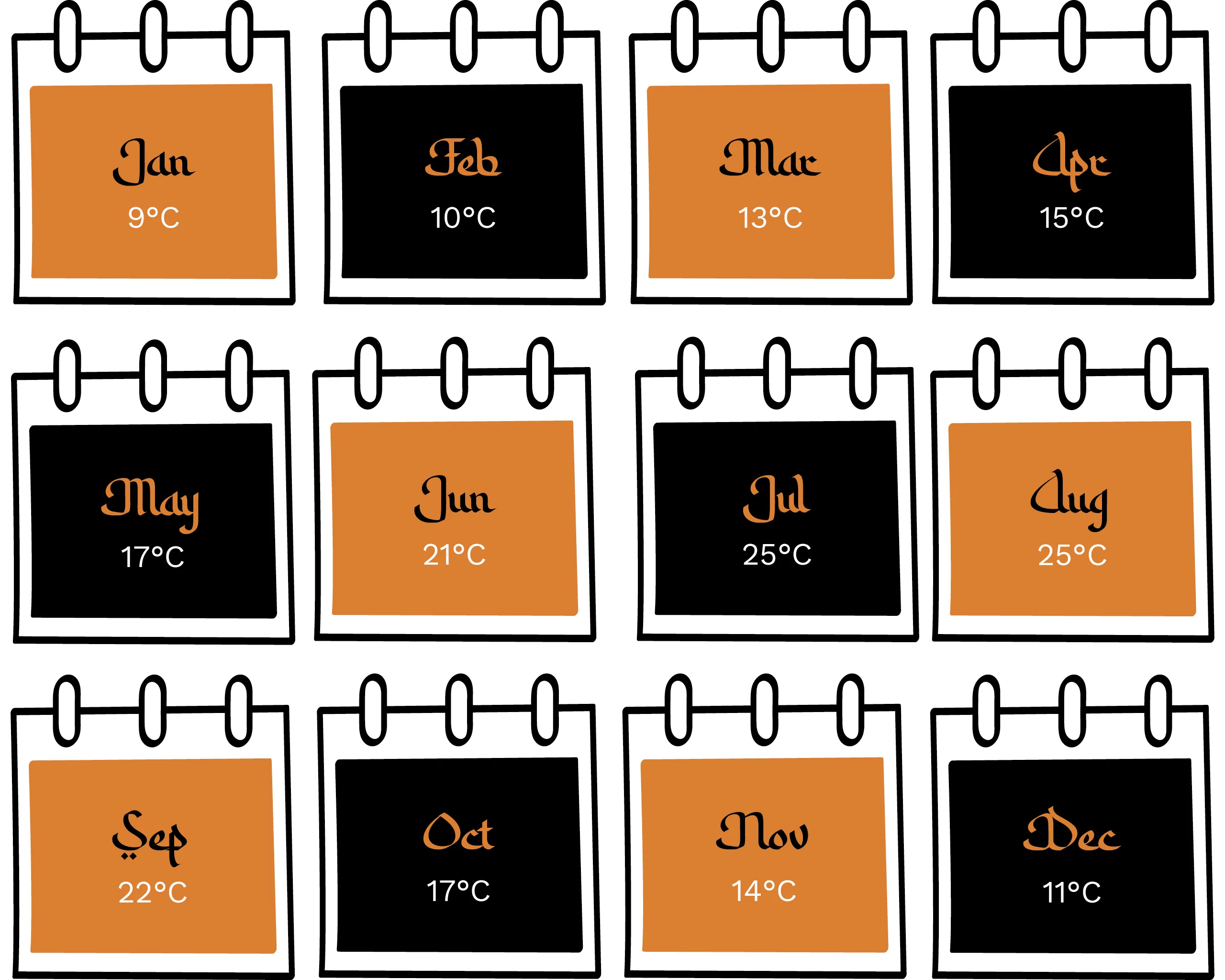
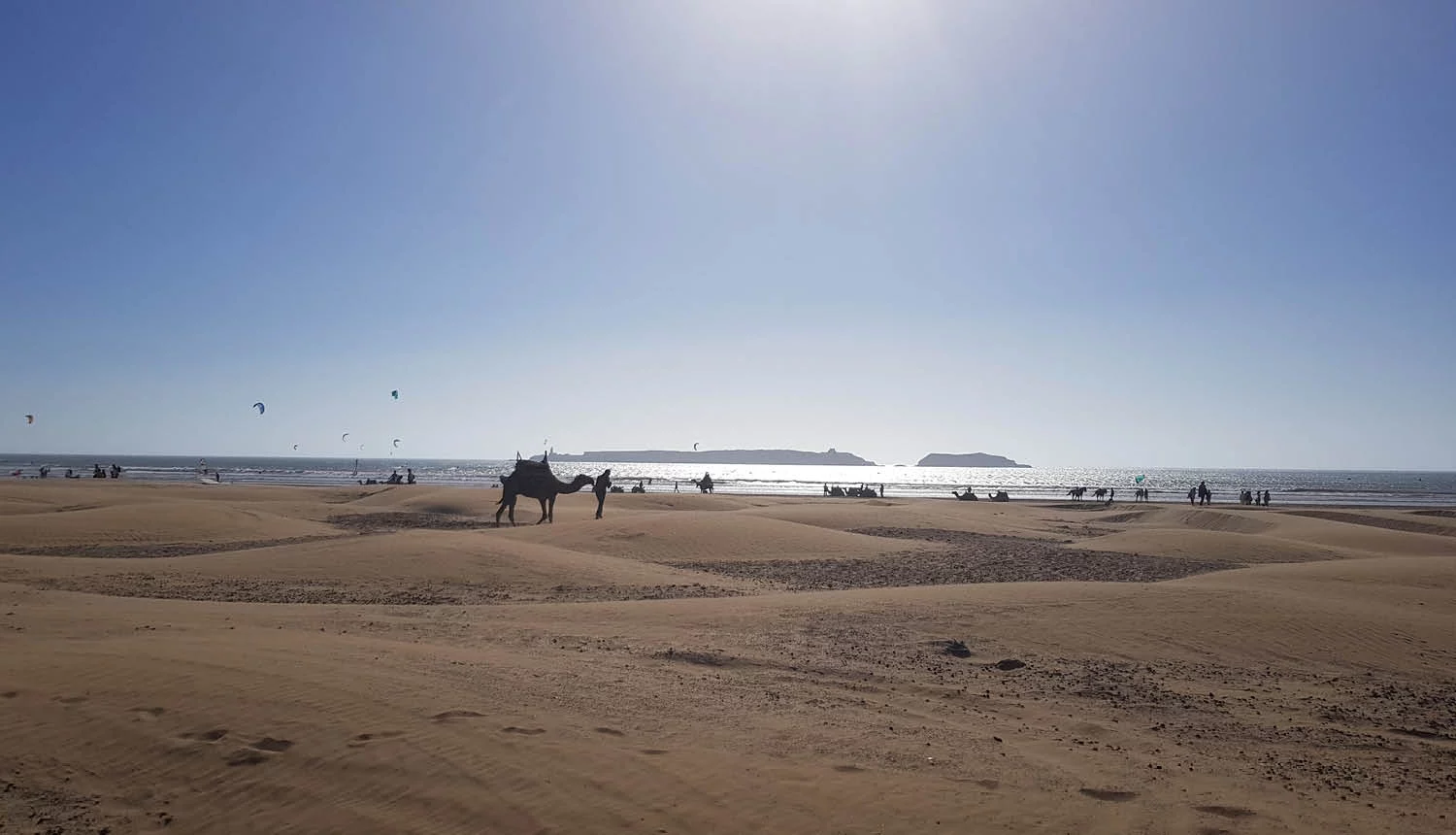
The average temperature in Essaouira, depending on the season, is between 18 and 28 °C. The climate is dry. Due to the location on the Atlantic coast, the air is always in motion, sometimes strong wind ensures pleasant cooling. Basically, a year-round travel destination, Essaouira is particularly pleasant from September to May, when the wind is somewhat weakened and the temperatures are moderate.
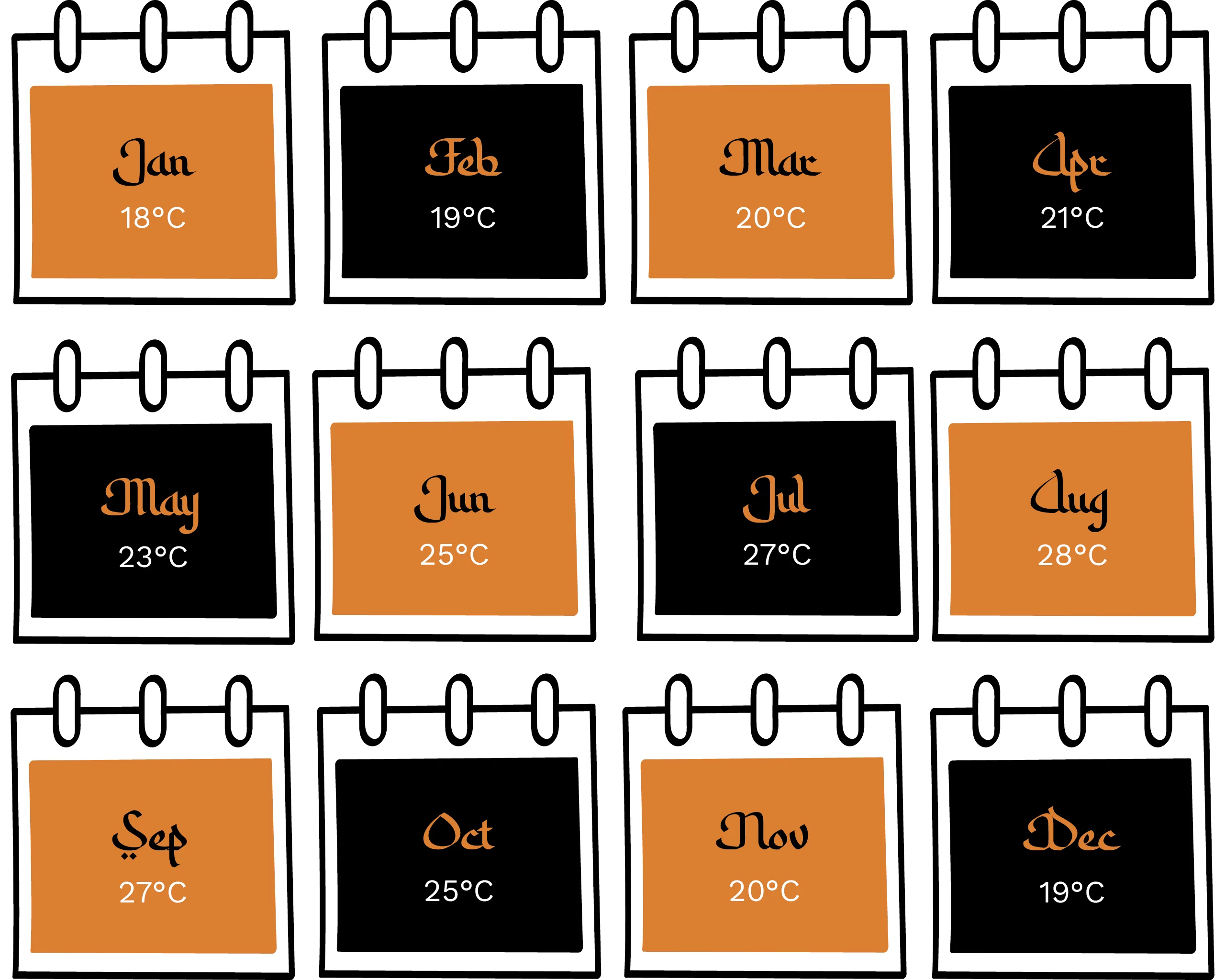
The average daytime temperature of the royal city of Fes is warm 25 degrees. The sun shines here practically all year round. The summers are very hot and dry, the winters are mild throughout.
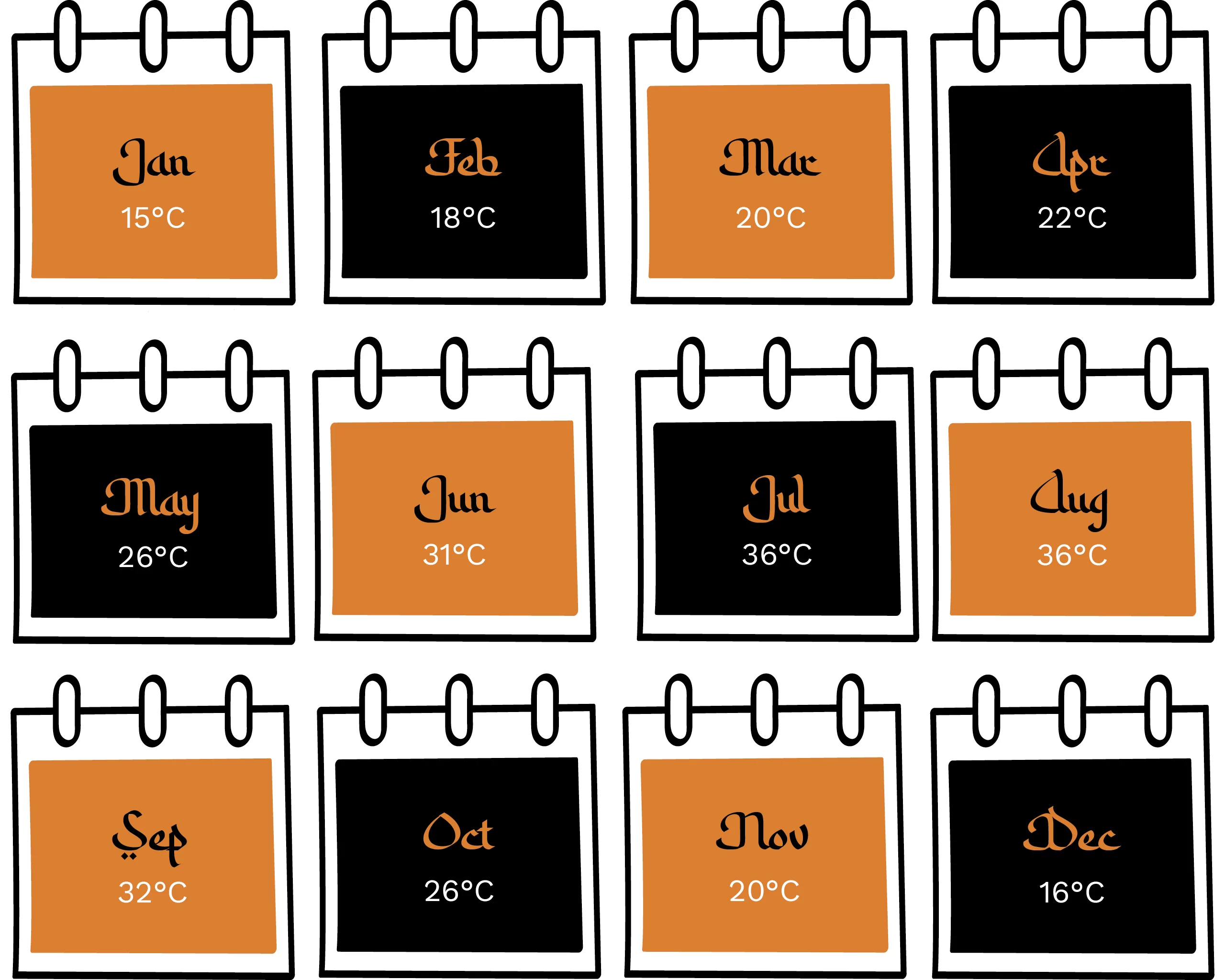
The weather in Marrakesh is often referred to as dream weather and compared to Florida, because on average almost 9 hours of sunshine are reached per day. A Mediterranean climate with very hot and dry summers is predominant. In winter, the average temperatures do not fall below 12 degrees.
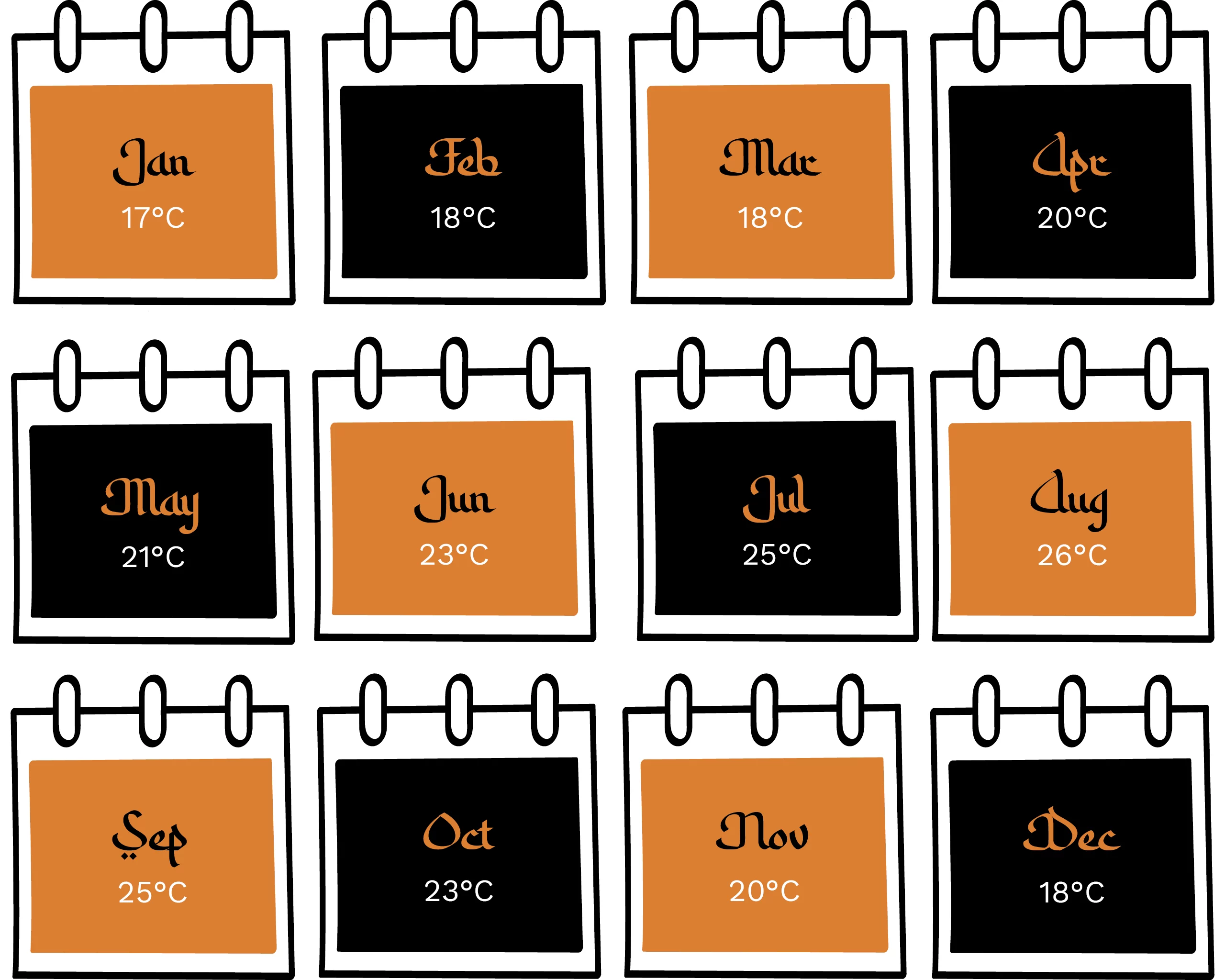
Merzouga has a desert climate and it practically never rains. In the summer months, temperatures in the Erg Chebbi reach up to 41-42 °C, while in winter they drop to about 3-4 °C. The climate is pleasant from March to May and from September to November – the temperatures during the day are 20 -30 °C with considerable temperature differences between day and night.
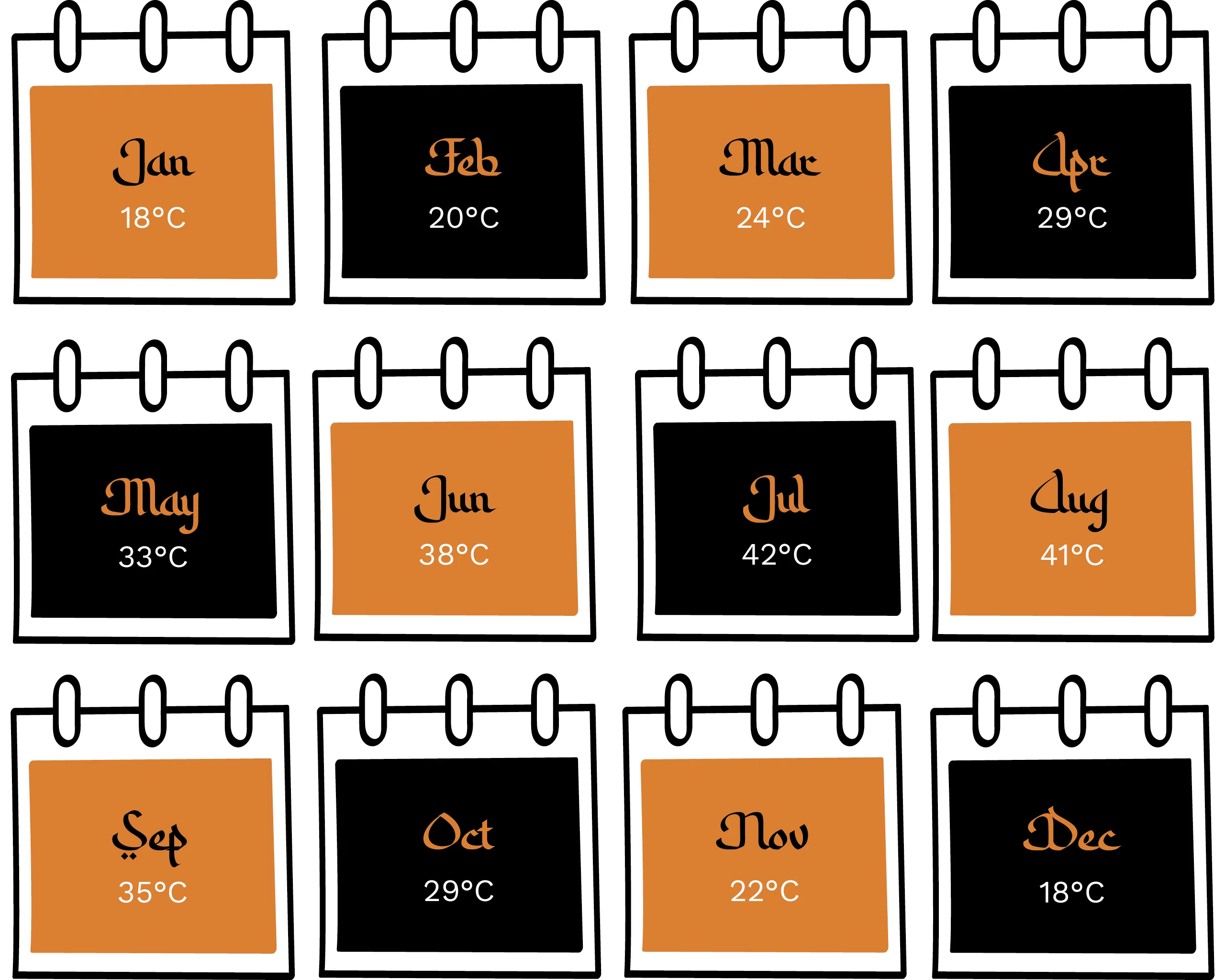
Thanks to the Atlantic, Oualidia enjoys a mild coastal climate. Summers are warm, though usually less hot than inland. Winters remain comparatively mild and can be wetter.
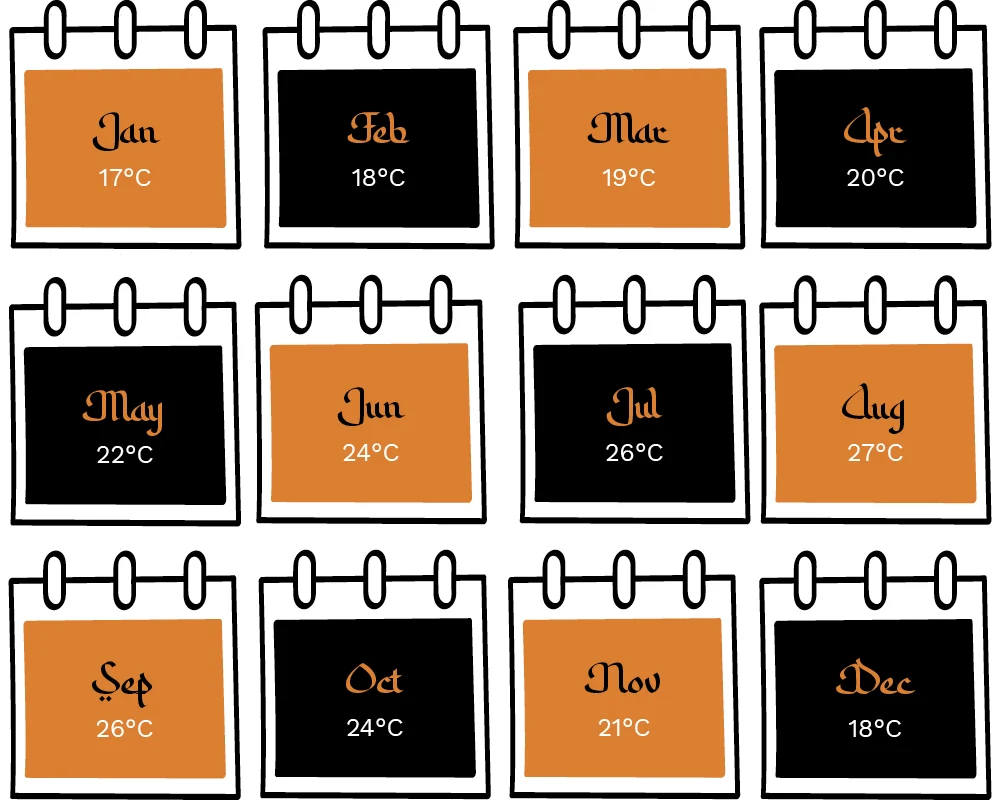
The weather is like a desert. In summer it is hot, extremely dry and low in rain. The winters await with temperatures between 10 and 20 degrees, while it cools quite a bit at night. The average temperatures fluctuate between 17 °C (January) and 38 °C (July). The rainiest months are: September, October and November.
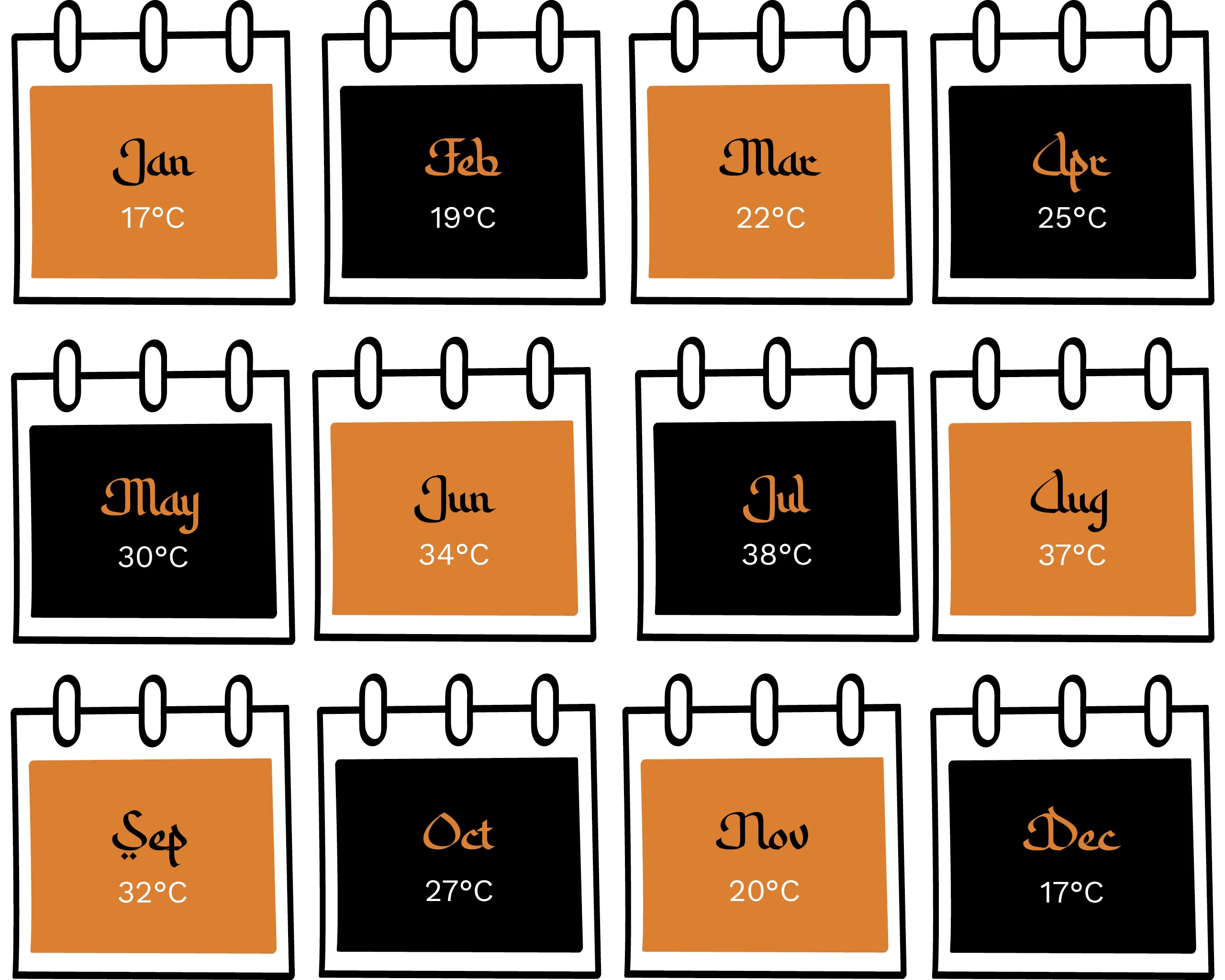
Rabat has a Mediterranean climate with dry hot summers. The average August temperature is 23 °C. In July there is an average of over 10 hours of sunshine. The winters are mild – January average 12 °C – and rainy.
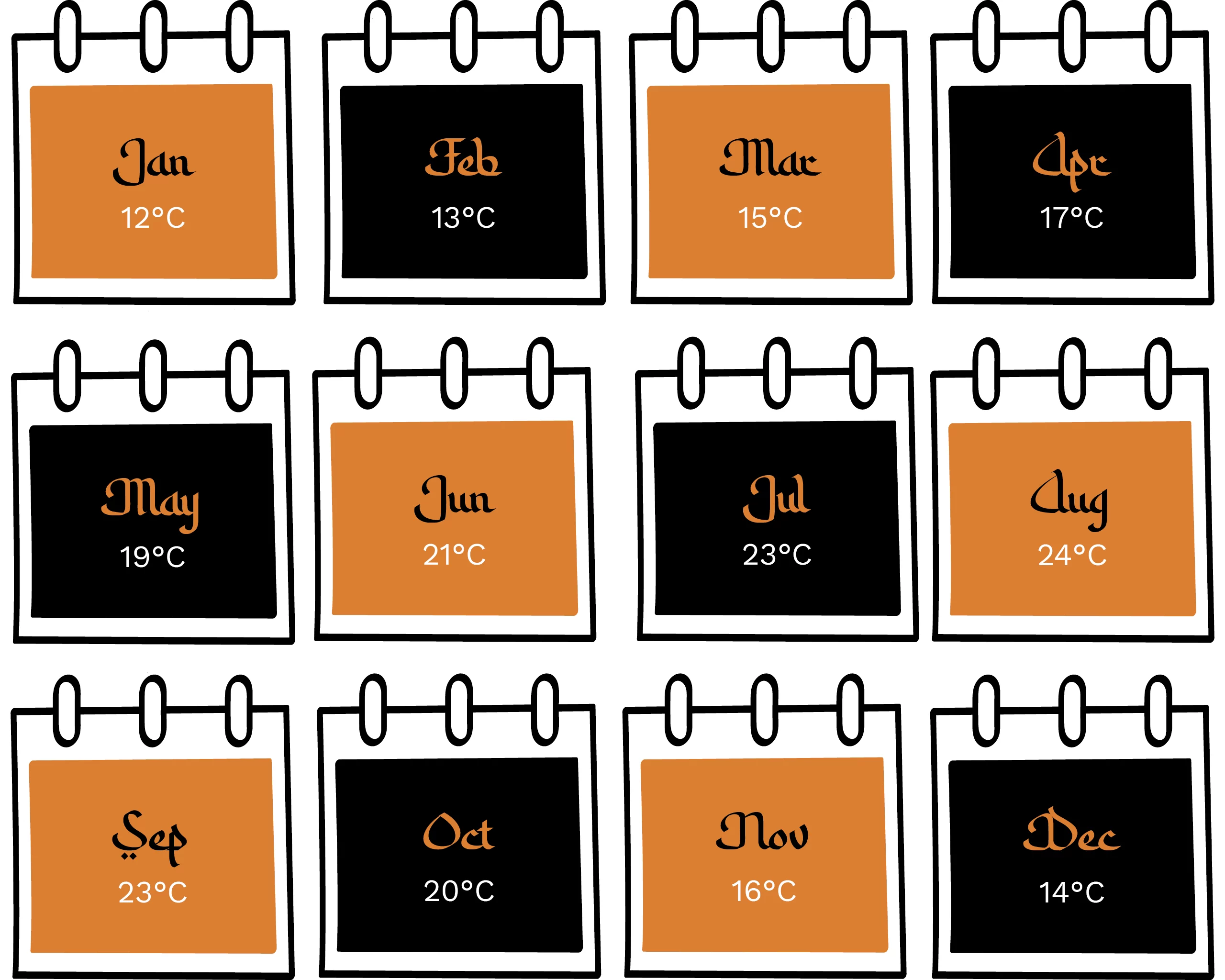
Nestled between the Atlas Mountains and the edge of the Sahara, Skoura enjoys a unique microclimate characterised by clear skies, abundant sunshine and the dry atmosphere of an oasis. Summers are hot thanks to its proximity to the desert, while evenings remain pleasantly cool.
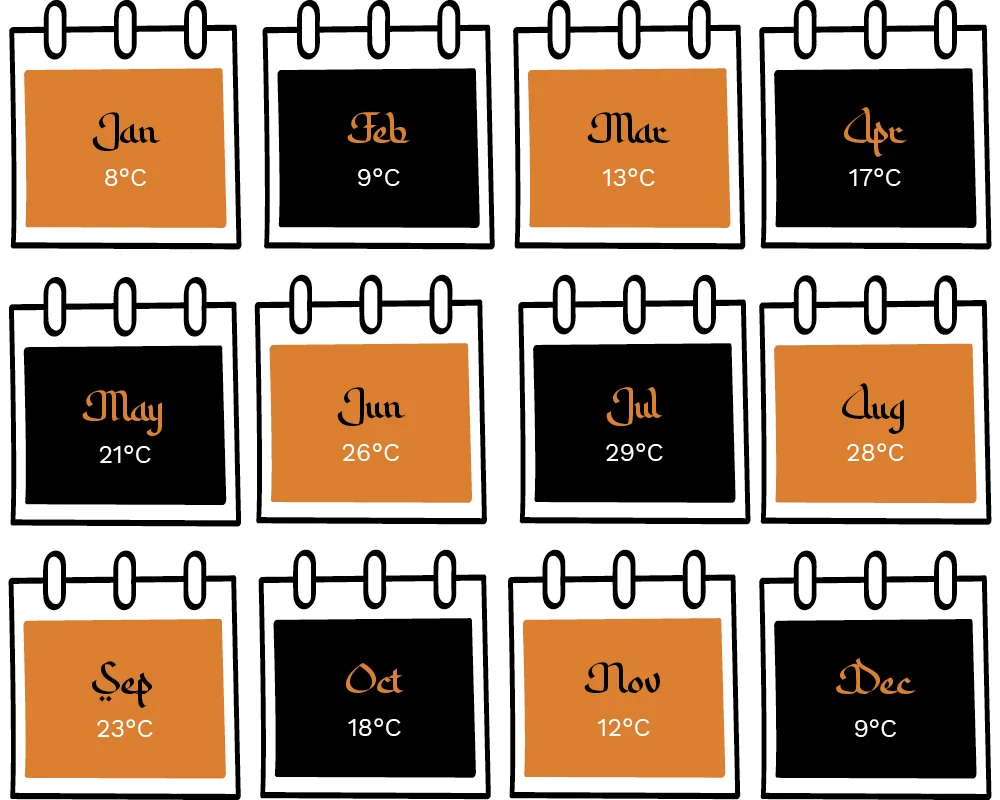
The Tangier climate is influenced by the Mediterranean and the Atlantic Ocean and is relatively mild. The summer months are warm and not very humid. Winters can be stormy and rainy.
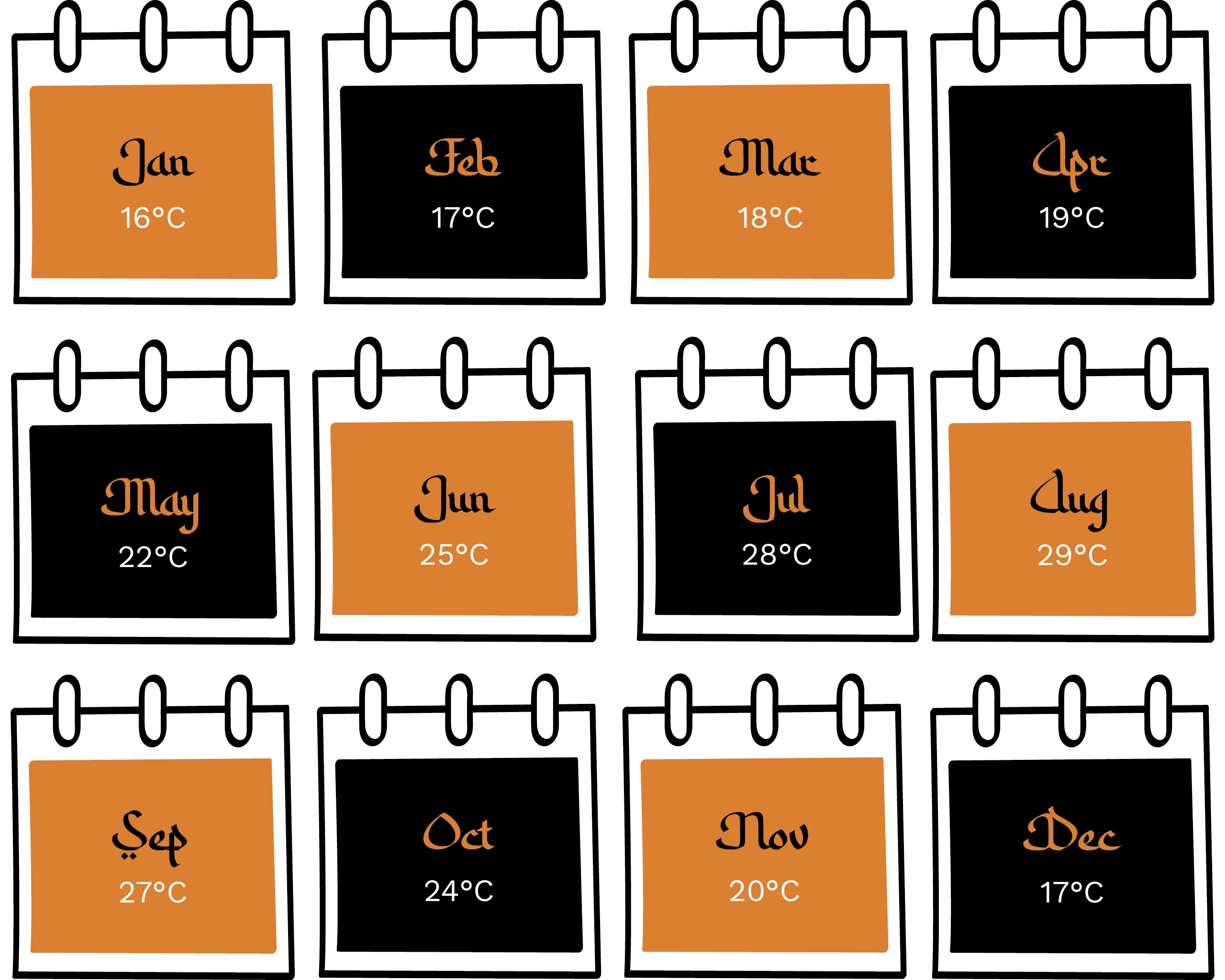
Rabat
over 35 million
Arabic, Berber languages, French
Over 710,000 km² (including the Moroccan Sahara)
1 Dirham (MAD) = 100 Centimes
1 Euro = ~11 MAD,
1 MAD = ~9 Eurocent
0 to -1 hour
Standard voltage: 220 Volt
Standard frequency: 50 Hertz
+212
8 good reasons for a Moroccan holiday. Still unsure about venturing beyond Europe, but like the look of the gateway to Africa? Our travel professional and Morocco insider, Said Boumahdi, has eight good reasons for you to try a trip to Morocco, especially if you’re an individualist who loves nature, being active and exploring different cultures.
Practical travel information
From travelling to Morocco to returning home
- Visa requirement: No visa needed for European countries. All others should check with your local Moroccan consulate
- Travel documents: Passport
- Passport validity: At least six months from date of arrival (recommended)
The people of Morocco speak Moroccan Arabic (Darija) and a number of Berber languages. French is the country’s second language and is spoken by most Moroccans. In many areas, you will be able to get by in English. However, learning a few Arabic words makes a good impression on the friendly locals and helps you gain a deeper insight into their culture.
Yallah – Let’s go!
Good day – Nhark mbrouk
Goodbye – Bslama
Please – Affak
Thank you – Shukran
Yes – Iyyeh
No – La
Making calls from Morocco to Europe can be expensive, particularly from a mobile! Ask your mobile provider about roaming charges before leaving for your trip. To make cheaper calls, you can purchase phone cards from companies such as Maroc Telecom. These are available from all post offices (La Poste) and can be used in public phone booths. Morocco also has many téléboutiques with coin-operated telephones and internet access. You could also visit an internet café or simply use the Wi-Fi in your hotel.
Note: You will need to enable international roaming on your mobile and connect it to the Moroccan network.
Morocco offers an endless kaleidoscope of captivating images! Always remember that it’s respectful to ask before taking a snap of a Moroccan person. Do not take photos of people who are praying, or anyone in uniform. Official buildings (indicated by the Moroccan flag) and strategically important buildings such as military facilities must not be photographed. If in doubt, just ask!
Stamps and postcards can be purchased from any tobacconist.
Most shops are open every day from morning to evening. Opening times are only restricted during Ramadan and in the week after Eid al-Adha, the ‘Festival of Sacrifice’.
Cash machines are the best option, or you can visit a currency exchange to swap your euros for dirham.
The country’s official religion is Islam, and almost 99% of the population is Muslim. Local customs and practices should be respected in all religious places. Accordingly, options in restaurants and bars will be limited. Opening times at tourist attractions may also change.
Note: Only Muslims are permitted to enter mosques.
In keeping with the local culture and religion, overly revealing clothes should be avoided when you’re sightseeing or strolling around town.
In keeping with the local religion, it is recommended that you do not consume alcohol in public. However, many hotels and restaurants do serve alcoholic drinks.
Do not drink water from the tap while visiting Morocco. You will be able to purchase mineral water wherever you go.
Global health insurance is essential for any trip abroad and can save you from high costs and serious problems. We therefore recommend that you take out an appropriate insurance policy before your trip. Travelling Morocco without insurance isn’t worth the risk. It doesn’t have to be expensive and can be completed online!
You don’t have to have any special vaccinations for Morocco, but we recommend vaccinating against Hepatitis A and B, polio, diphtheria and tetanus. Depending on the type of holiday, it may also be worth getting a rabies jab. Make sure to consult your doctor or pharmacist in good time.
Morocco is a safe country with a high police presence – including on the roads, where they perform frequent traffic checks.
All journeys are run as private, individual tours. You’ll travel exclusively with your own travelling companions and your personal guide.
No. The Agafay is a stone desert, and its appeal lies in its vastness, its stillness and its captivating quality of light. Its scenery differs markedly from the sand dunes of the Sahara.
Yes. Together with your Private Concierge, we tailor the accommodation, experiences and additional services to your personal wishes.
Yes. It combines the cultural highlights of Marrakesh with the stillness of the Agafay, making it ideal for guests who want to discover Morocco in a stylish and relaxed way.
Light, comfortable clothing for the day, along with a light jacket for the cooler evenings in the Agafay desert.
All journeys are conducted as private, individual trips. You travel exclusively with your own companions and your personal guide.
This journey in the heart of the Imperial Cities deliberately leaves room for encounters – with artisans, traders and locals.
Yes. Together with your Private Concierge, we tailor accommodation, experiences and additional services to your wishes – right down to individual luxury upgrades.
Yes. It brings together the cultural highlights of all four Imperial Cities and is ideal for guests who wish to discover Morocco in all its historical depth.
Comfortable shoes for longer walks in the medinas, light clothing for the day and a light jacket for cooler evenings.
Every itinerary is offered as a private tailor-made journey. You will travel exclusively with your chosen companions, accompanied by your own private guides and dedicated chauffeur.
This itinerary has been thoughtfully designed to balance discovery with comfort. Each destination is given the time it deserves, allowing you to enjoy carefully curated experiences – particularly in Marrakesh and Fes – rather than simply passing through.
Absolutely. Your dedicated Pur Life Maroc Private Concierge can tailor your accommodation, experiences, dining reservations and additional services to suit your individual preferences.
Yes. It is an ideal introduction to Morocco, bringing together all four Imperial Cities and Casablanca in one seamless luxury journey while offering a rich insight into the country’s history, culture and contemporary lifestyle.
Comfortable walking shoes are recommended for exploring the historic medinas, along with lightweight clothing for daytime and a light jacket or shawl for cooler evenings.
All journeys are run as private, individual trips. You travel exclusively with your own companions; transfers and agreed guided tours are arranged individually for you.
It combines significant places with deliberate Slow Travel and insights away from the tourist trail. Scenic legs, encounters and time for sensory experience are as much a part of the journey as guided discoveries.
The legs into and out of the Sahara are longer, but they lead through extraordinary landscapes. They are deliberately part of the travel experience and are broken up by carefully chosen stops. You gather impressions and experience unique contrasts.
Yes. Accommodation, experiences, activity level and free time are tailored individually to your wishes; additional nights at the various stops are also possible.
Sturdy footwear, sun protection and clothing suited to the climate are recommended. In the desert, the difference in temperature between day and night can be considerable. After booking your journey, you will receive a comprehensive packing list.
A Private Concierge or tour guide who accompanies you throughout the entire journey can be added optionally. They coordinate the Private Chauffeur and organise your whole daily schedule.
All Pur Life Maroc journeys are conducted as private, individual trips. You travel exclusively with your own companions. The programme and the guides are curated exclusively for you.
The journey’s programme is curated individually and tailored to your wishes. All included experiences are clearly set out in your personal offer.
No. Safi is deliberately conceived as an unguided leisure stop – with free time for ceramics and craftsmanship, a stroll through town and lunch at your own pace. A guided tour can be arranged on request.
Yes. The journey is designed from six nights and can be extended individually in Oualidia, at the selected Desert Hideaway in the Agafay, or in Marrakech.
Yes. This journey can be enhanced with your chosen experiences and shaped into your personal honeymoon or anniversary dream trip.
You can optionally add a Private Concierge who accompanies you throughout the entire journey. They coordinate the Private Chauffeur and organise your entire daily schedule.
No. Before every drive you are given a briefing, and experienced guides accompany the tour. Route, vehicle and pace are matched to your ability.
Solid basic fitness is enough. The 4×4 and buggy call above all for concentration; the quad bike, e-bike and hike ask more of the body. Together with us, you choose the intensity that suits you.
Both are possible, depending on the chosen activity: at the wheel yourself, taking turns in pairs, or chauffeured with a guide. We clarify the specific requirements before booking.
Autumn, winter and spring usually offer pleasant conditions for activities in Agafay. In the hot summer, we prefer to schedule tours for the early morning and late afternoon.
Yes. The programme can be designed for groups of friends, private groups and teams – from a shared track to the long table in the evening.
A briefing, protective equipment suited to the activity, carefully chosen routes and experienced guides are all part of the concept. Intensity and pace are adjusted to experience, fitness and current conditions. As with any outdoor adventure, a residual risk can never be entirely ruled out.
A briefing, protective equipment suited to the activity, carefully chosen routes and experienced guides are all part of the concept. Intensity and pace are adjusted to experience, fitness and current conditions. As with any outdoor adventure, a residual risk can never be entirely ruled out.
A briefing, protective equipment suited to the activity, carefully chosen routes and experienced guides are all part of the concept. Intensity and pace are adjusted to experience, fitness and current conditions. As with any outdoor adventure, a residual risk can never be entirely ruled out.
A briefing, protective equipment suited to the activity, carefully chosen routes and experienced guides are all part of the concept. Intensity and pace are adjusted to experience, fitness and current conditions. As with any outdoor adventure, a residual risk can never be entirely ruled out.
A briefing, protective equipment suited to the activity, carefully chosen routes and experienced guides are all part of the concept. Intensity and pace are adjusted to experience, fitness and current conditions. As with any outdoor adventure, a residual risk can never be entirely ruled out.
A briefing, protective equipment suited to the activity, carefully chosen routes and experienced guides are all part of the concept. Intensity and pace are adjusted to experience, fitness and current conditions. As with any outdoor adventure, a residual risk can never be entirely ruled out.
A briefing, protective equipment suited to the activity, carefully chosen routes and experienced guides are all part of the concept. Intensity and pace are adjusted to experience, fitness and current conditions. As with any outdoor adventure, a residual risk can never be entirely ruled out.
A briefing, protective equipment suited to the activity, carefully chosen routes and experienced guides are all part of the concept. Intensity and pace are adjusted to experience, fitness and current conditions. As with any outdoor adventure, a residual risk can never be entirely ruled out.
A briefing, protective equipment suited to the activity, carefully chosen routes and experienced guides are all part of the concept. Intensity and pace are adjusted to experience, fitness and current conditions. As with any outdoor adventure, a residual risk can never be entirely ruled out.
A briefing, protective equipment suited to the activity, carefully chosen routes and experienced guides are all part of the concept. Intensity and pace are adjusted to experience, fitness and current conditions. As with any outdoor adventure, a residual risk can never be entirely ruled out.
A briefing, protective equipment suited to the activity, carefully chosen routes and experienced guides are all part of the concept. Intensity and pace are adjusted to experience, fitness and current conditions. As with any outdoor adventure, a residual risk can never be entirely ruled out.
A briefing, protective equipment suited to the activity, carefully chosen routes and experienced guides are all part of the concept. Intensity and pace are adjusted to experience, fitness and current conditions. As with any outdoor adventure, a residual risk can never be entirely ruled out.
A briefing, protective equipment suited to the activity, carefully chosen routes and experienced guides are all part of the concept. Intensity and pace are adjusted to experience, fitness and current conditions. As with any outdoor adventure, a residual risk can never be entirely ruled out.
A briefing, protective equipment suited to the activity, carefully chosen routes and experienced guides are all part of the concept. Intensity and pace are adjusted to experience, fitness and current conditions. As with any outdoor adventure, a residual risk can never be entirely ruled out.
A briefing, protective equipment suited to the activity, carefully chosen routes and experienced guides are all part of the concept. Intensity and pace are adjusted to experience, fitness and current conditions. As with any outdoor adventure, a residual risk can never be entirely ruled out.
A briefing, protective equipment suited to the activity, carefully chosen routes and experienced guides are all part of the concept. Intensity and pace are adjusted to experience, fitness and current conditions. As with any outdoor adventure, a residual risk can never be entirely ruled out.
A briefing, protective equipment suited to the activity, carefully chosen routes and experienced guides are all part of the concept. Intensity and pace are adjusted to experience, fitness and current conditions. As with any outdoor adventure, a residual risk can never be entirely ruled out.
A briefing, protective equipment suited to the activity, carefully chosen routes and experienced guides are all part of the concept. Intensity and pace are adjusted to experience, fitness and current conditions. As with any outdoor adventure, a residual risk can never be entirely ruled out.
A briefing, protective equipment suited to the activity, carefully chosen routes and experienced guides are all part of the concept. Intensity and pace are adjusted to experience, fitness and current conditions. As with any outdoor adventure, a residual risk can never be entirely ruled out.
A briefing, protective equipment suited to the activity, carefully chosen routes and experienced guides are all part of the concept. Intensity and pace are adjusted to experience, fitness and current conditions. As with any outdoor adventure, a residual risk can never be entirely ruled out.
A briefing, protective equipment suited to the activity, carefully chosen routes and experienced guides are all part of the concept. Intensity and pace are adjusted to experience, fitness and current conditions. As with any outdoor adventure, a residual risk can never be entirely ruled out.
A briefing, protective equipment suited to the activity, carefully chosen routes and experienced guides are all part of the concept. Intensity and pace are adjusted to experience, fitness and current conditions. As with any outdoor adventure, a residual risk can never be entirely ruled out.
A briefing, protective equipment suited to the activity, carefully chosen routes and experienced guides are all part of the concept. Intensity and pace are adjusted to experience, fitness and current conditions. As with any outdoor adventure, a residual risk can never be entirely ruled out.
A briefing, protective equipment suited to the activity, carefully chosen routes and experienced guides are all part of the concept. Intensity and pace are adjusted to experience, fitness and current conditions. As with any outdoor adventure, a residual risk can never be entirely ruled out.
A briefing, protective equipment suited to the activity, carefully chosen routes and experienced guides are all part of the concept. Intensity and pace are adjusted to experience, fitness and current conditions. As with any outdoor adventure, a residual risk can never be entirely ruled out.
A briefing, protective equipment suited to the activity, carefully chosen routes and experienced guides are all part of the concept. Intensity and pace are adjusted to experience, fitness and current conditions. As with any outdoor adventure, a residual risk can never be entirely ruled out.
A briefing, protective equipment suited to the activity, carefully chosen routes and experienced guides are all part of the concept. Intensity and pace are adjusted to experience, fitness and current conditions. As with any outdoor adventure, a residual risk can never be entirely ruled out.
A briefing, protective equipment suited to the activity, carefully chosen routes and experienced guides are all part of the concept. Intensity and pace are adjusted to experience, fitness and current conditions. As with any outdoor adventure, a residual risk can never be entirely ruled out.
A briefing, protective equipment suited to the activity, carefully chosen routes and experienced guides are all part of the concept. Intensity and pace are adjusted to experience, fitness and current conditions. As with any outdoor adventure, a residual risk can never be entirely ruled out.
A briefing, protective equipment suited to the activity, carefully chosen routes and experienced guides are all part of the concept. Intensity and pace are adjusted to experience, fitness and current conditions. As with any outdoor adventure, a residual risk can never be entirely ruled out.
A briefing, protective equipment suited to the activity, carefully chosen routes and experienced guides are all part of the concept. Intensity and pace are adjusted to experience, fitness and current conditions. As with any outdoor adventure, a residual risk can never be entirely ruled out.
A briefing, protective equipment suited to the activity, carefully chosen routes and experienced guides are all part of the concept. Intensity and pace are adjusted to experience, fitness and current conditions. As with any outdoor adventure, a residual risk can never be entirely ruled out.
A briefing, protective equipment suited to the activity, carefully chosen routes and experienced guides are all part of the concept. Intensity and pace are adjusted to experience, fitness and current conditions. As with any outdoor adventure, a residual risk can never be entirely ruled out.
A briefing, protective equipment suited to the activity, carefully chosen routes and experienced guides are all part of the concept. Intensity and pace are adjusted to experience, fitness and current conditions. As with any outdoor adventure, a residual risk can never be entirely ruled out.
A briefing, protective equipment suited to the activity, carefully chosen routes and experienced guides are all part of the concept. Intensity and pace are adjusted to experience, fitness and current conditions. As with any outdoor adventure, a residual risk can never be entirely ruled out.
A briefing, protective equipment suited to the activity, carefully chosen routes and experienced guides are all part of the concept. Intensity and pace are adjusted to experience, fitness and current conditions. As with any outdoor adventure, a residual risk can never be entirely ruled out.
A briefing, protective equipment suited to the activity, carefully chosen routes and experienced guides are all part of the concept. Intensity and pace are adjusted to experience, fitness and current conditions. As with any outdoor adventure, a residual risk can never be entirely ruled out.
Agafay is an arid landscape of stone and hills, rather than a sand-dune landscape such as Erg Chebbi. This difference is precisely part of the concept behind Desert Silence & the Sound of the Sea: a stark landscape close to Marrakesh meets the vastness of the Atlantic.
Considerably darker than in Marrakesh, although not comparable with skies deep in the Sahara. Depending on the camp’s location and weather conditions, the glow of the city may remain visible on the horizon.
Depending on the camp and coastal destination, you should allow several hours for the journey. The connection to Agadir is slightly shorter than to Taghazout. You travel privately with a private chauffeur and can arrange stops according to your preferences.
Taghazout is particularly suited to guests looking for surf culture, boutique properties and a laid-back coastal rhythm. Agadir offers more resort comfort, spas, a promenade, golf and urban infrastructure. Together, we select the coastal destination that best suits your travel style.
Desert Silence & the Sound of the Sea can be booked from four nights. We individually determine how the nights are divided between Agafay and the Atlantic according to your preferred pace of travel and planned experiences.
Spring and autumn generally combine pleasant conditions in Agafay with a mild coastal climate. The journey is also possible at other times of year; activities and accommodation are adapted according to temperature, wind and weather conditions.
The quality and facilities of camps and lodges vary considerably. We select accommodation according to your desired level of comfort and clearly specify the exact category and meal arrangements in your individual proposal.
Yes. However, the Atlantic is considerably cooler and more dynamic than the Mediterranean. Surfing and watersports are therefore always adapted to current conditions, experience level and suitable locations.
No. Activities described under Private Pur Life Experiences are optional and are listed separately in your individual proposal.
A briefing, protective equipment suited to the activity, carefully chosen routes and experienced guides are all part of the concept. Intensity and pace are adjusted to experience, fitness and current conditions. As with any outdoor adventure, a residual risk can never be entirely ruled out.
Marrakesh is an ideal arrival point for Agafay; depending on flight connections and your individual itinerary, Agadir or another suitable option can be selected for your return flight. We plan the route around your current flight options – not the other way around.
Yes. Additional nights in Marrakesh or on the Atlantic coast are particularly easy to incorporate. An onward journey to Essaouira or a combination with other regions of Morocco can also be individually arranged.
A passport that is valid for at least six months upon entry and is undamaged. An ID card is not sufficient. For citizens of Germany, Austria and Switzerland, Morocco is visa-free for stays of up to 90 days. Please check the latest travel advice issued by your country’s foreign ministry before departure.
All Pur Life Maroc journeys are operated as private, individual tours. You travel exclusively with your own party, with a private chauffeur and an itinerary individually tailored to you.
For the two longer stages between Marrakesh, the Atlantic coast and Agafay, allow up to approximately four hours of driving time, depending on the route and traffic. The changing landscapes along the way make the drive itself part of the journey.
Yes. The duration, length of stay and itinerary are individually tailored to your preferences. Each destination can be extended flexibly and combined with additional Private Pur Life Experiences.
The journey ideally begins and ends at Marrakesh-Menara Airport (RAK). We tailor the exact route and transfers to your individual flight times.
For very early departures, we adapt the itinerary accordingly and can arrange the final night in Marrakesh on request. This ensures a relaxed end to your journey.
No. Agafay is a stone desert characterised by stark plains and gently rolling, ochre-coloured hills. It does not have the classic sand dunes found in the Sahara. If you would like to experience Morocco’s great dune landscapes, these can be found on our desert journeys to the south of the country.
Yes. Outside the city, the night sky is considerably darker than in Marrakesh. How clearly the stars can be seen depends on cloud cover, the phase of the moon and prevailing atmospheric conditions.
Yes. Taghazout and the surrounding coastline offer surf spots suitable for different levels of experience. The best conditions for beginners depend on the season, swell, wind and individual surf spot. We select the most suitable surf school and session individually.
Yes. However, Marrakesh and Agafay can become very hot during July and August, while the climate on the Atlantic coast is generally considerably milder. We schedule sightseeing and activities during the more comfortable times of day accordingly.
Your journey takes place with a private chauffeur. At selected destinations, Private guides or local guides accompany you according to your individual travel programme. A private concierge can also be booked to accompany you throughout the journey and take care of organisation and the daily itinerary.
No. The journey combines art, traditional craftsmanship, architecture, nature and Moroccan culture. It is particularly suited to travellers who enjoy looking a little closer and discovering the stories behind places, people and creative traditions.
No. Like all Pur Life Maroc journeys, this route is individually planned. We tailor the length of stay, accommodation and additional experiences to your interests and preferred pace of travel.
Precisely because of the contrast. After the visual intensity of Marrakesh and ANIMA Garden, Agafay’s pared-back landscape creates space and stillness before the journey reveals another creative side of Morocco in Essaouira.
No. Agafay is a stone desert with arid plains and gently rolling hills. You will not find the vast sand dunes of the Sahara here.
The spectrum ranges from traditional craftsmanship and historic architecture to contemporary African art, photography, design and selected galleries. We tailor the focus individually according to your interests.
Visits to selected artists’ studios and artisan workshops can be arranged subject to availability. We place particular emphasis on authentic encounters and carefully selected partners.
ANIMA Garden is generally open throughout the year. We check opening hours and any potential closure dates for your specific travel dates.
The port city has long had a vibrant art, craft and music scene. Its Medina has been a UNESCO World Heritage Site since 2001, and Essaouira has also been a UNESCO Creative City of Music since 2019.
The Medinas of Marrakesh and Essaouira are primarily explored on foot. Routes may include uneven paving and narrow streets. We adapt tours and daily itineraries according to your preferred activity level.
Yes. Additional days in Marrakesh or Essaouira, more time in Agafay or an extension along the Atlantic coast can all be individually incorporated into your journey.
No. The route, length of stay, accommodation and additional experiences are individually tailored to your preferences. However, due to the distances between the Sahara and the Atlantic, the complete route requires sufficient travel time.
This is one of our more driving-intensive journeys. Several stages cover longer distances. In return, you experience the transition from the High Atlas through kasbah landscapes and the Sahara to the Atlantic first-hand. You travel privately with a private chauffeur and can arrange individual stops along the way.
The Draa Valley connects the Sahara with the landscapes of the south and is historically closely linked with the caravan routes. At the same time, the stop breaks up the longer journey towards the Souss and makes the drive itself part of the landscape experience.
Yes. Erg Chebbi is a large dune region on the edge of the Sahara near Merzouga. Unlike the stone desert of Agafay, here you experience extensive sand dunes reaching up to 150 metres in height.
No. The dromedary ride is an optional experience. If you would prefer to explore the dunes on foot or by 4×4, we can plan the desert experience accordingly.
For the complete route, we particularly recommend October to April. Spring and autumn generally offer the most balanced conditions. During the height of summer, temperatures in the Sahara can become extremely hot.
Only if your travel dates fall within the short harvest period. Around Taliouine, saffron is generally harvested from approximately mid-October to mid-November, depending on weather conditions. The flowers are picked by hand early in the morning. As the season varies from year to year, we check the possibilities for your specific travel dates.
Yes. The coastline around Taghazout offers surf spots suitable for different levels of experience. For beginners, we select an appropriate beach and surf school according to the wind, season and conditions.
Accommodation is selected individually. Depending on your travel style, we combine riads, characterful kasbah hotels, lodges, a comfortable desert camp and a resort or boutique hideaway on the Atlantic.
Yes. Additional nights can be added at individual destinations or on the Atlantic coast. Further desert experiences, a longer stay in Marrakesh or an extension along the coast can also be individually incorporated. Every journey can be planned as individually as your wishes.
A briefing, protective equipment suited to the activity, carefully chosen routes and experienced guides are all part of the concept. Intensity and pace are adjusted to experience, fitness and current conditions. As with any outdoor adventure, a residual risk can never be entirely ruled out.
A briefing, protective equipment suited to the activity, carefully chosen routes and experienced guides are all part of the concept. Intensity and pace are adjusted to experience, fitness and current conditions. As with any outdoor adventure, a residual risk can never be entirely ruled out.
A briefing, protective equipment suited to the activity, carefully chosen routes and experienced guides are all part of the concept. Intensity and pace are adjusted to experience, fitness and current conditions. As with any outdoor adventure, a residual risk can never be entirely ruled out.
A briefing, protective equipment suited to the activity, carefully chosen routes and experienced guides are all part of the concept. Intensity and pace are adjusted to experience, fitness and current conditions. As with any outdoor adventure, a residual risk can never be entirely ruled out.
A briefing, protective equipment suited to the activity, carefully chosen routes and experienced guides are all part of the concept. Intensity and pace are adjusted to experience, fitness and current conditions. As with any outdoor adventure, a residual risk can never be entirely ruled out.
A briefing, protective equipment suited to the activity, carefully chosen routes and experienced guides are all part of the concept. Intensity and pace are adjusted to experience, fitness and current conditions. As with any outdoor adventure, a residual risk can never be entirely ruled out.
A briefing, protective equipment suited to the activity, carefully chosen routes and experienced guides are all part of the concept. Intensity and pace are adjusted to experience, fitness and current conditions. As with any outdoor adventure, a residual risk can never be entirely ruled out.
A briefing, protective equipment suited to the activity, carefully chosen routes and experienced guides are all part of the concept. Intensity and pace are adjusted to experience, fitness and current conditions. As with any outdoor adventure, a residual risk can never be entirely ruled out.
A briefing, protective equipment suited to the activity, carefully chosen routes and experienced guides are all part of the concept. Intensity and pace are adjusted to experience, fitness and current conditions. As with any outdoor adventure, a residual risk can never be entirely ruled out.
A briefing, protective equipment suited to the activity, carefully chosen routes and experienced guides are all part of the concept. Intensity and pace are adjusted to experience, fitness and current conditions. As with any outdoor adventure, a residual risk can never be entirely ruled out.
A briefing, protective equipment suited to the activity, carefully chosen routes and experienced guides are all part of the concept. Intensity and pace are adjusted to experience, fitness and current conditions. As with any outdoor adventure, a residual risk can never be entirely ruled out.
A briefing, protective equipment suited to the activity, carefully chosen routes and experienced guides are all part of the concept. Intensity and pace are adjusted to experience, fitness and current conditions. As with any outdoor adventure, a residual risk can never be entirely ruled out.
A briefing, protective equipment suited to the activity, carefully chosen routes and experienced guides are all part of the concept. Intensity and pace are adjusted to experience, fitness and current conditions. As with any outdoor adventure, a residual risk can never be entirely ruled out.
A briefing, protective equipment suited to the activity, carefully chosen routes and experienced guides are all part of the concept. Intensity and pace are adjusted to experience, fitness and current conditions. As with any outdoor adventure, a residual risk can never be entirely ruled out.
A briefing, protective equipment suited to the activity, carefully chosen routes and experienced guides are all part of the concept. Intensity and pace are adjusted to experience, fitness and current conditions. As with any outdoor adventure, a residual risk can never be entirely ruled out.
A briefing, protective equipment suited to the activity, carefully chosen routes and experienced guides are all part of the concept. Intensity and pace are adjusted to experience, fitness and current conditions. As with any outdoor adventure, a residual risk can never be entirely ruled out.
A briefing, protective equipment suited to the activity, carefully chosen routes and experienced guides are all part of the concept. Intensity and pace are adjusted to experience, fitness and current conditions. As with any outdoor adventure, a residual risk can never be entirely ruled out.
A briefing, protective equipment suited to the activity, carefully chosen routes and experienced guides are all part of the concept. Intensity and pace are adjusted to experience, fitness and current conditions. As with any outdoor adventure, a residual risk can never be entirely ruled out.
A briefing, protective equipment suited to the activity, carefully chosen routes and experienced guides are all part of the concept. Intensity and pace are adjusted to experience, fitness and current conditions. As with any outdoor adventure, a residual risk can never be entirely ruled out.
A briefing, protective equipment suited to the activity, carefully chosen routes and experienced guides are all part of the concept. Intensity and pace are adjusted to experience, fitness and current conditions. As with any outdoor adventure, a residual risk can never be entirely ruled out.


