Overview
of this
Round Trip
Journey Code & Duration
PLM-T-001 |
Approx. 7–10 days (fully adaptable)
PLM-T-001 | Approx. 7–10 days (fully adaptable)
Best Travel Period
Spring (March–May) and autumn (September–November)
Climate
Warm to hot during the day, significantly cooler the evening – especially in desert regions
Stages
3- to 5-hour journeys with curated breaks
Concierge Service
Round trip with private chauffeur & local guides
A journey through contrasts and emotions

There are places that are not loud – and yet resonate long afterwards. Places that change perspectives because they create space: for silence, openness and genuine impressions.
This desert journey through Morocco takes you from the vibrant imperial city of Marrakech across the spectacular mountain roads of the Atlas Mountains and the quiet stone landscapes of Agafay deep into the fascinating scenery of southern Morocco. Between centuries-old kasbahs, legendary film locations, green oases, historic caravan routes and the immense sand dunes of the Sahara, you will discover a Morocco full of contrasts – authentic, intense and extraordinarily diverse.
A journey between adventure and slow travel. Between comfort and authenticity. Between orientation and the conscious feeling of losing yourself for a moment – only to return with renewed clarity.

This journey means immersing yourself step by step in another world: from the Atlas Mountains as the natural boundary between northern and southern Morocco, along historic trade routes, and into the endless vastness of the Sahara, where time and dimension take on a new meaning. It is an encounter with the quiet power of the desert. With earthen buildings that have withstood wind and time for centuries. With the traditions of Amazigh culture. With nights beneath a starry sky that is rarely still visible in Europe.
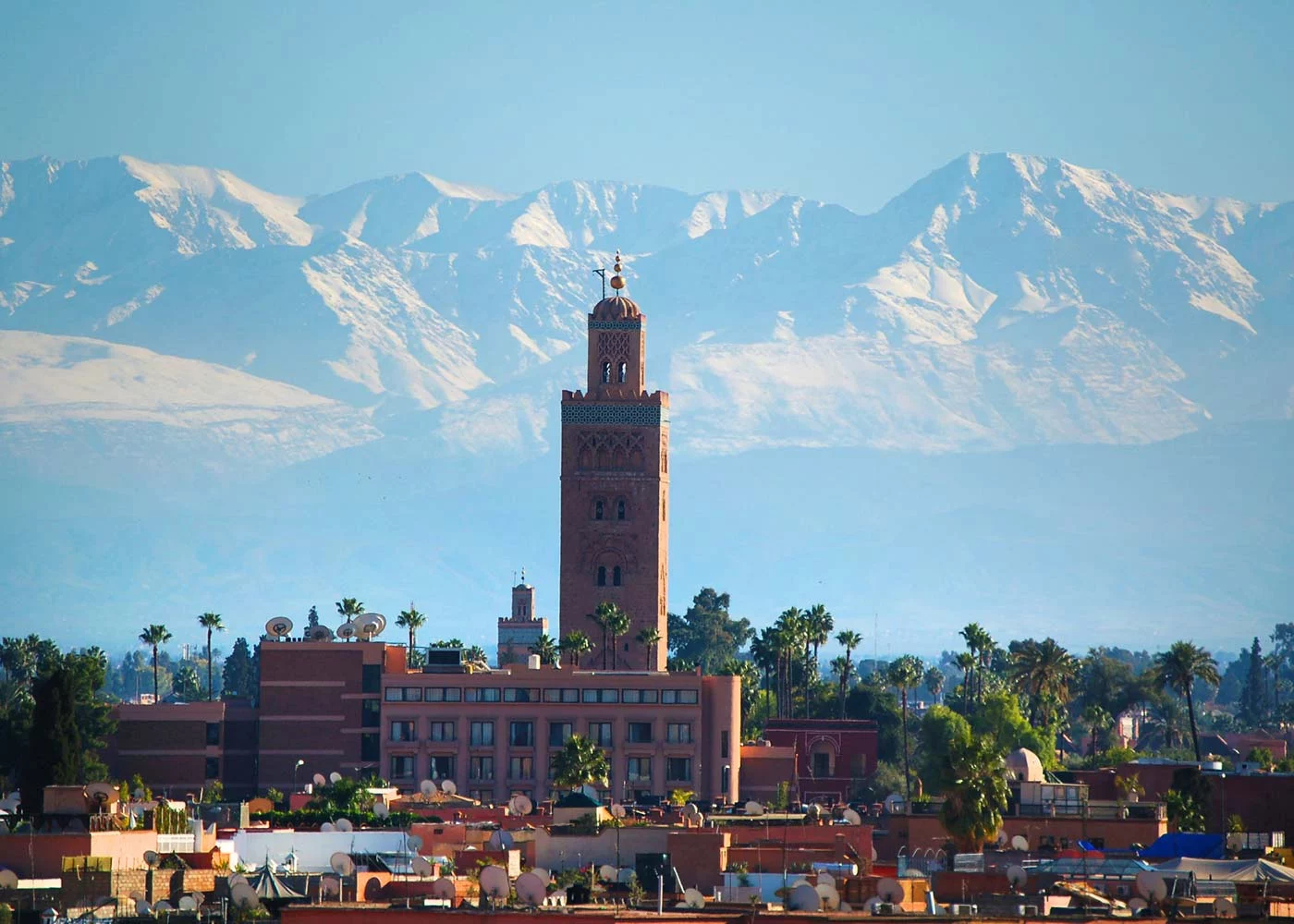
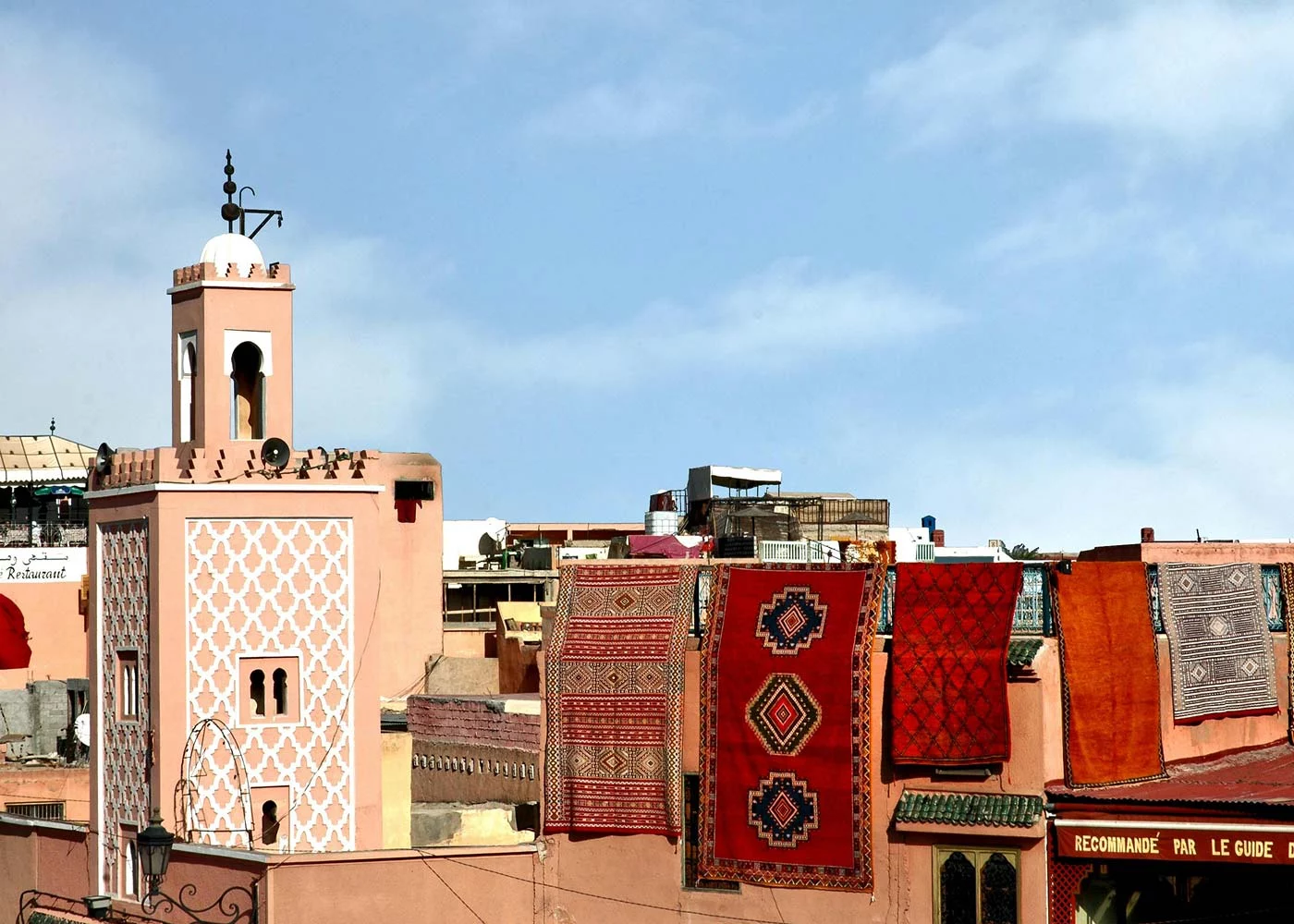
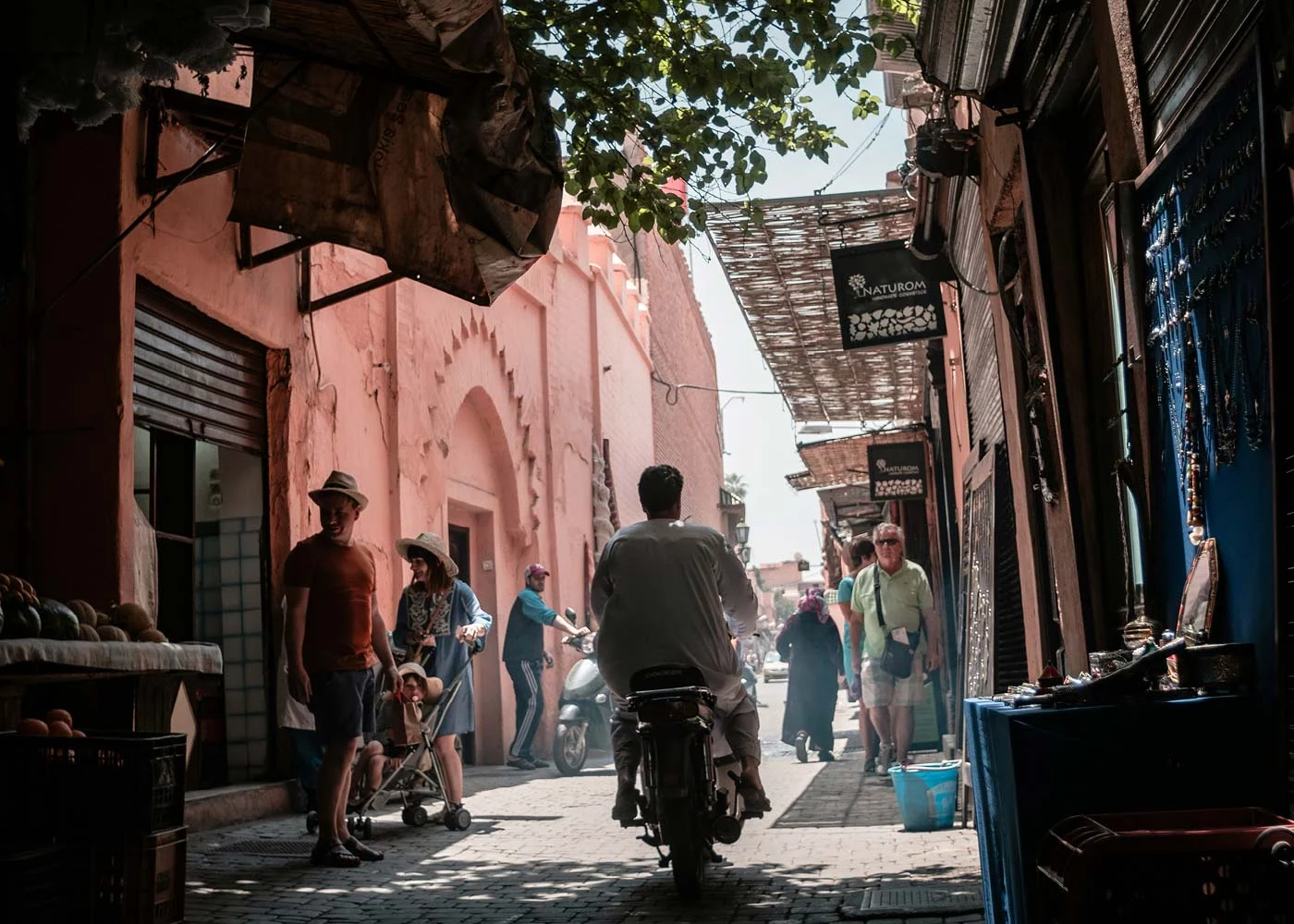
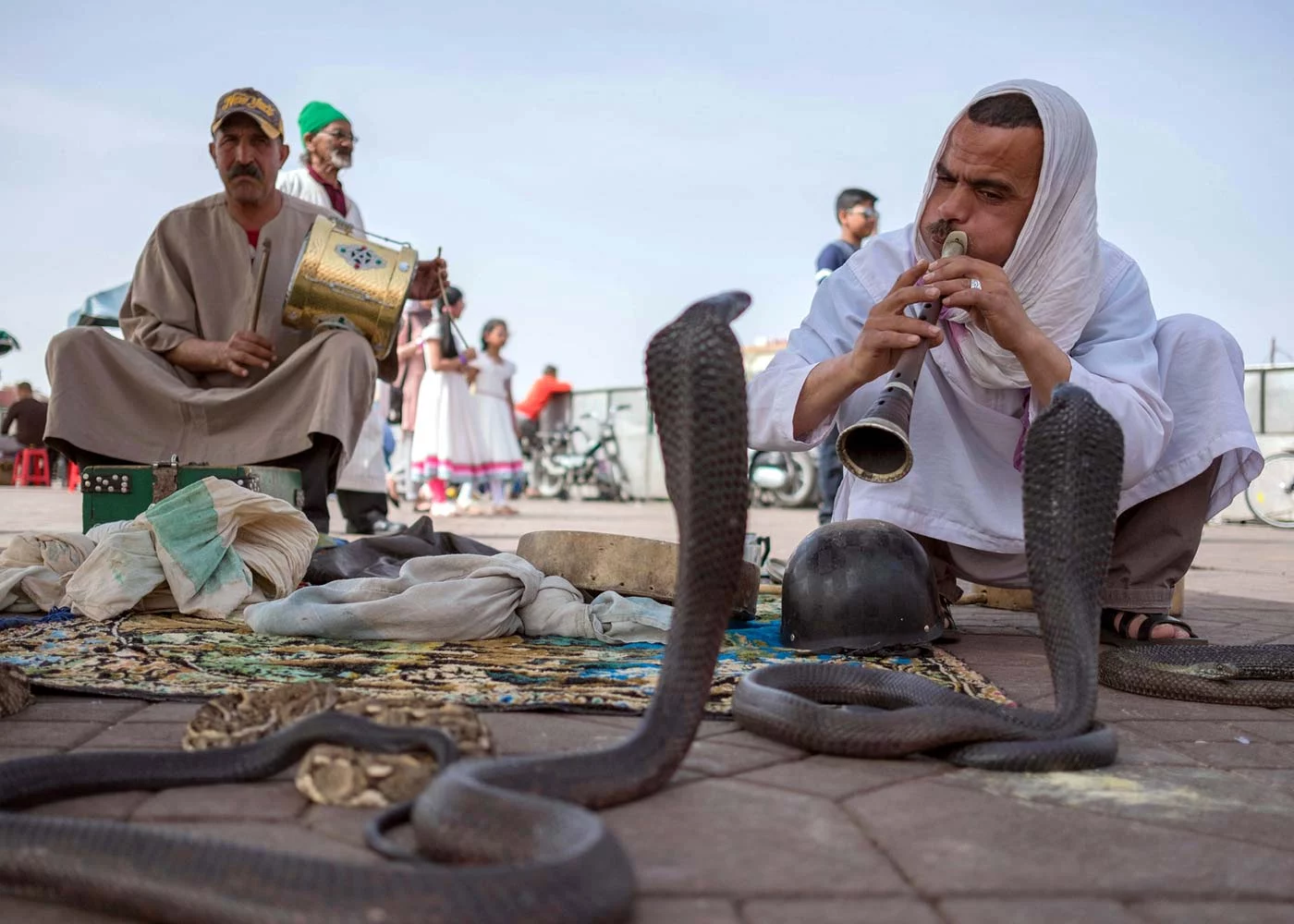
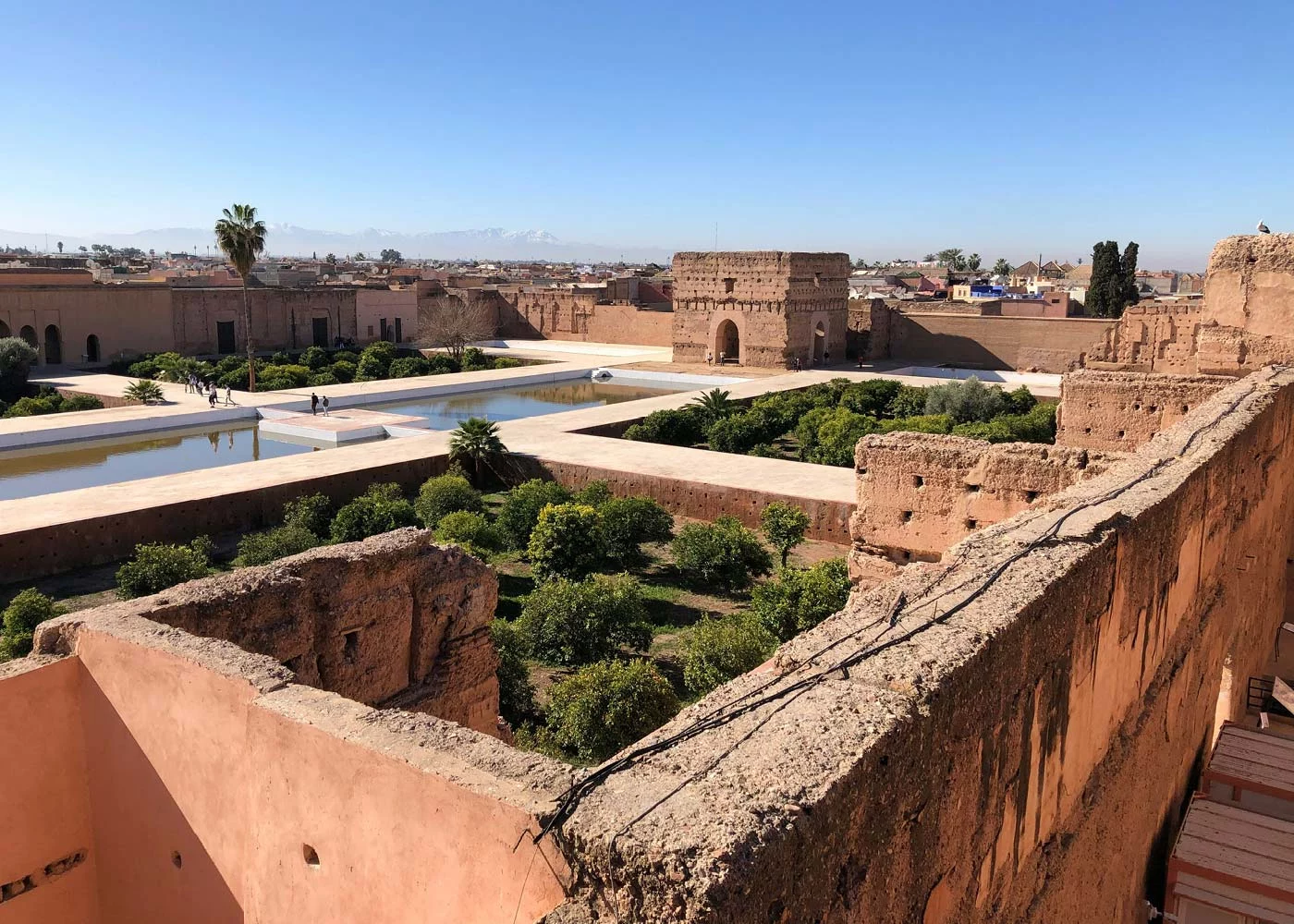
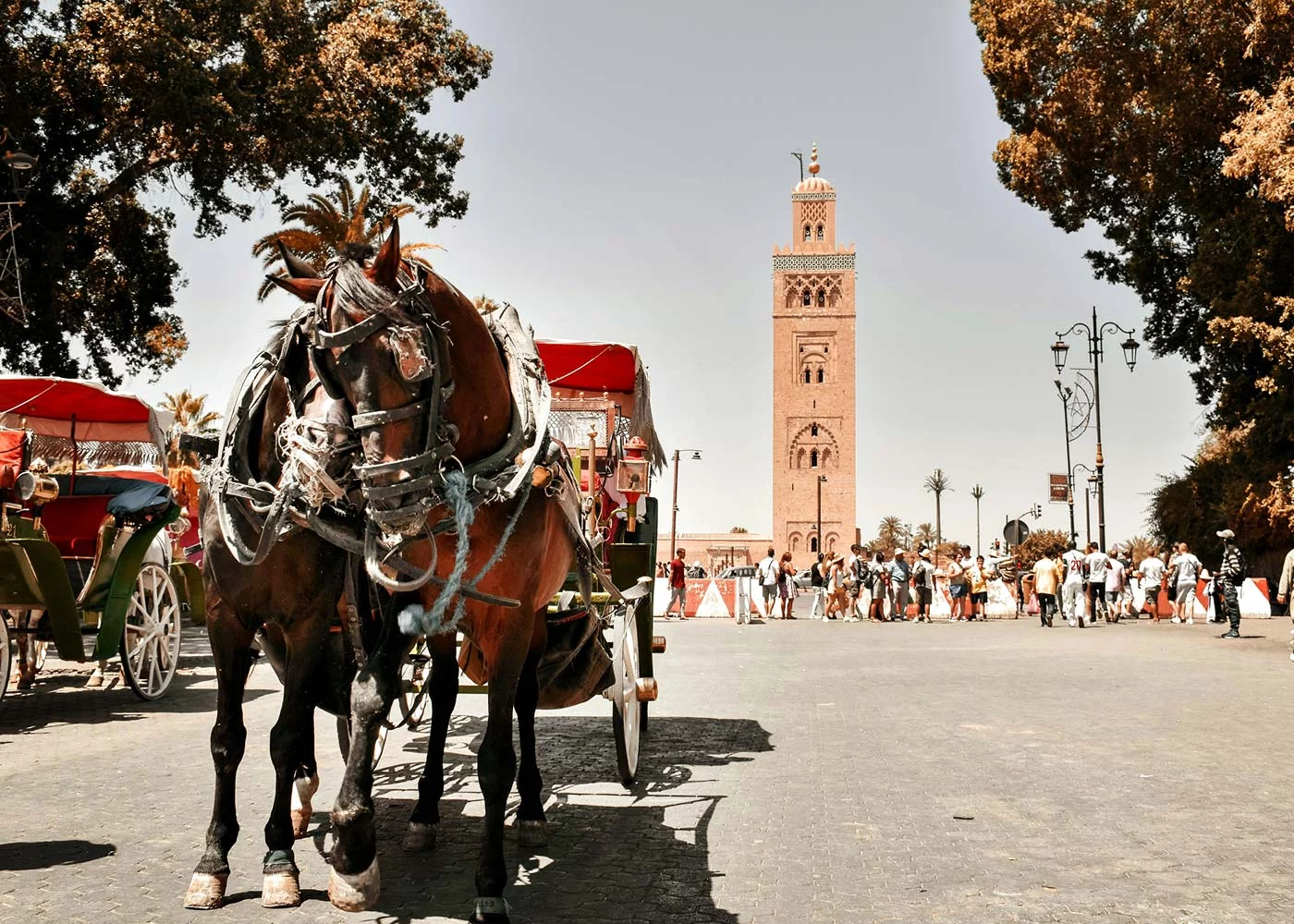
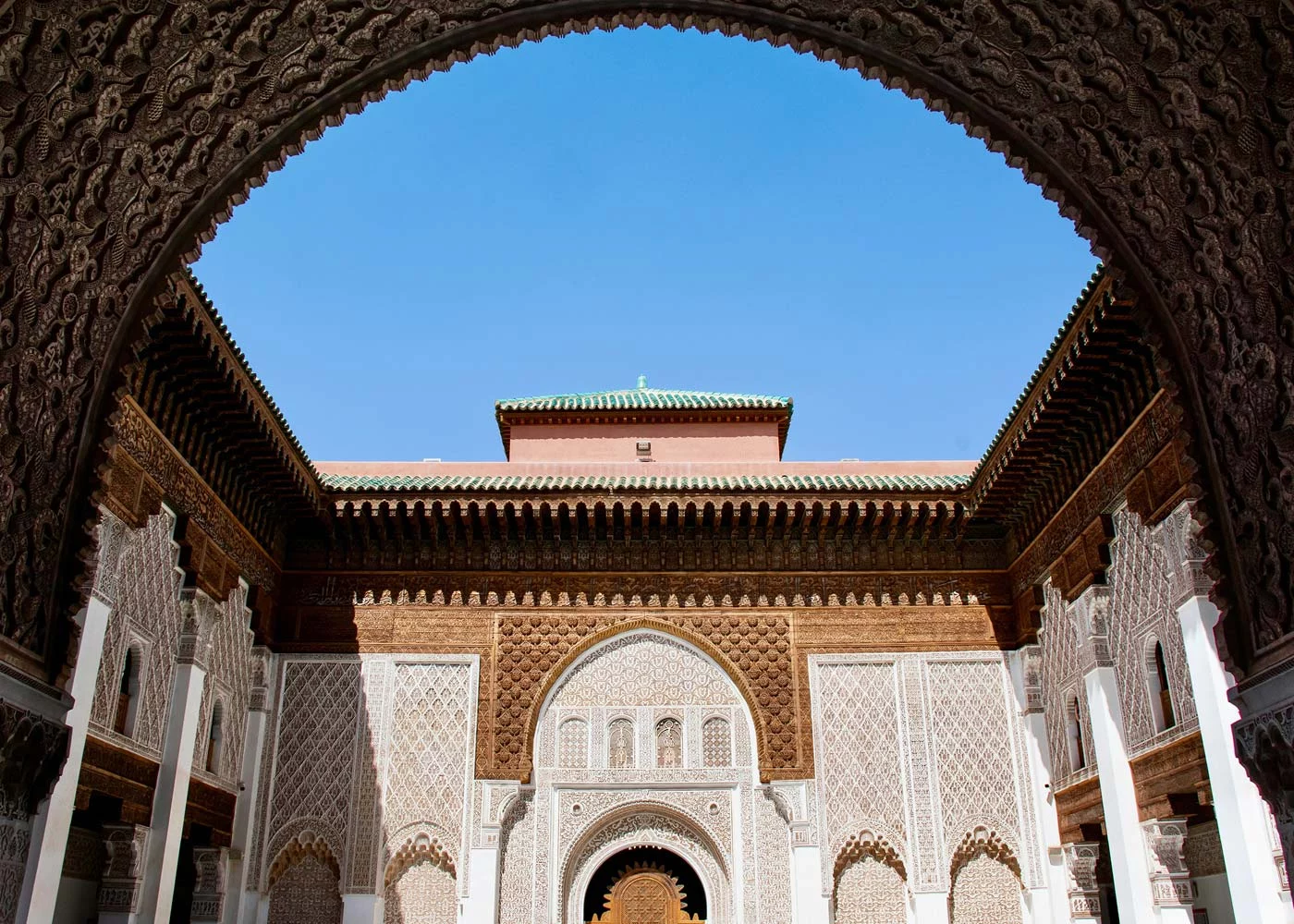
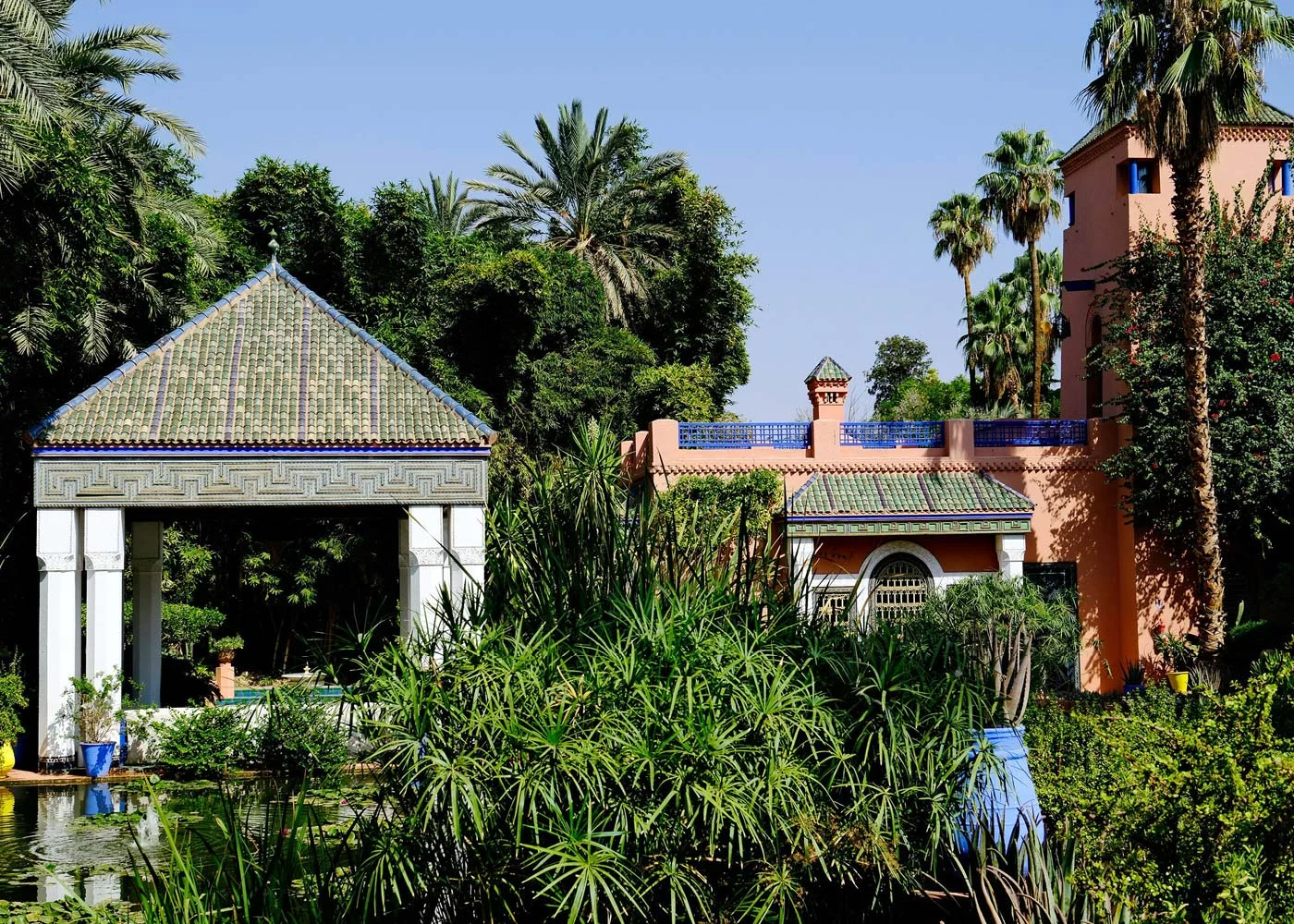
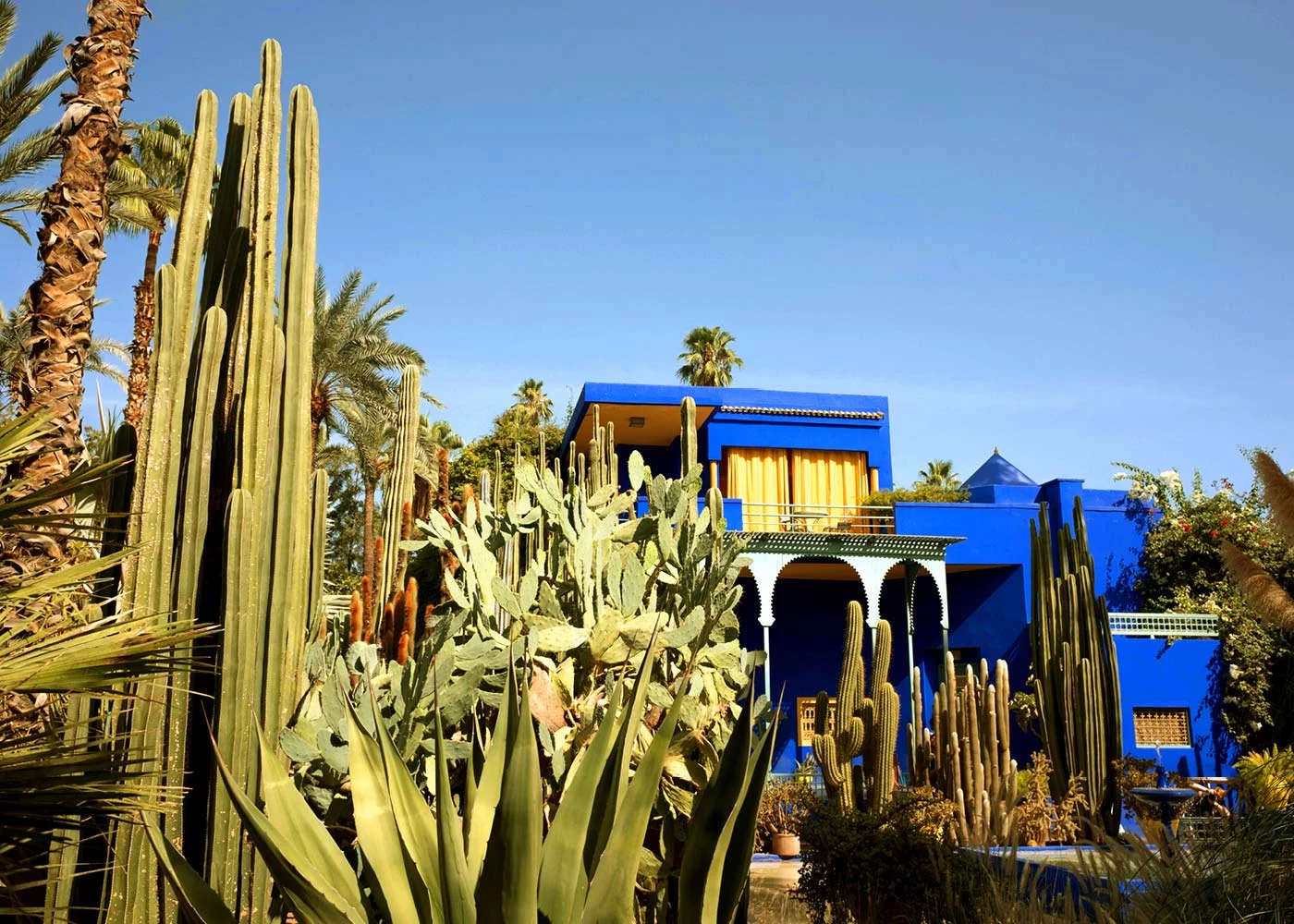
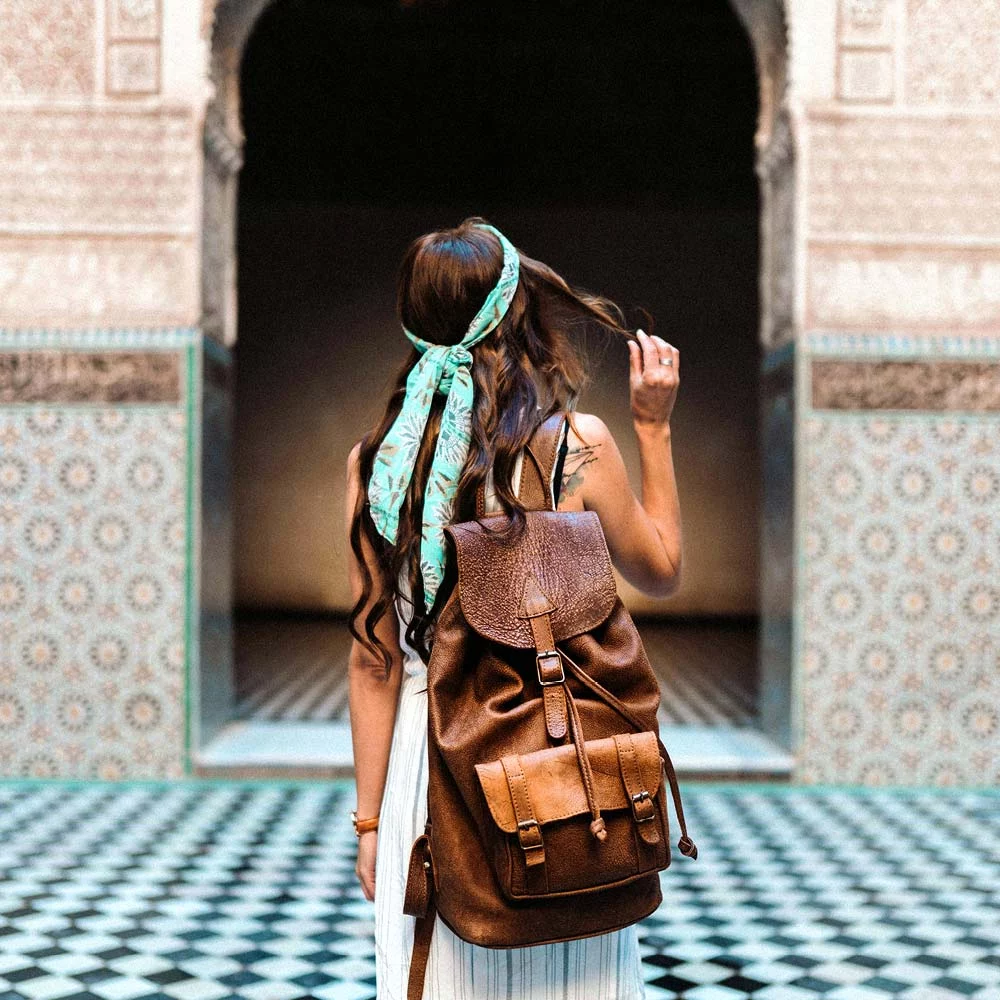 The Red City is a feast for the senses, filled with colours, scents, architecture and vibrant energy. Behind the walls of the Medina lie hidden riads, intricately designed courtyards and a world where centuries-old traditions meet modern design.
What you’ll experience
– Private guided tour through the souks, gardens and historic neighbourhoods
– Insider tips and hidden gems away from the usual tourist routes
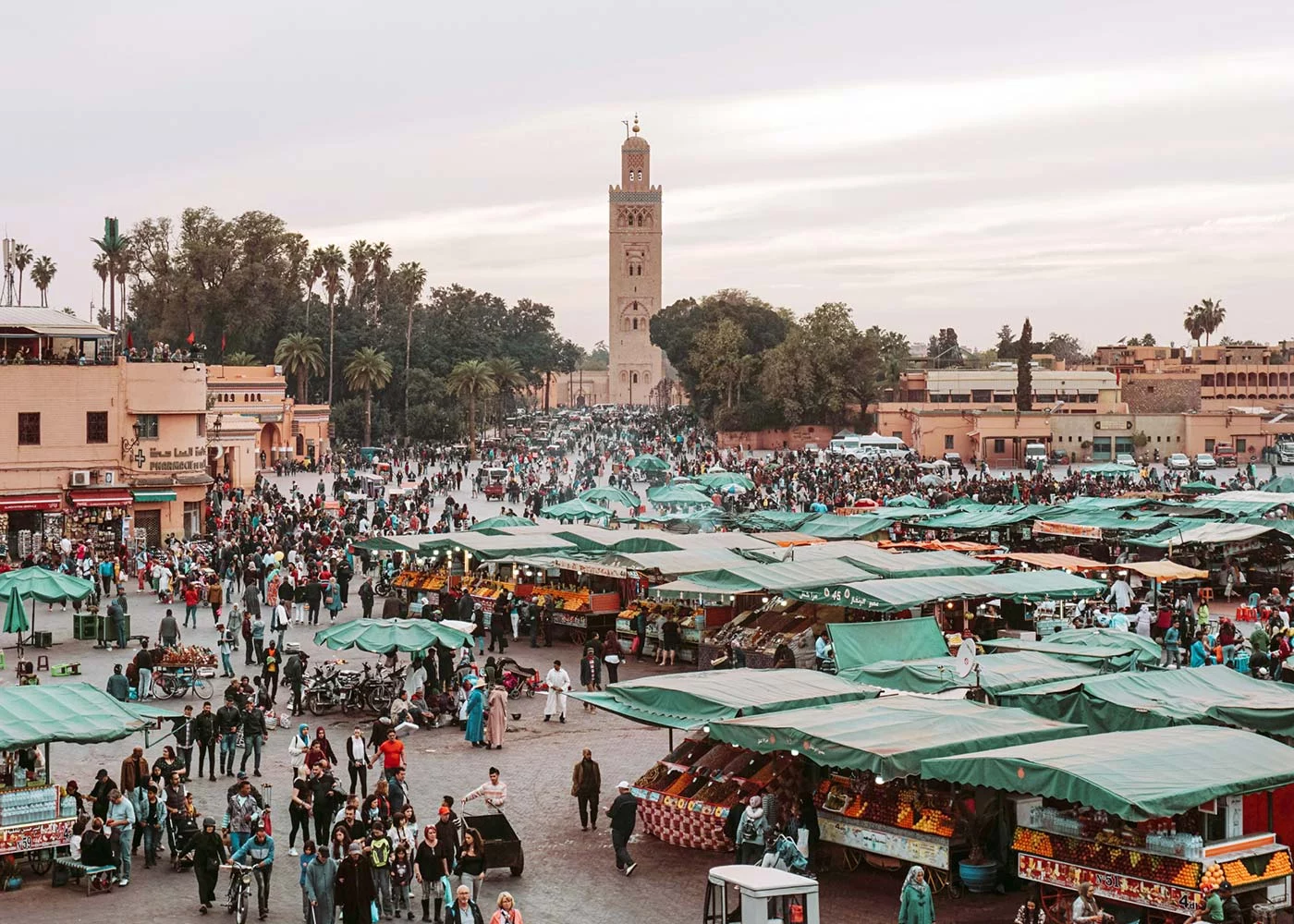
– Discover Jemaa el-Fna through the eyes of a local
– Design hotels, rooftops and the modern side of Marrakech
Facts & Figures
– Founded in the 11th century by the Almoravids
– The Medina has been a UNESCO World Heritage Site since 1985
– Jemaa el-Fna is inscribed on UNESCO’s Intangible Cultural Heritage list for its tradition of storytelling
– The souks are still organised by traditional trades, including dyers, tanners, coppersmiths and zellij tile artisans
What particularly fascinates us
Marrakech is the vibrant starting point of this journey. The intensity of the Medina makes the tranquillity of the desert that follows all the more remarkable.
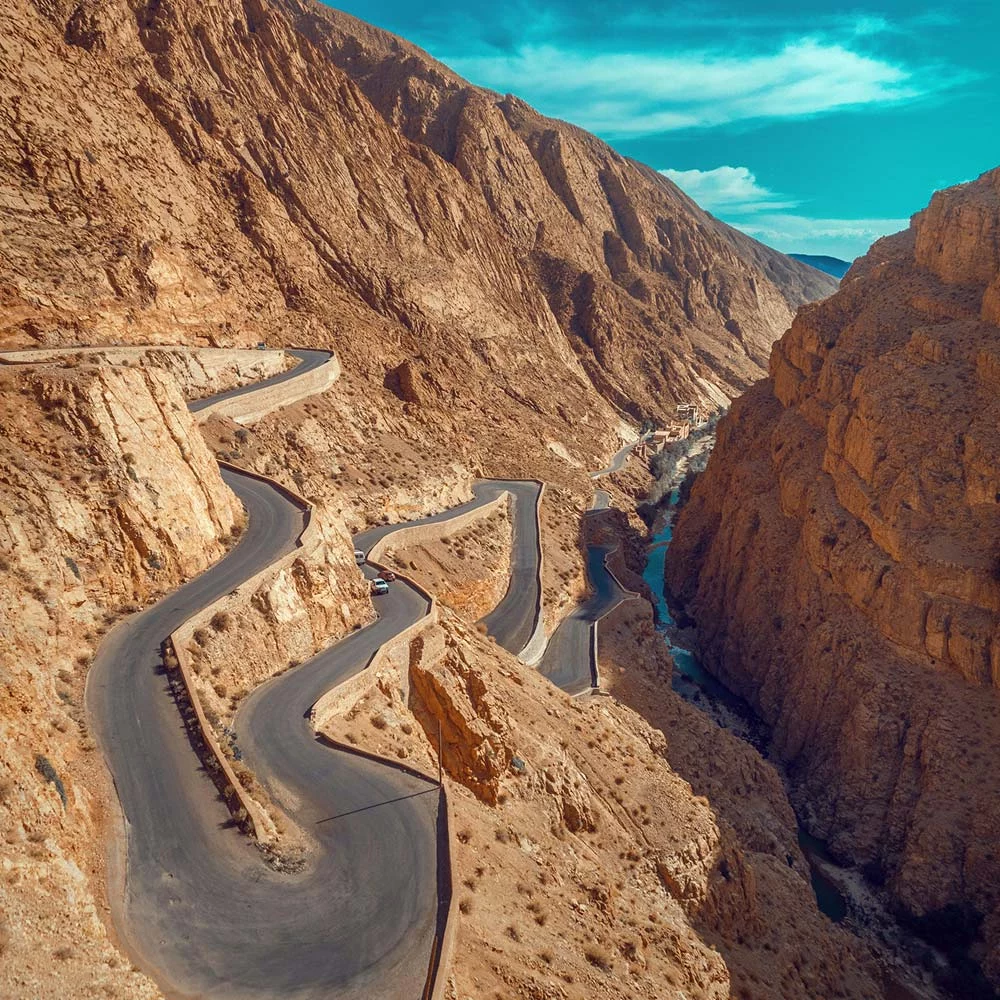
The route winds through the spectacular High Atlas Mountains, passing Berber villages, terraced landscapes and peaks rising above 4,000 metres.
What you can expect
• Journey across the famous Tizi n’Tichka Pass (2,260 m)
• Traditional earthen villages and authentic encounters
• Panoramic views across the High Atlas Mountains
• Traditional tea ceremony with local families
What fascinates us most
The moment the landscape changes: green valleys transform into barren plains, rugged mountains become the first signs of the desert beyond.
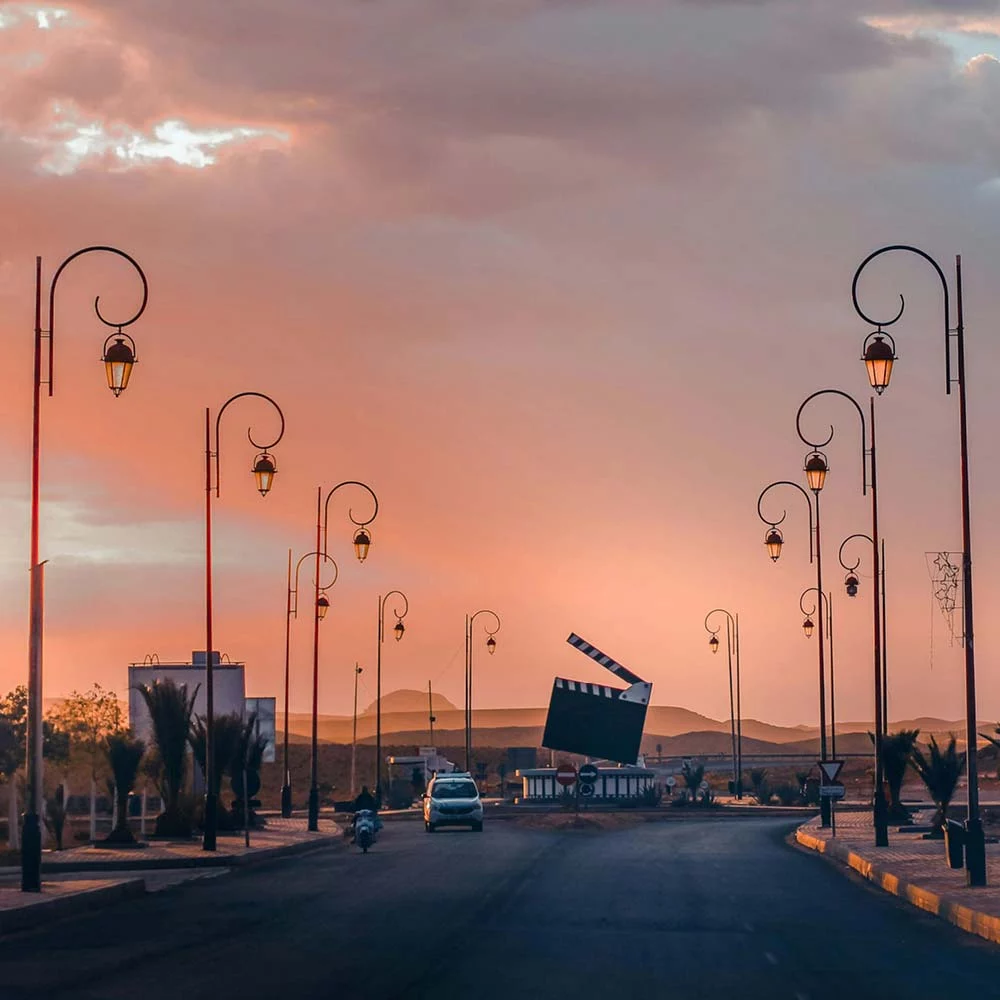 Between kasbahs, oases and cinematic history, Ouarzazate combines authentic southern Morocco with the magic of international film worlds.
What you can expect
• Private backstage tour through Atlas Studios, filming location of productions such as Gladiator, Game of Thrones and Kingdom of Heaven
• Taourirt Kasbah and historic earthen architecture
• Oasis landscapes along the Draa River
What fascinates us most
Here, the feeling of the real desert begins: palm groves, caravan history and landscapes that feel both rugged and surprisingly elegant — framed by cinematic scenery and legendary film locations.
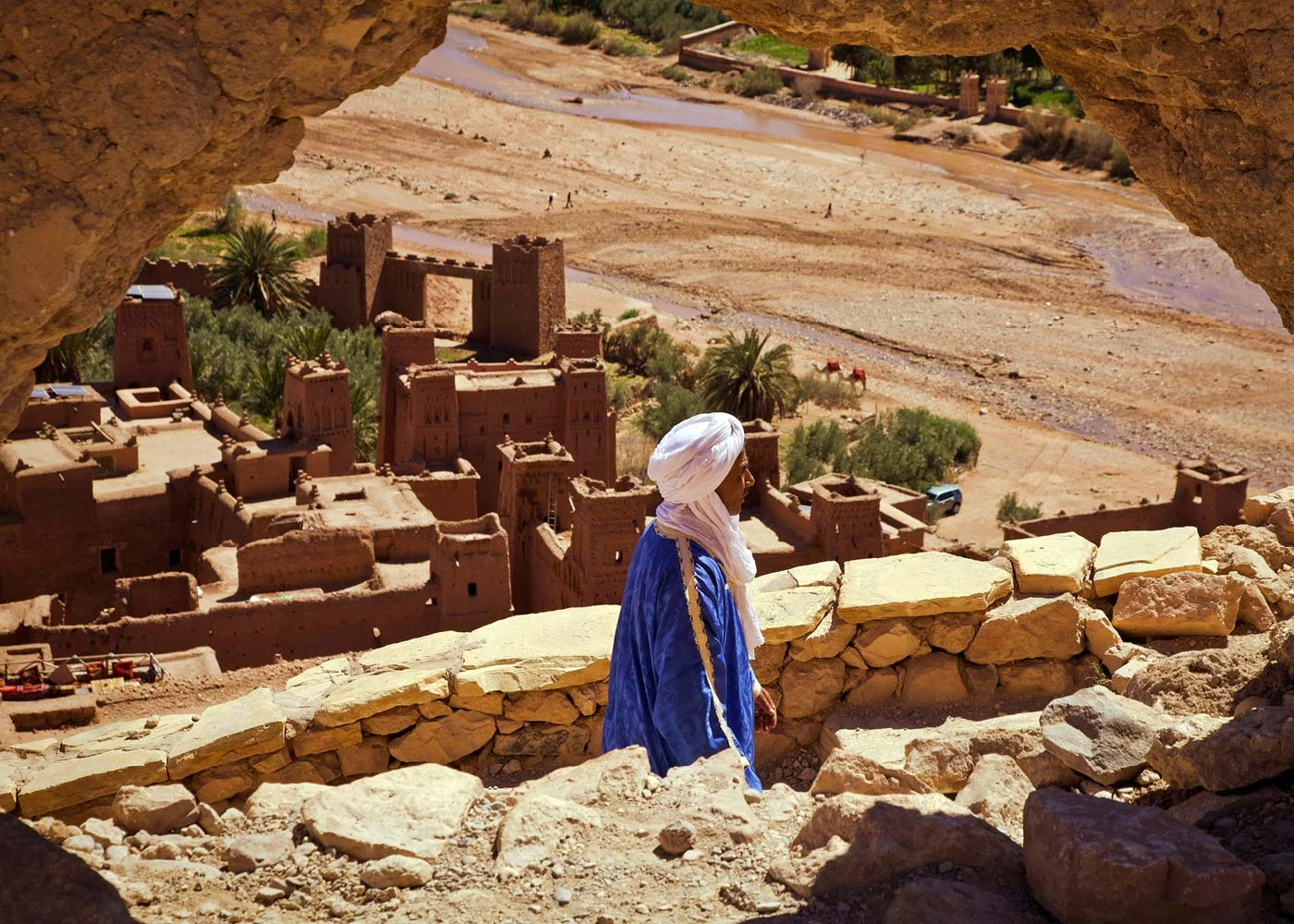
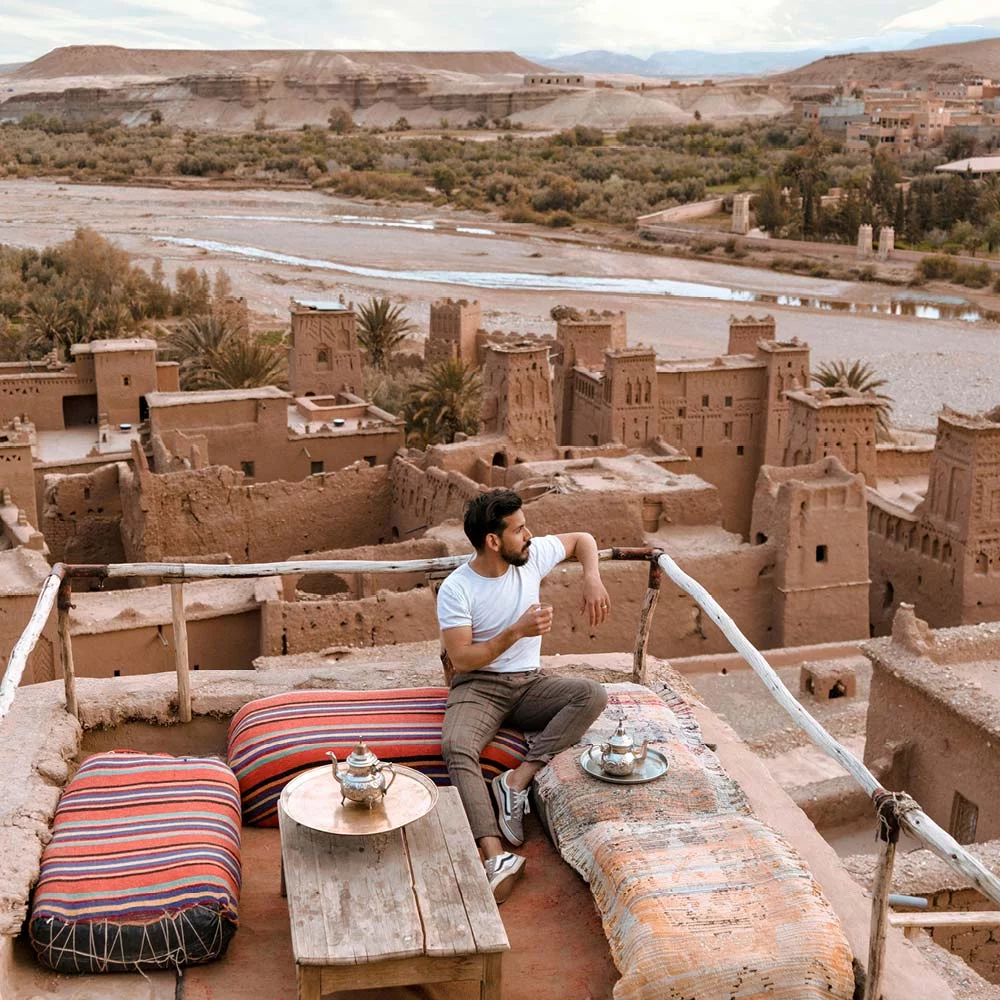 This UNESCO World Heritage Site is one of Morocco’s most impressive ksour and has been one of the country’s most important historic trading settlements for centuries.
What you can expect
• Private guided tour through the fortified earthen village
• Insights into traditional pisé earthen construction
• Panoramic views across the valley from the upper plateau
Facts & Figures
• Origins dating back to the 11th century
• Part of historic trade routes between Marrakesh and the Sahara
• Film location for numerous international productions including Game of Thrones
What fascinates us most
Light, earth and shadow merge into an almost surreal atmosphere — especially during the early morning and evening hours.
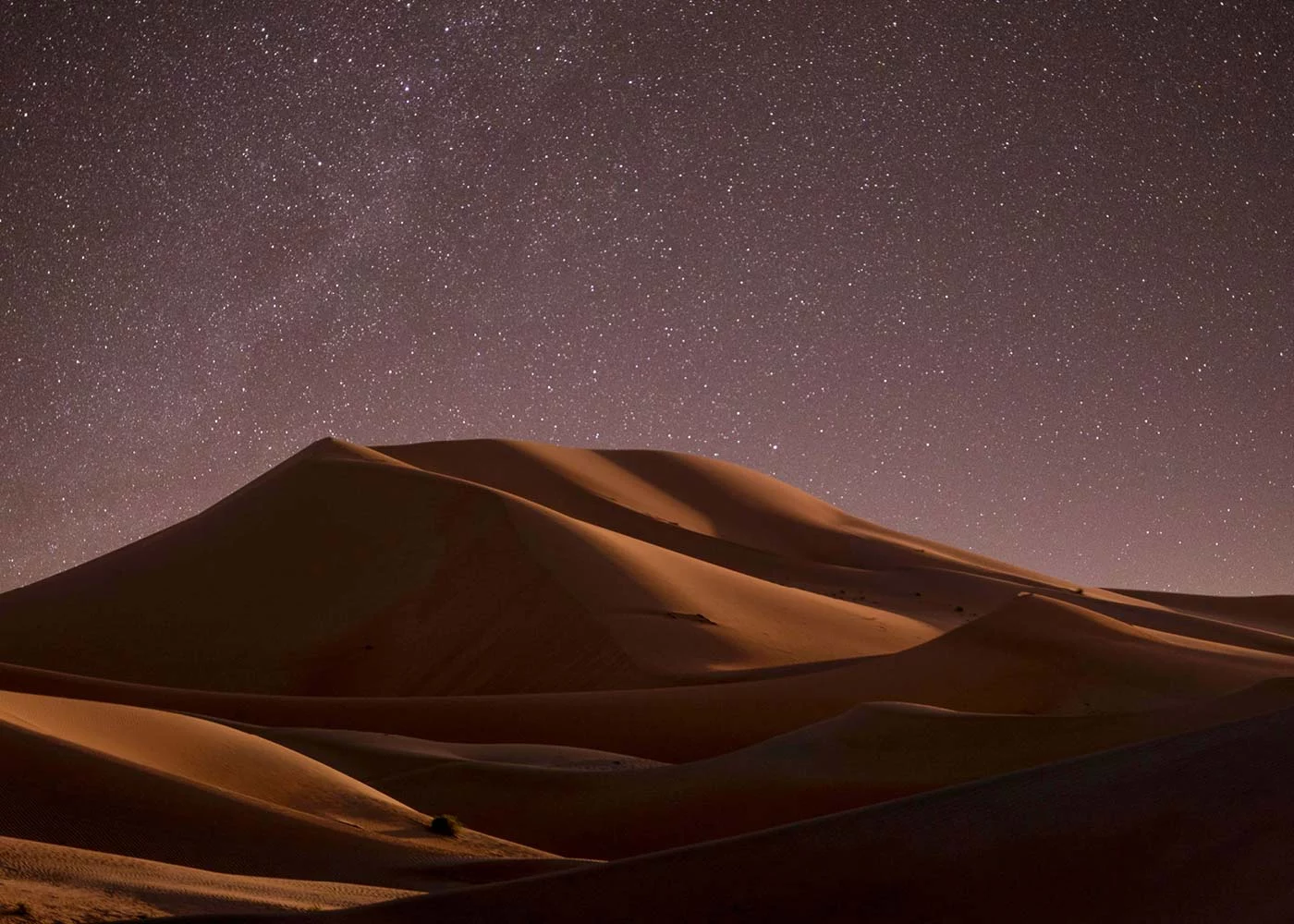
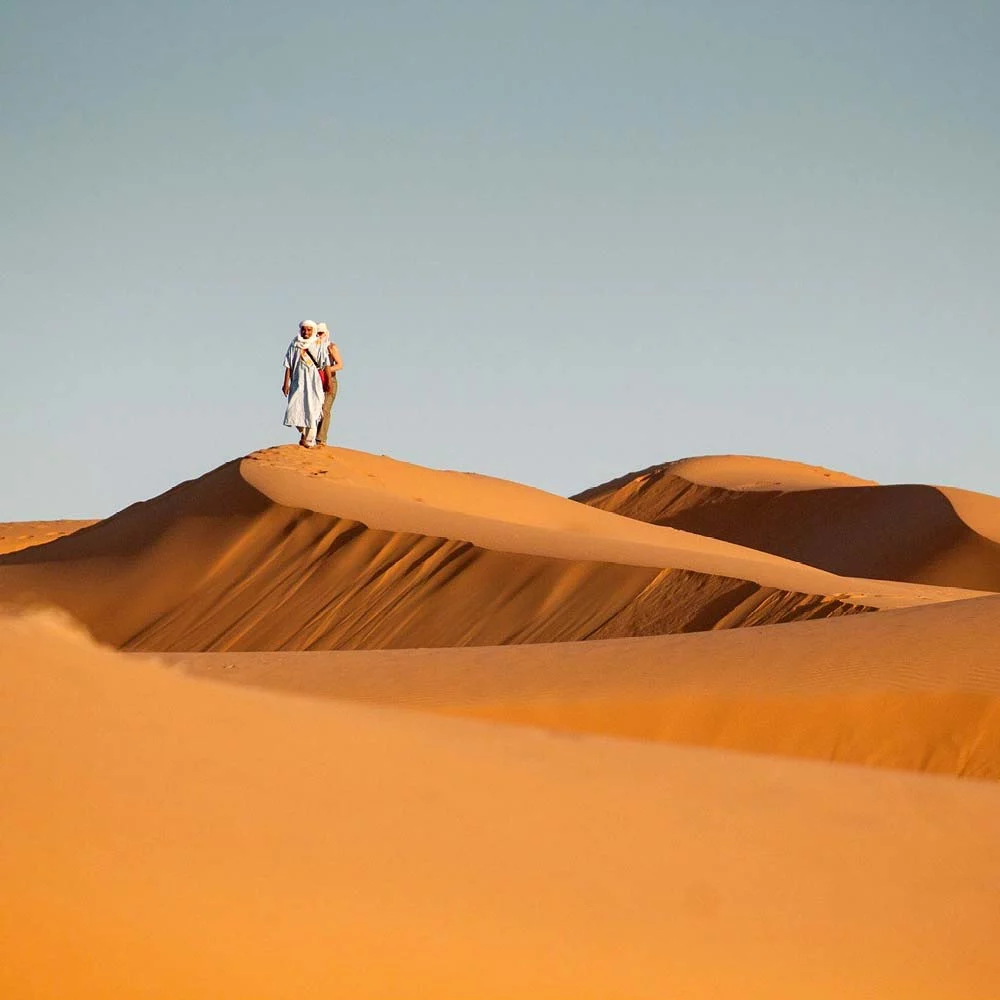 Golden sand dunes rising up to 150 metres, complete silence and nights beneath endless stars: Erg Chebbi is one of the most impressive desert landscapes in North Africa.
What you can expect
• Access to Morocco’s highest sand dunes
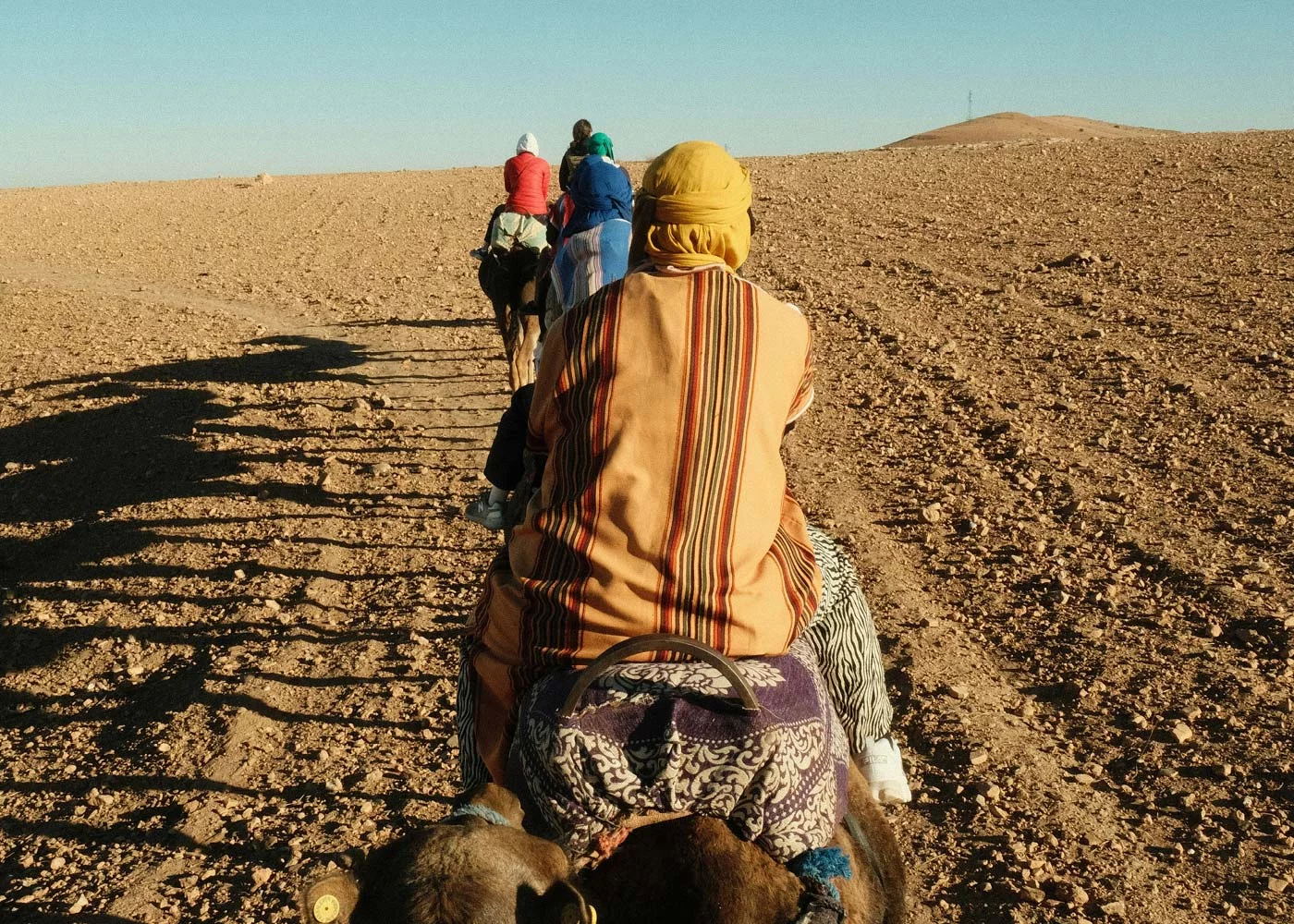
• Camel rides through the dunes
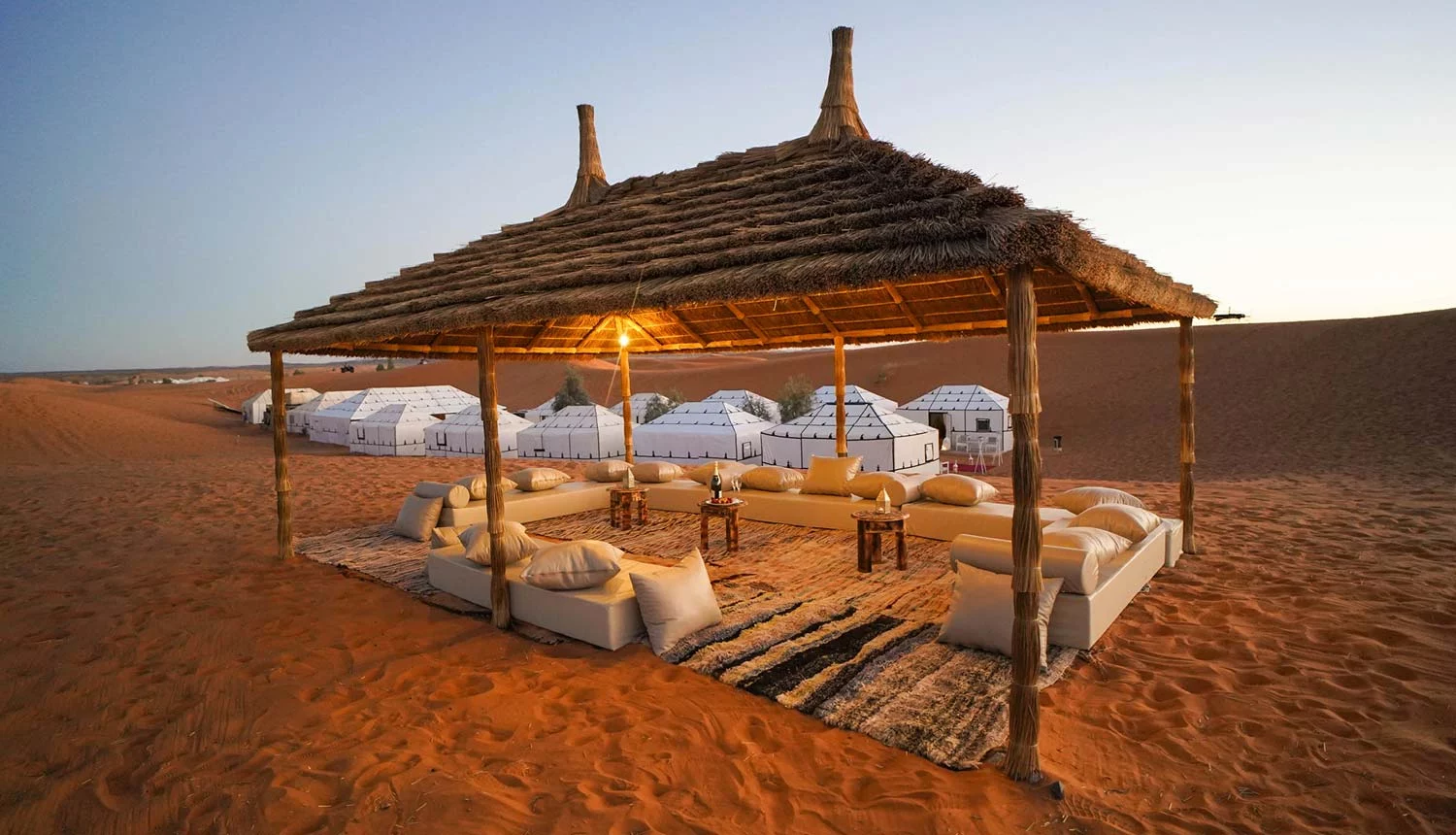
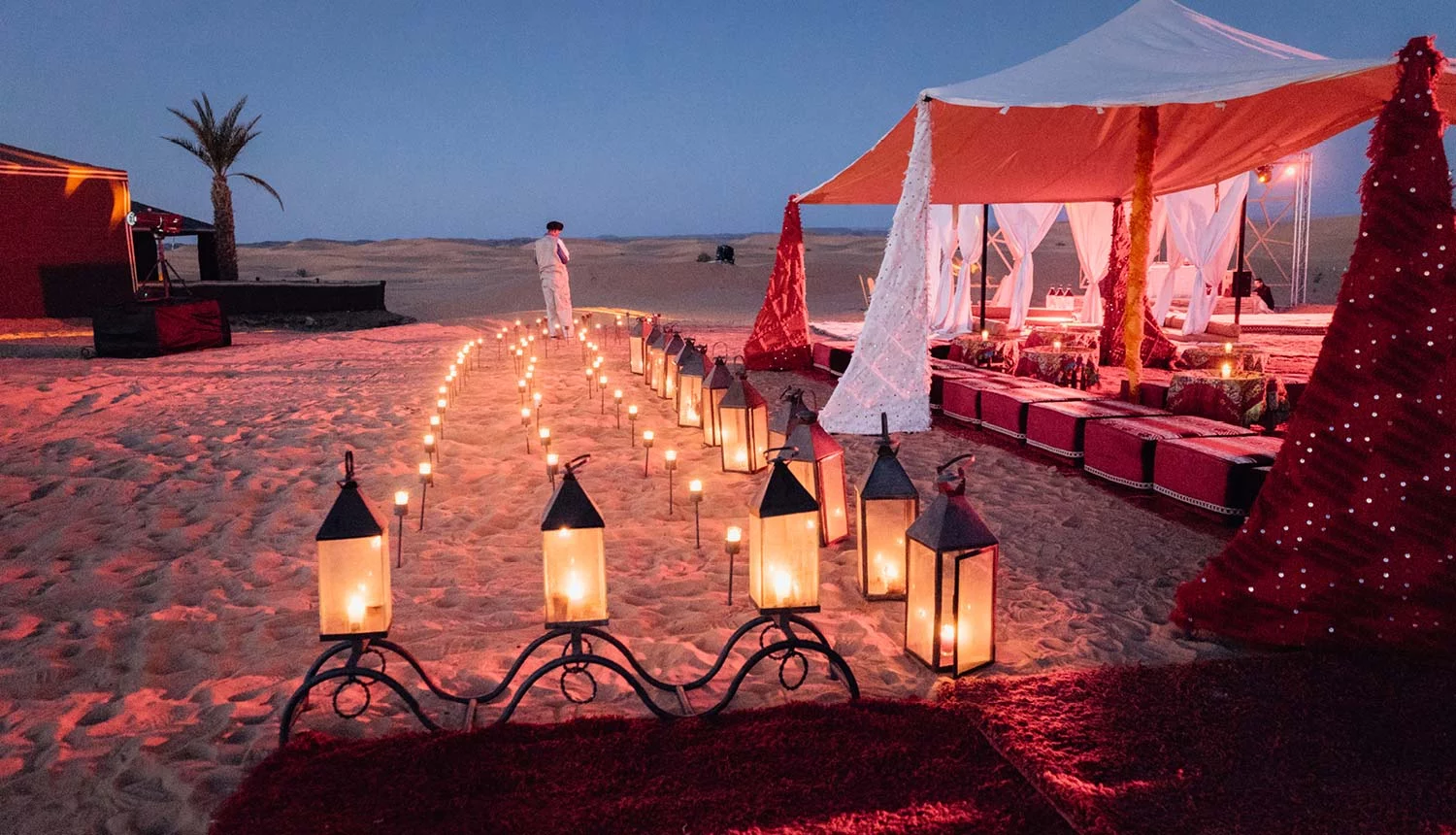
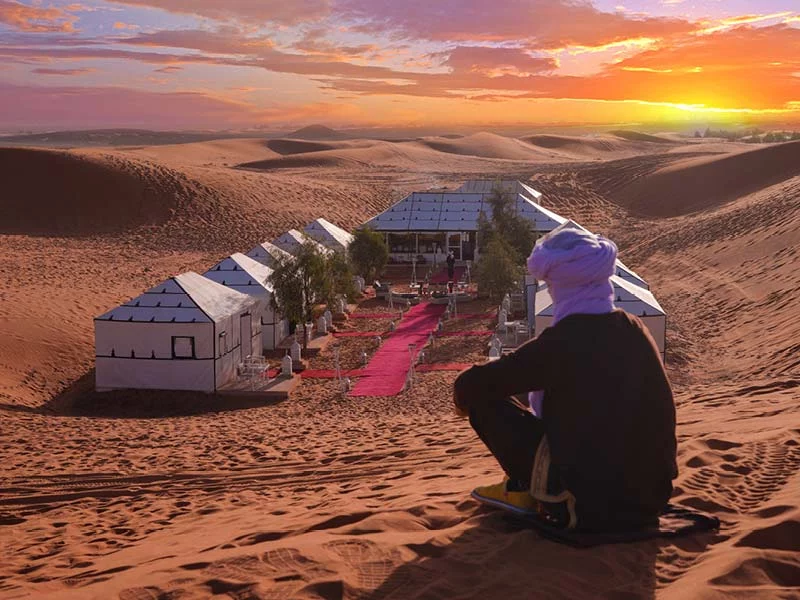
• Overnight stay in an exclusive desert camp
• Sunrises and sunsets in the Sahara
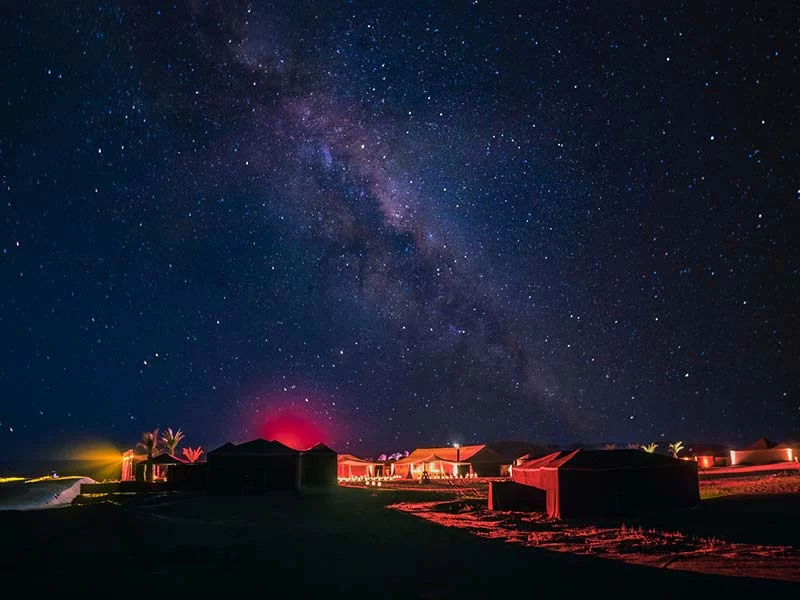
• Star-filled skies without light pollution
Facts & Figures
• Dunes reaching up to 150 metres in height
• Erg Chebbi stretches across approximately 28 kilometres
• One of the few true sand deserts in Morocco
What fascinates us most
The Sahara reduces everything to what truly matters. Sounds disappear, distances lose meaning – and within that lies its extraordinary power.
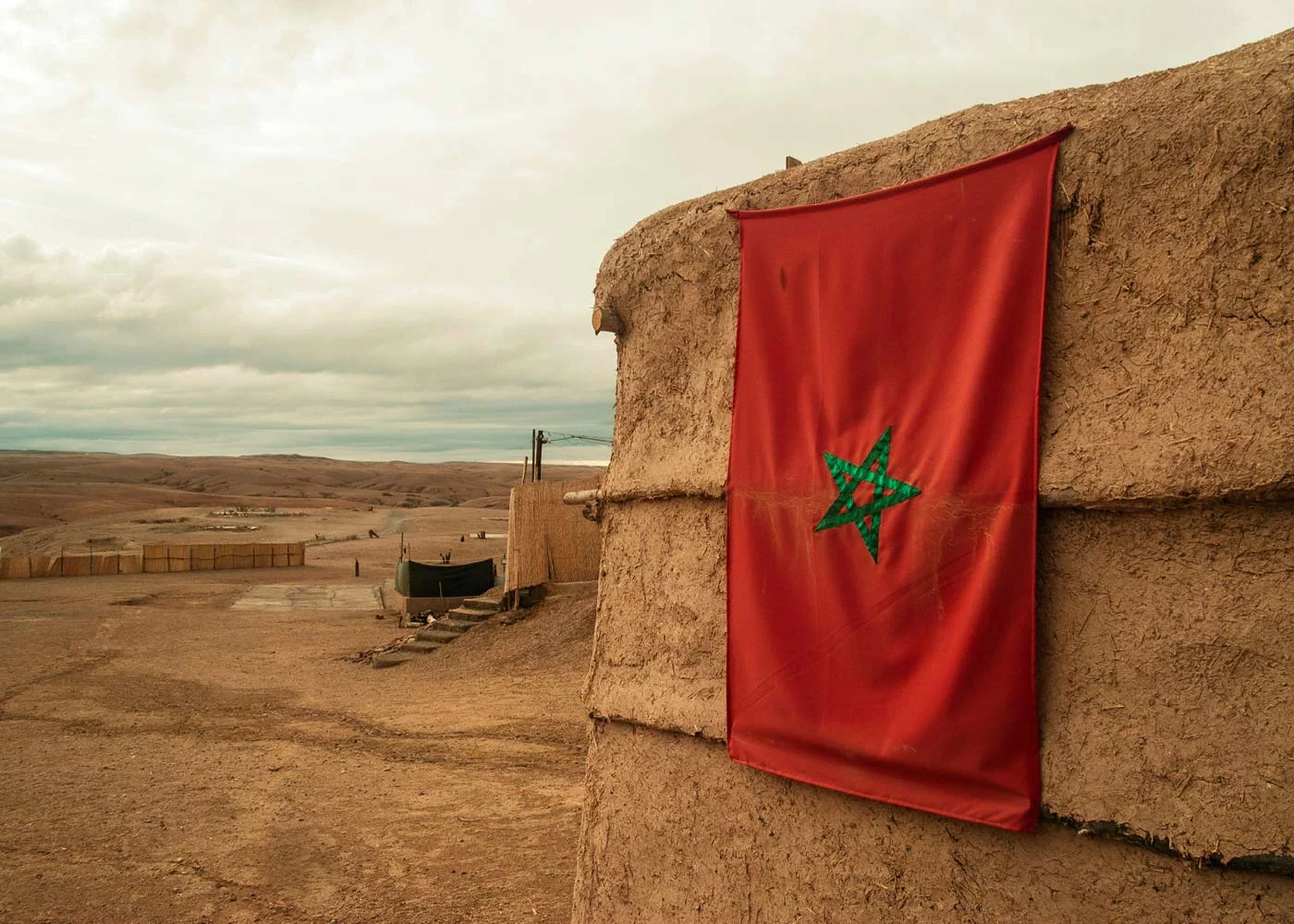
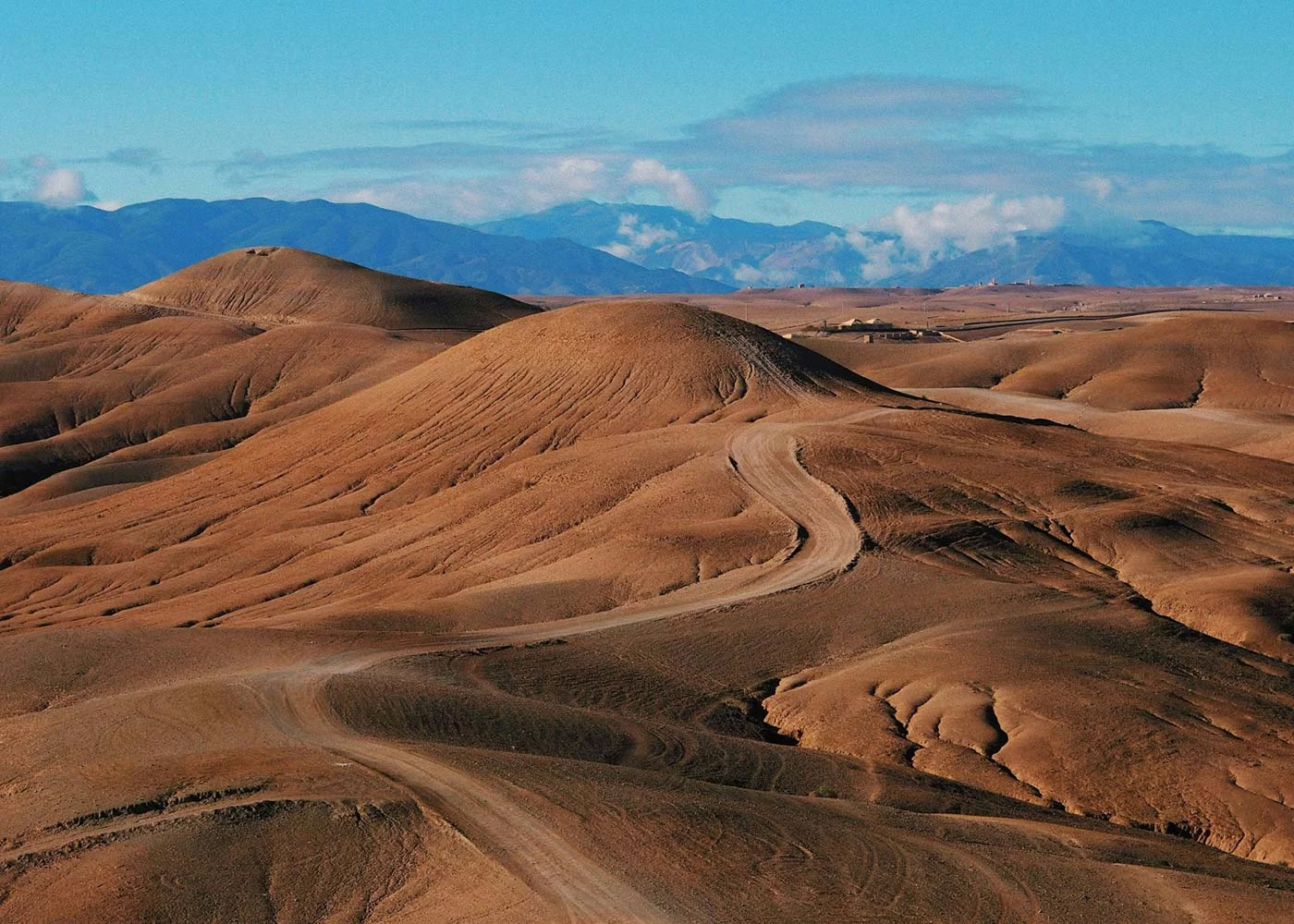
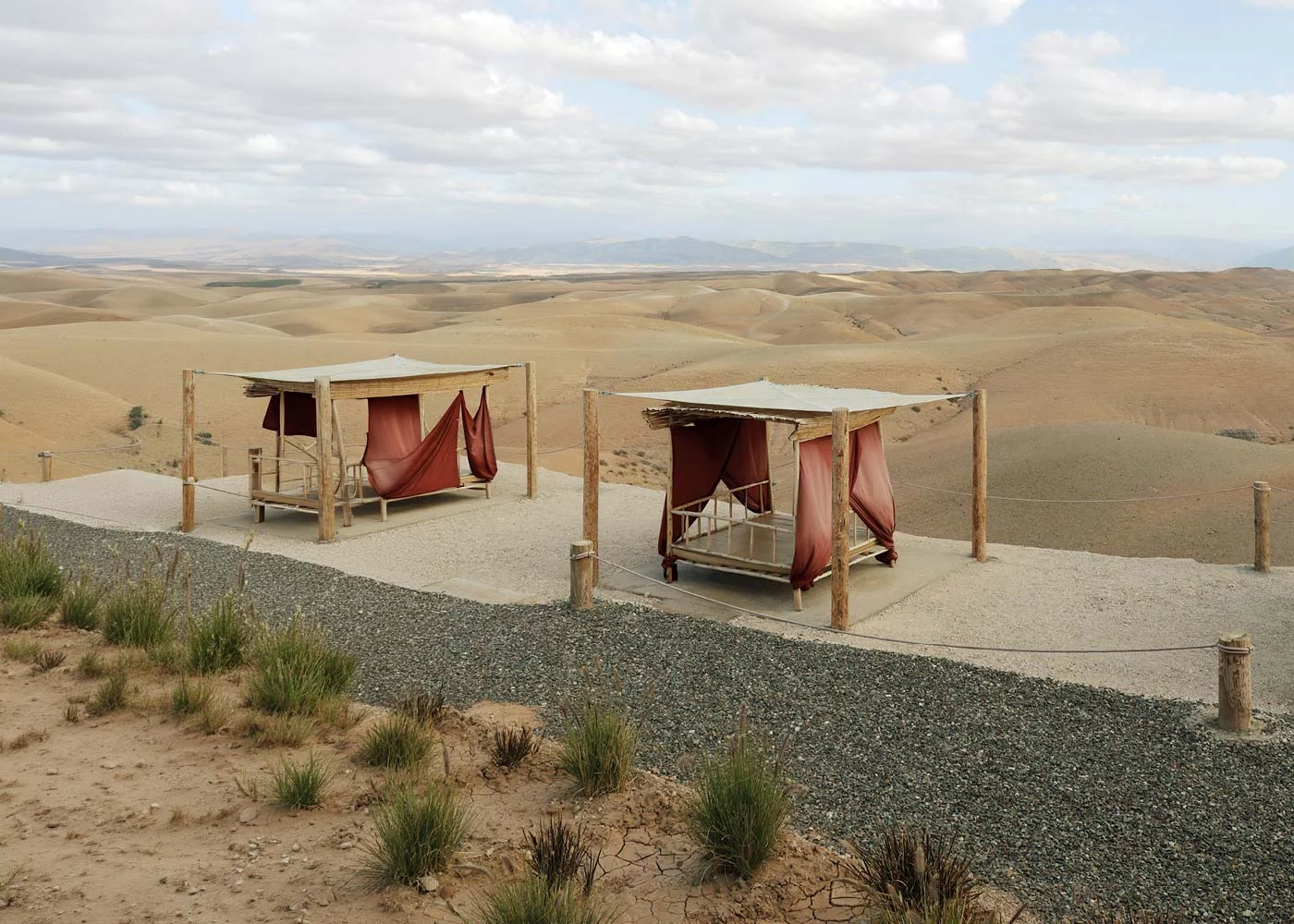
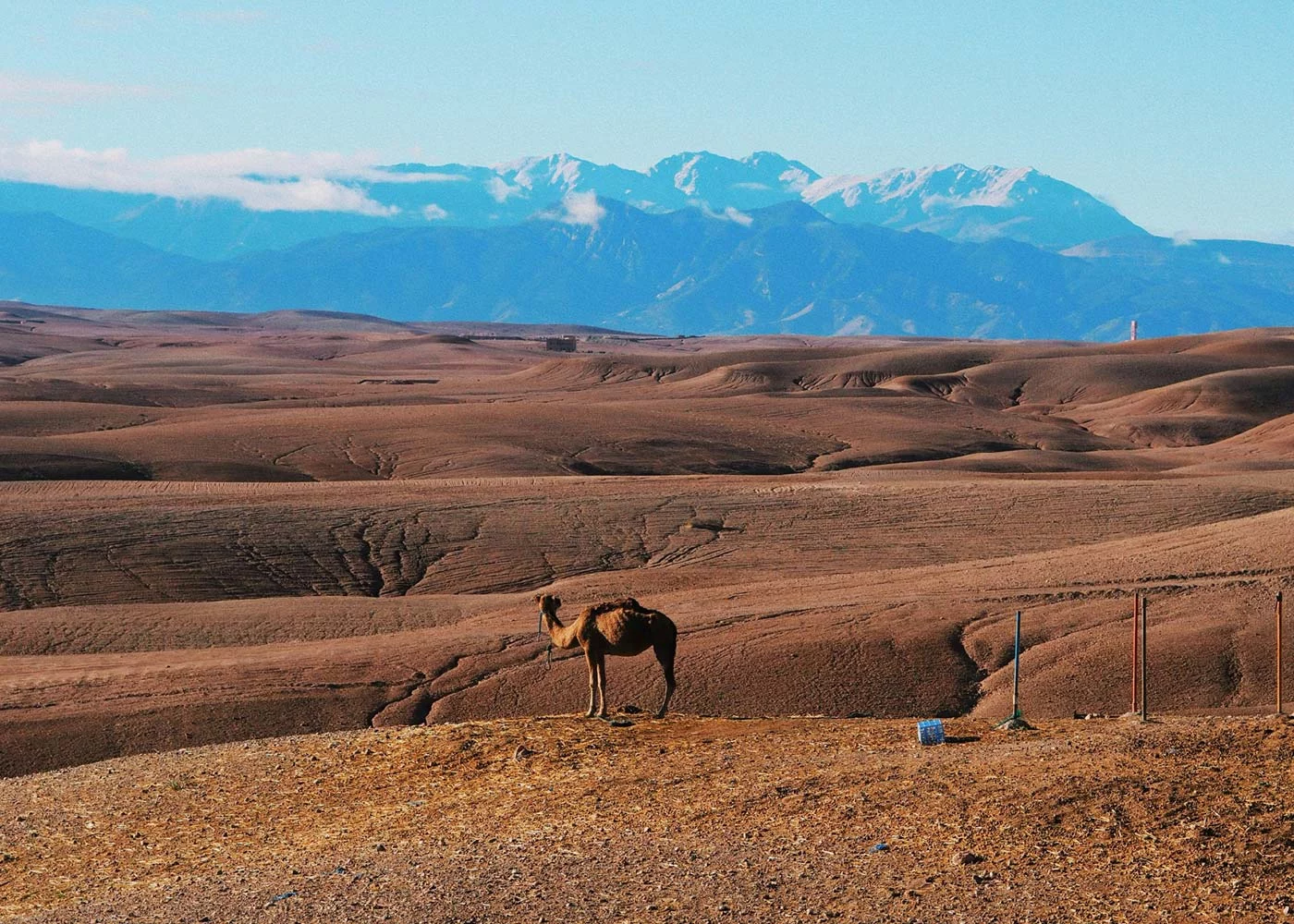
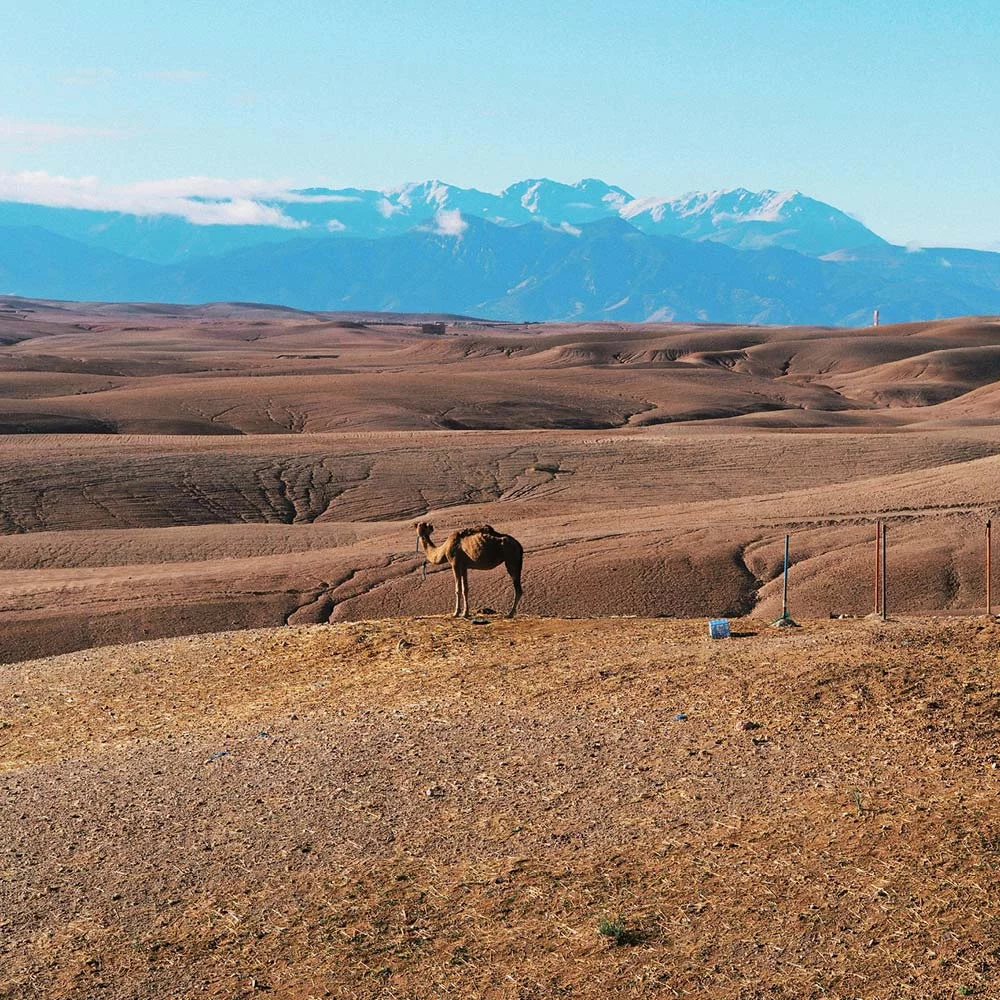 Only around 45 minutes from Marrakesh lies the barren stone desert of Agafay — a place of silence with wide views across the Atlas Mountains.
What you can expect
• Dinner beneath the stars
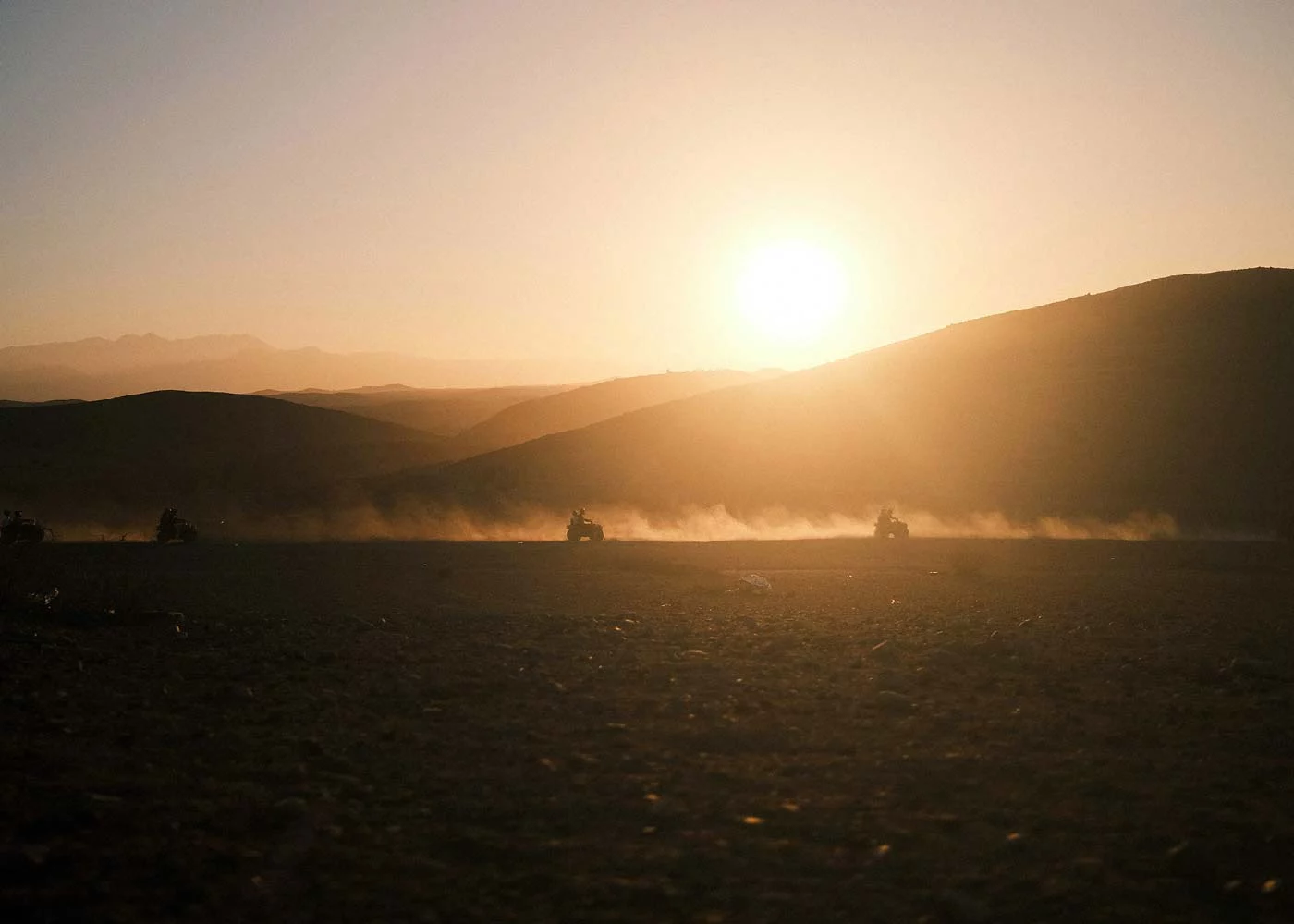
• Sunsets over the stone desert
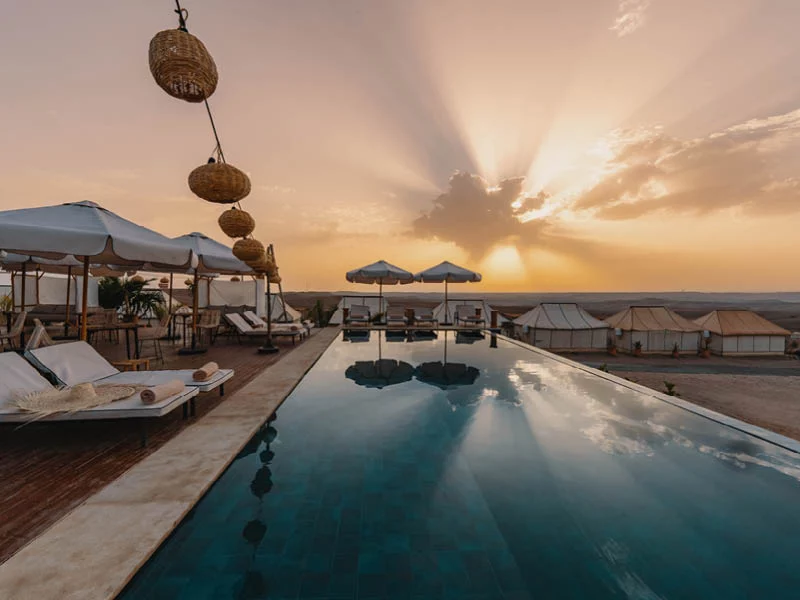
• Exclusive camps with a unique atmosphere
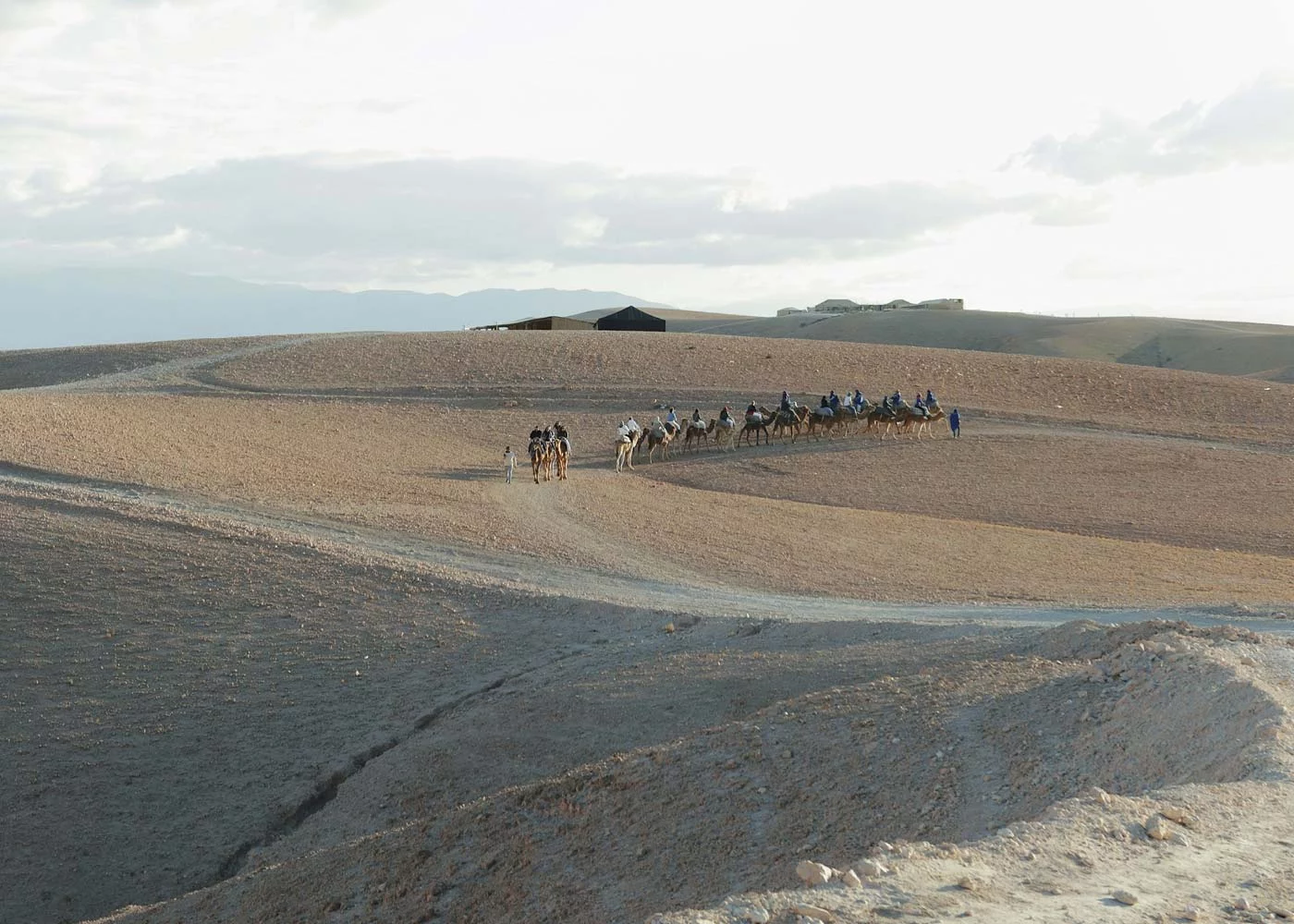
• Optional quad biking or camel rides
What fascinates us most
Agafay is not a sand desert, but a slow-paced contrast to the energy of Marrakesh. Its barren stone landscape marks the transition between the vibrant city and the quiet nature at the edge of the Atlas Mountains – a purist reduction to the essentials.
Your
Personalised
Access to
Morocco
What makes this journey special is not only the what, but the how:
Customised planning
Continuous support
Destinations beyond the usual routes

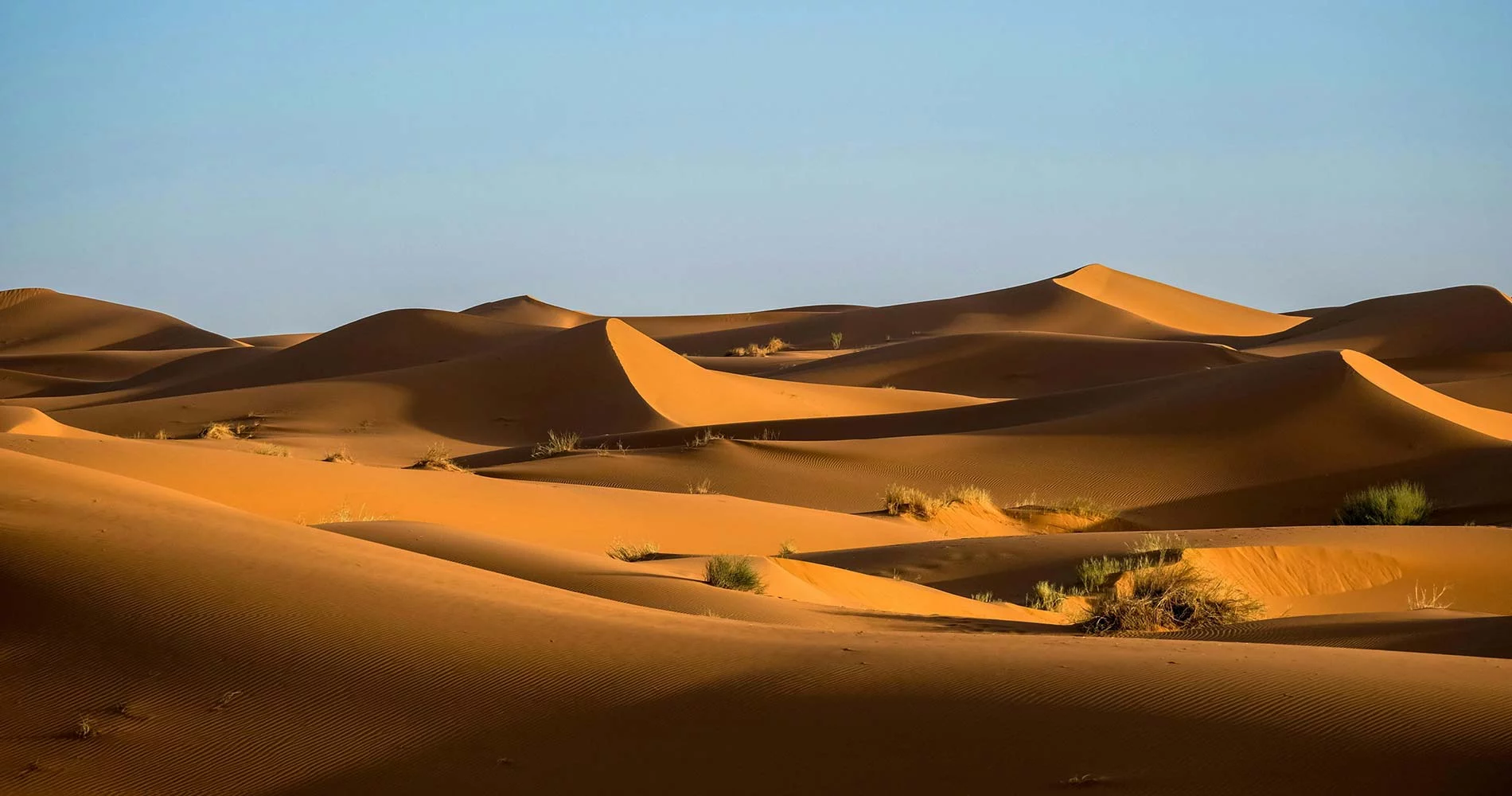
Desert Types – From stone deserts to dunes
Morocco’s desert landscapes are among the most diverse in North Africa and differ greatly in geological character.
Hamada – the stone desert
Barren, vast and minimalist – like Agafay near Marrakesh.
Reg – the gravel desert
Flat, seemingly endless plains with fascinating silence and clear horizons.
Erg – the sand desert
The classic Sahara with towering dune landscapes such as Erg Chebbi near Merzouga.
Erg Chebbi stretches approximately 28 kilometres in length and up to 7 kilometres in width. With dunes rising to heights of up to 150 metres, it is one of Morocco’s most spectacular sand deserts.
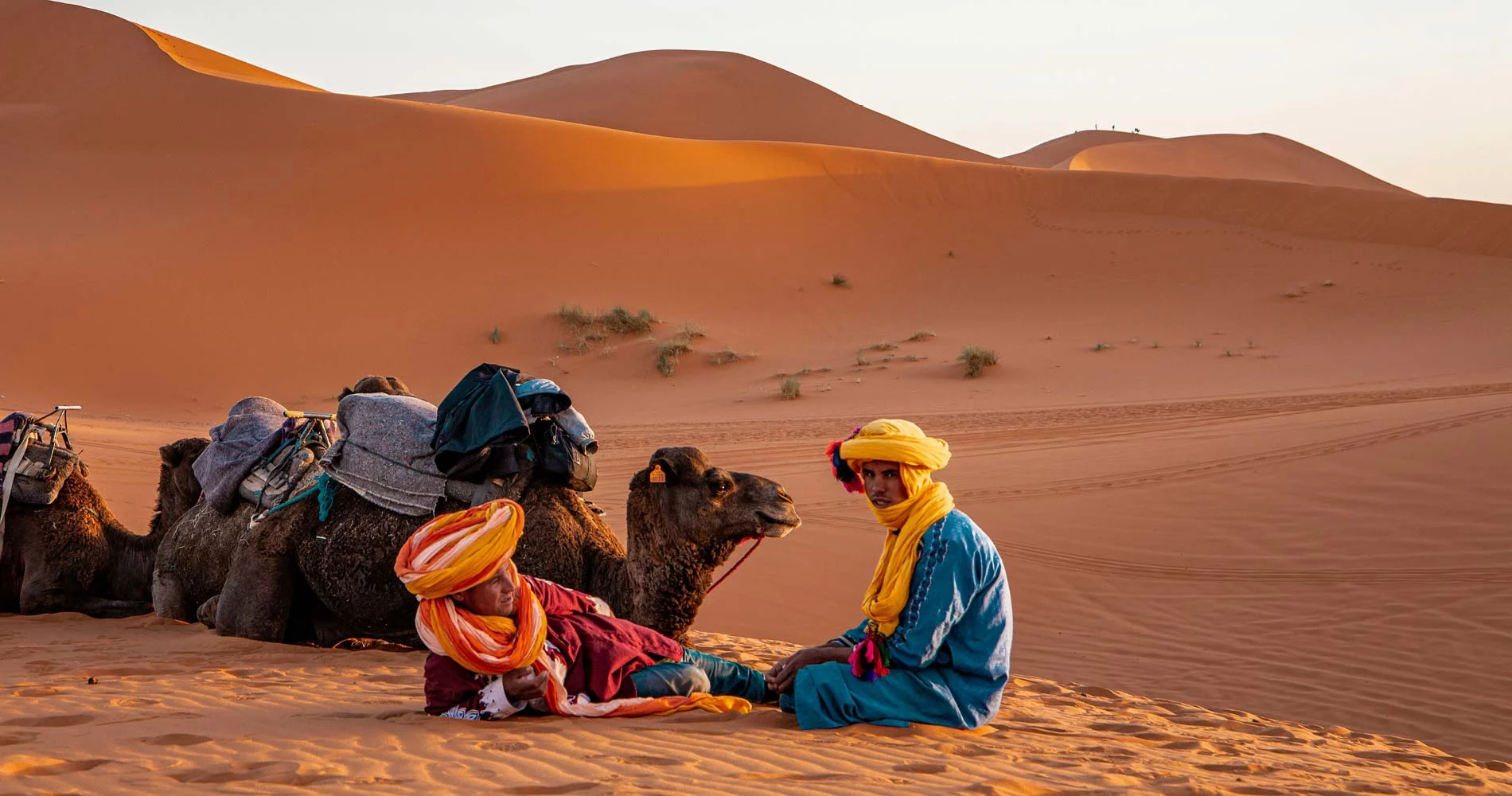
Life on the edge of the desert
The landscapes of southern Morocco tell stories not only of sand, stone and vastness, but also of centuries-old cultures, trade routes and architecture born directly from desert conditions. Many regions along this route still feel like living testimonies of the time when caravans travelled between Marrakesh and sub-Saharan Africa.
The Amazigh – “Free people” of North Africa
The original inhabitants of North Africa are today known as the Amazigh — translated as “free people”. For centuries, they shaped life along the trade routes, in the Atlas Mountains and at the edge of the Sahara. Their culture, language and traditions remain an essential part of southern Morocco today.
Characteristics of Amazigh culture
• Traditionally semi-nomadic way of life
• Deep understanding of climate, water sources and landscapes
• Their own language and writing system (Tamazight)
• Strong community and family structures
• Craftsmanship, music and architecture with regional diversity
Many villages along the route have evolved over centuries, adapting to extreme climatic conditions. Earthen buildings, terraced fields and sophisticated irrigation systems still demonstrate how closely culture and landscape are connected here.
Encountering Amazigh culture offers a different understanding of time, hospitality and community — shaped by simplicity, respect for nature and a remarkable ability to thrive under extreme conditions.
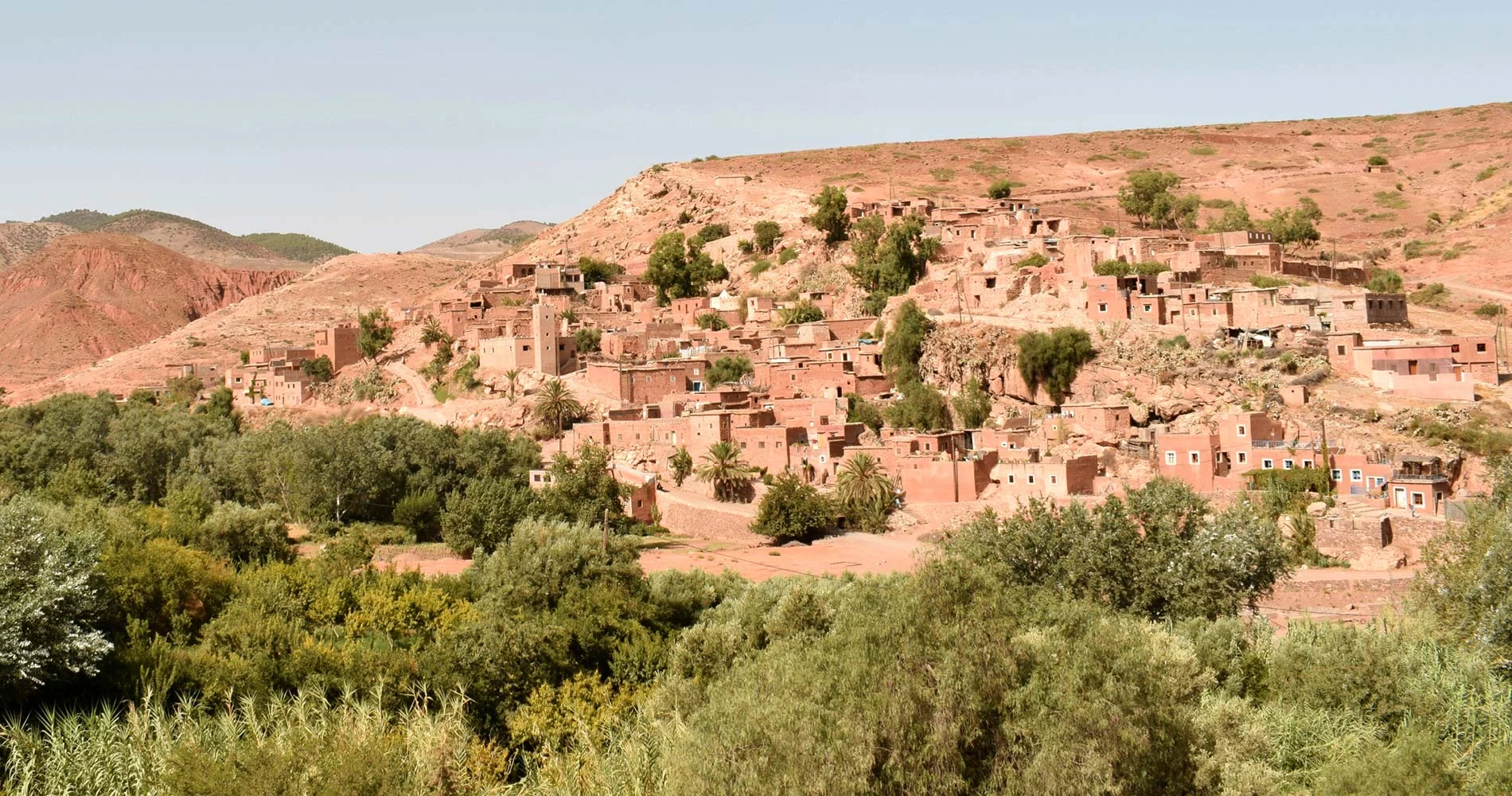
Architecture shaped by the landscape
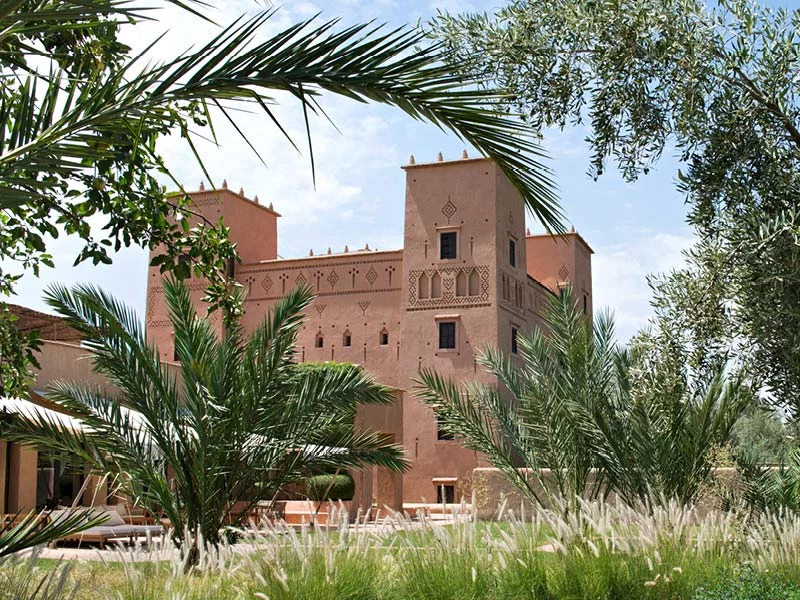
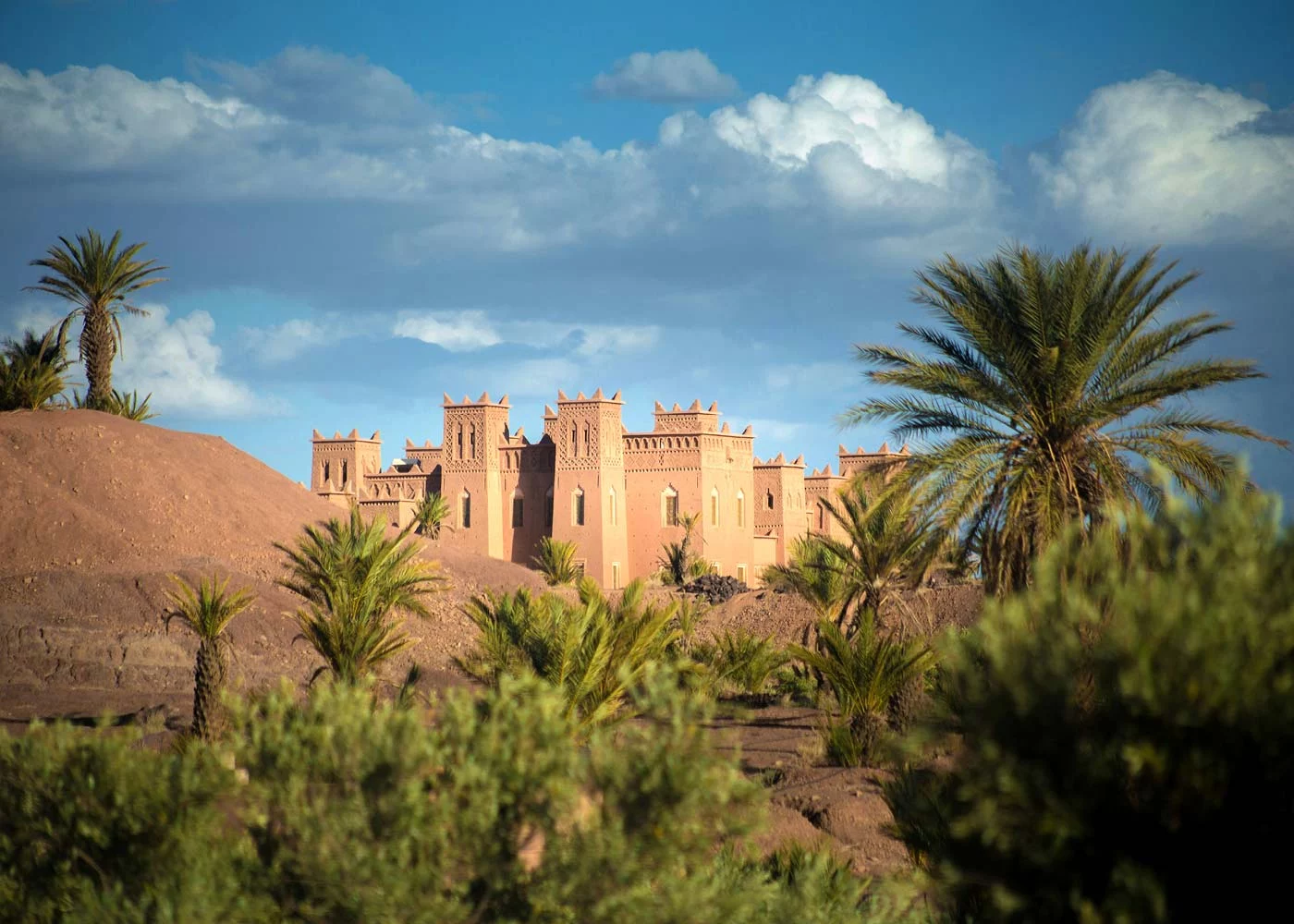
Between the Atlas Mountains, oasis landscapes and the desert, extraordinary earthen architecture emerged over centuries, blending almost seamlessly into the surrounding environment. The typical kasbahs and ksour are now among the most iconic architectural symbols of southern Morocco.
Characteristic features
• Construction using earth, straw and wood in traditional pisé technique
• Natural climate regulation: cool in summer, insulating in winter
• Colours harmonising with the surrounding landscape
• Thick walls protecting against heat, wind and sand
A ksar (plural: ksour) is a fortified village with communal storage areas, towers and residential quarters. Many of these settlements developed along historic caravan routes and served as protected trading and living spaces in a harsh environment.
This architecture feels organic rather than constructed – as though it emerged directly from the earth itself. Light, earth and shadow create an almost surreal atmosphere, especially during sunrise and sunset.
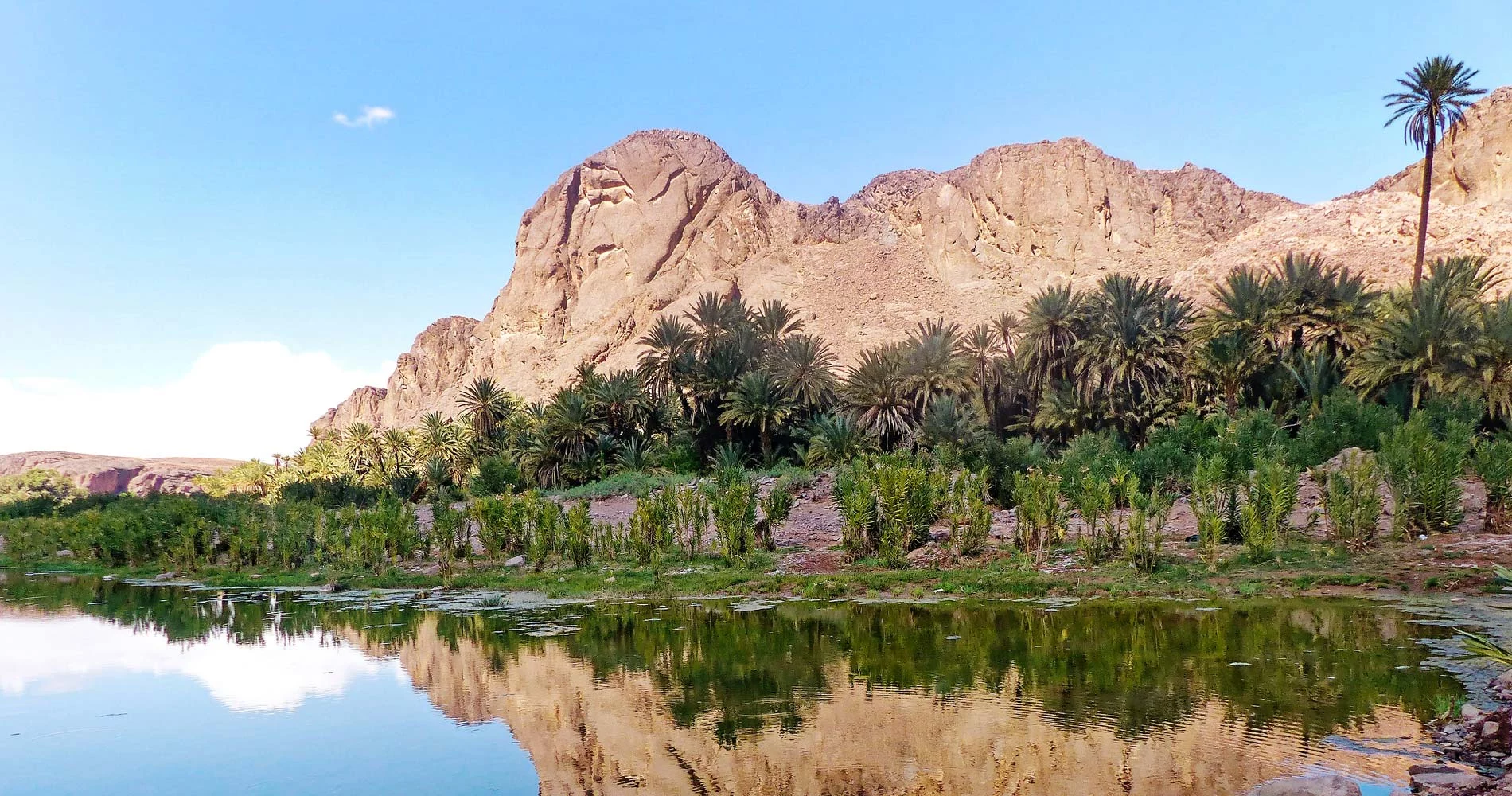
The lifelines of the Sahara
For centuries, southern Morocco formed part of important trans-Saharan trade routes linking Marrakesh with regions south of the Sahara. Caravans transported goods, knowledge and cultural influences across thousands of kilometres through deserts and mountains.
Historical importance of the caravan routes
• Transport of salt, gold, spices and textiles
• Connections between sub-Saharan Africa and Morocco’s imperial cities
• Oases serving as essential places for rest and supplies
• Exchange of cultures, music, architecture and traditions
Even today, many travel routes follow the paths once used by caravans. Palm oases, ancient granaries and fortified villages recall a time when water, shade and orientation determined survival and trade.
Travelling through these landscapes means moving not only geographically through Morocco, but also through the history of North Africa — along routes that have connected people, cultures and stories for centuries.

For centuries, trans-Saharan trade networks connected the Maghreb with regions south of the Sahara. Oases and fortified settlements were important places for supplies, trade and protection. Even today, earthen buildings, palm groves and historic routes are reminders that the desert was never merely a space of separation, but also one of connection.
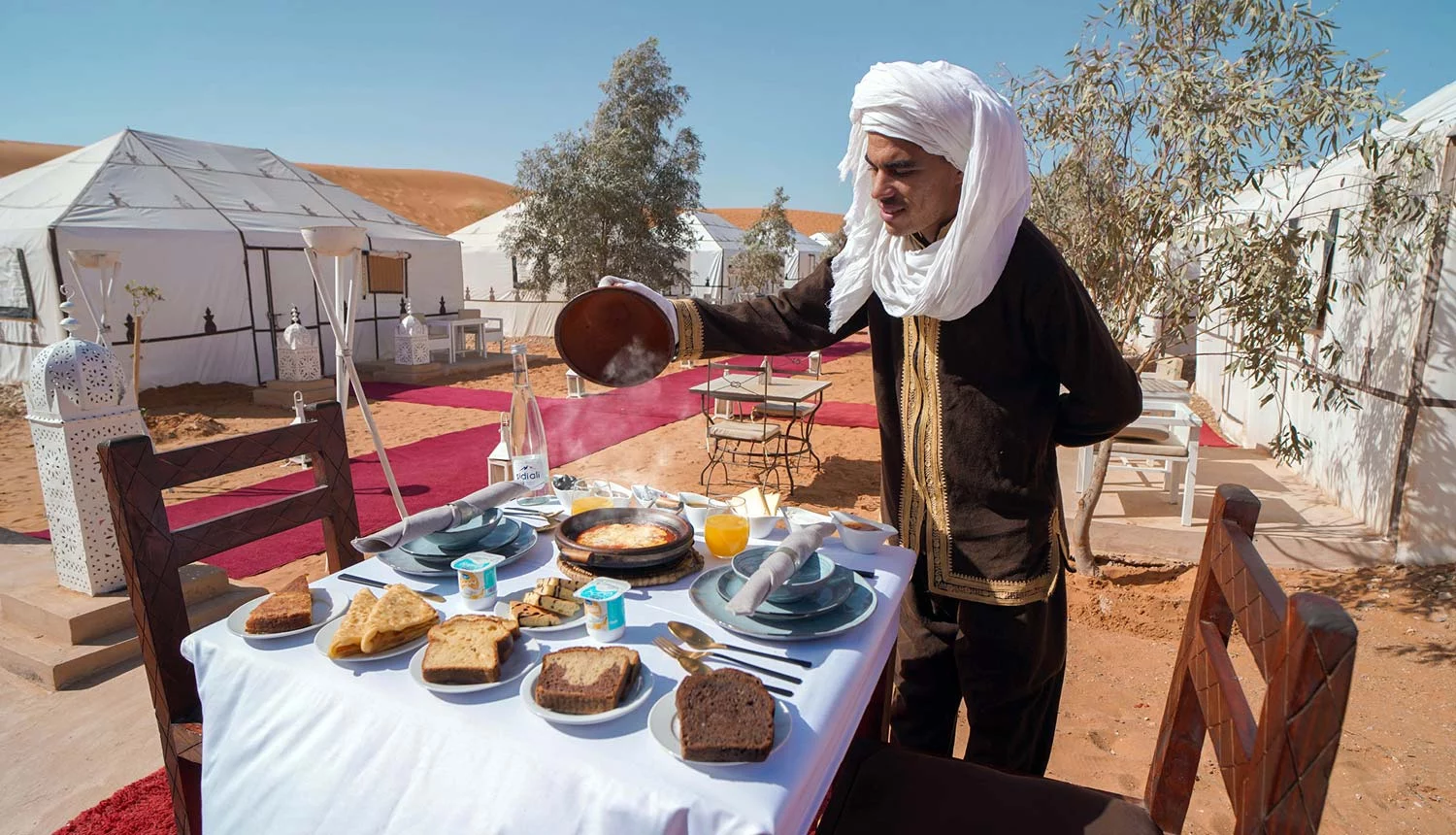
The cuisine also changes along the route. Marrakesh combines traditional Moroccan cooking with a modern dining scene. In the south, dates, olives, vegetables, spices and freshly baked bread accompany the oasis and desert landscapes. At camp, above all, the location becomes part of the experience: dinner after sunset, clear air and the quiet of the desert. In Agafay, the stony landscape provides the final culinary contrast of the journey.

Enhance your desert tour with selected Private Pur Life Experiences – tailored to your interests and individually integrated into your itinerary.
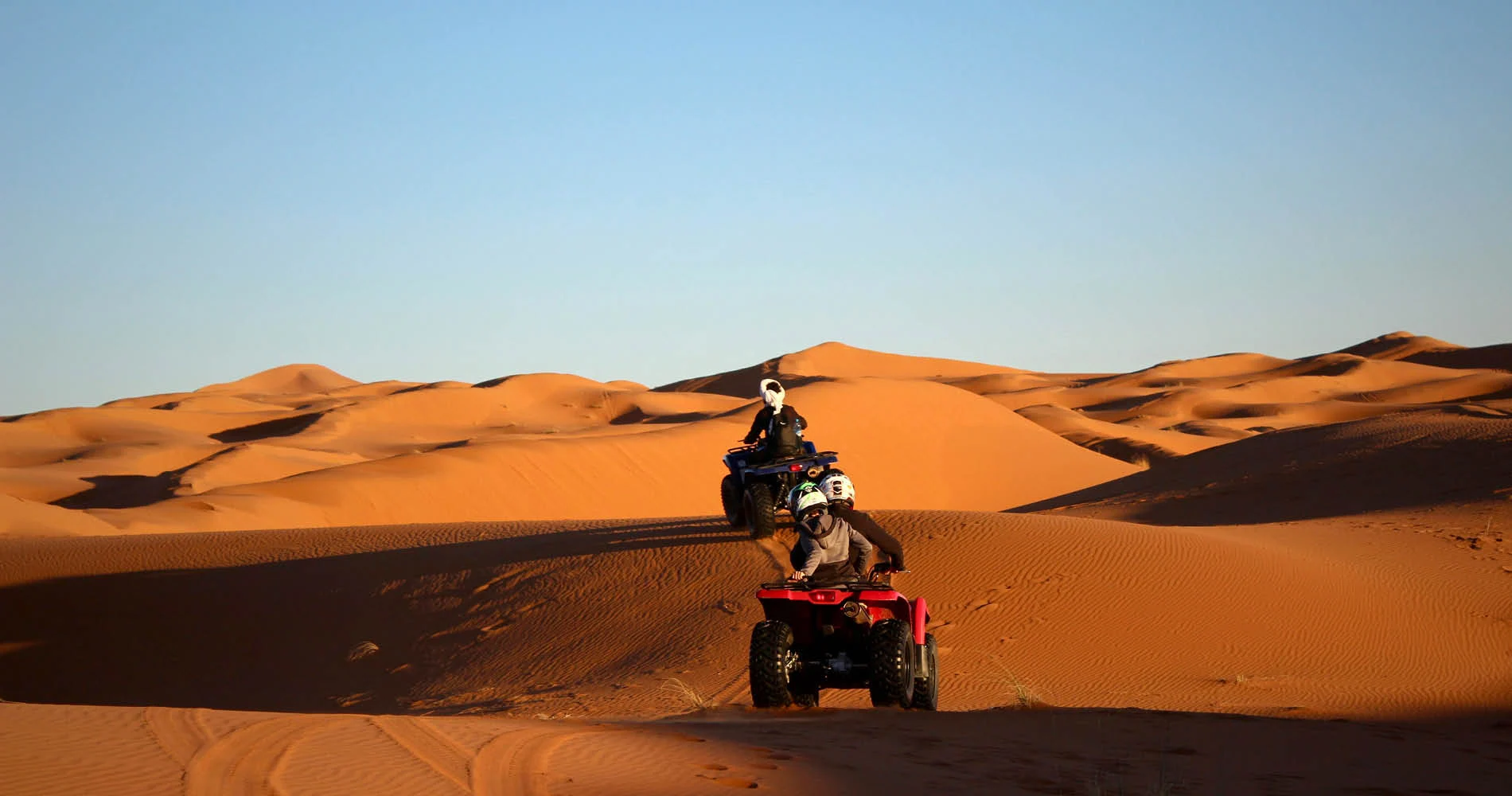
In the Sahara
- A second night at Erg Chebbi – to enjoy the sunrise without the pressure of departure
- 4×4 dune drive with an experienced driver
- Buggy and quad biking through the dunes
- Sandboarding along the ridges of Erg Chebbi
- Visit the palm groves with their ancient irrigation systems (Khettara)
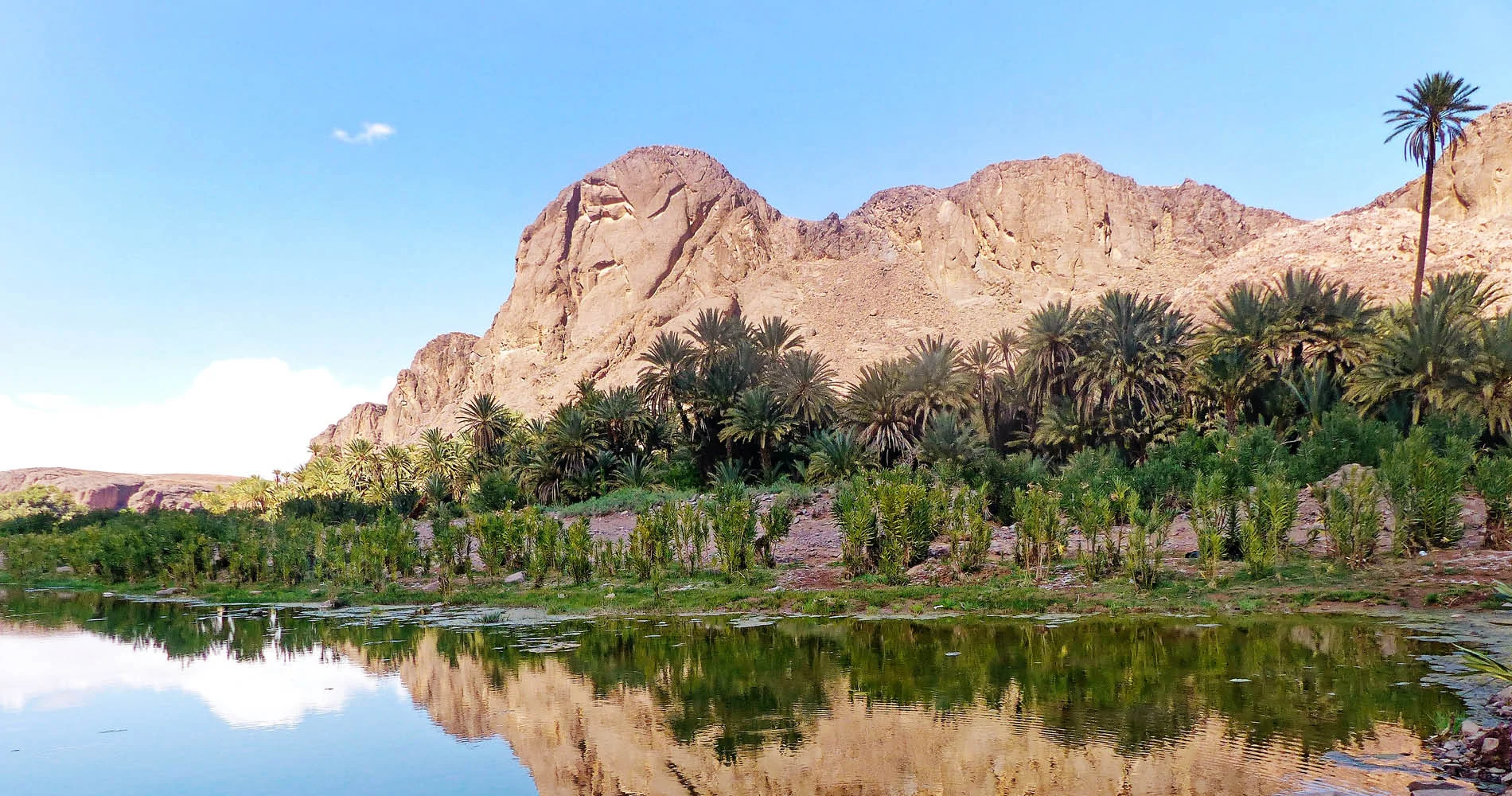
Along the Route
- Return via N’Kob and the Draa Valley instead of taking the same route back
- Half-day excursion to the Fint Oasis near Ouarzazate
- Full-day excursion to the Valley of Roses (Vallée des Roses), including a visit to a distillery in Kelaat M’Gouna
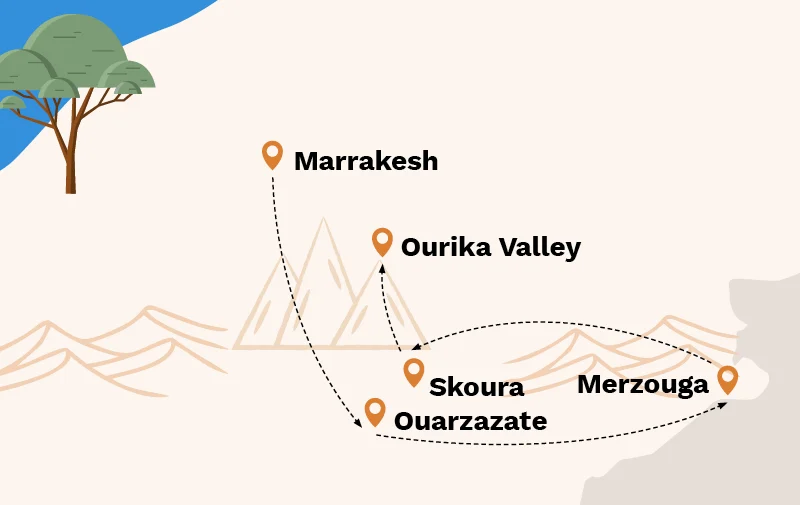
- Detour to Skoura, home to around forty earthen kasbahs surrounded by date palms
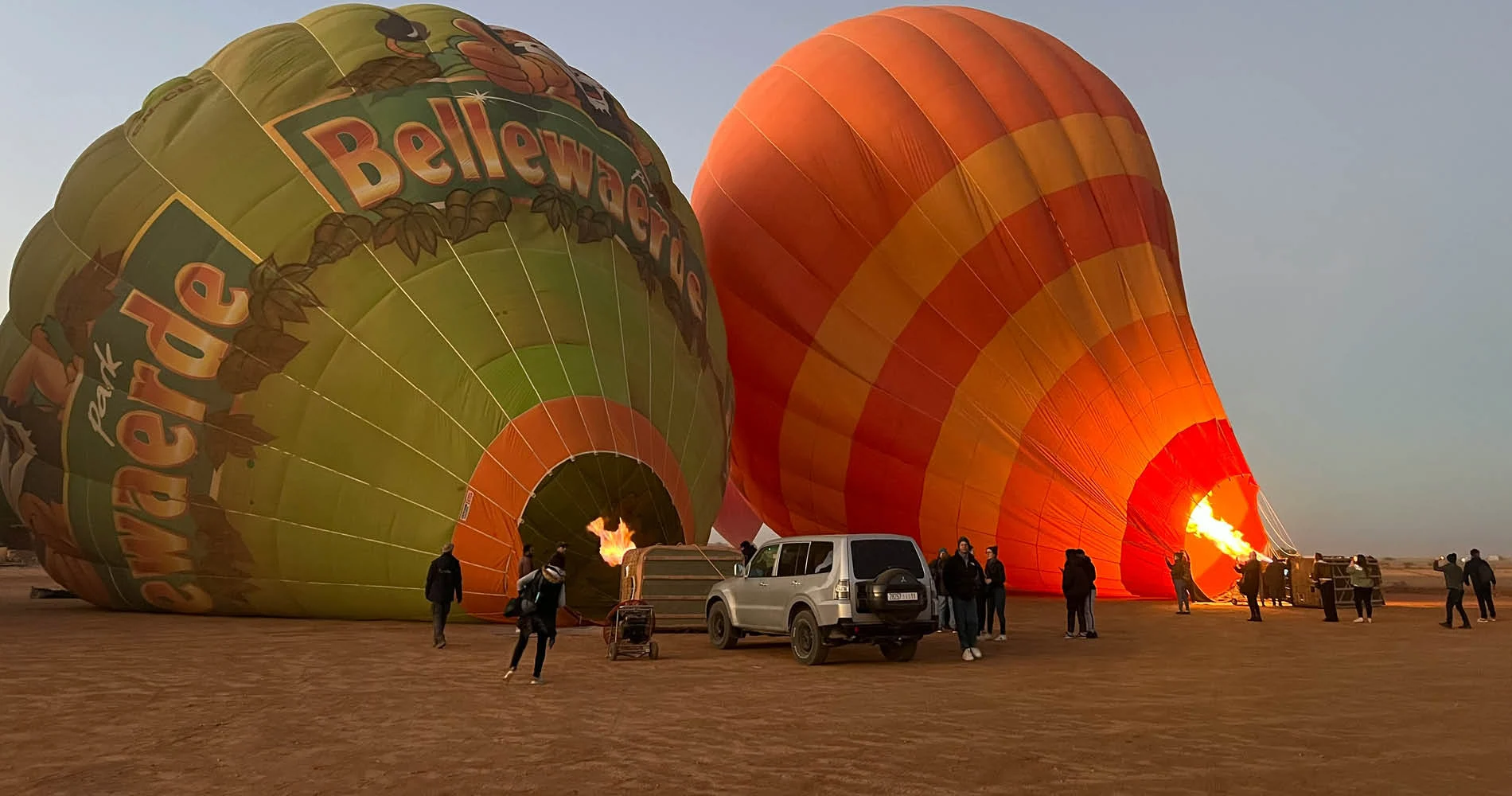
Around Marrakesh and Agafay
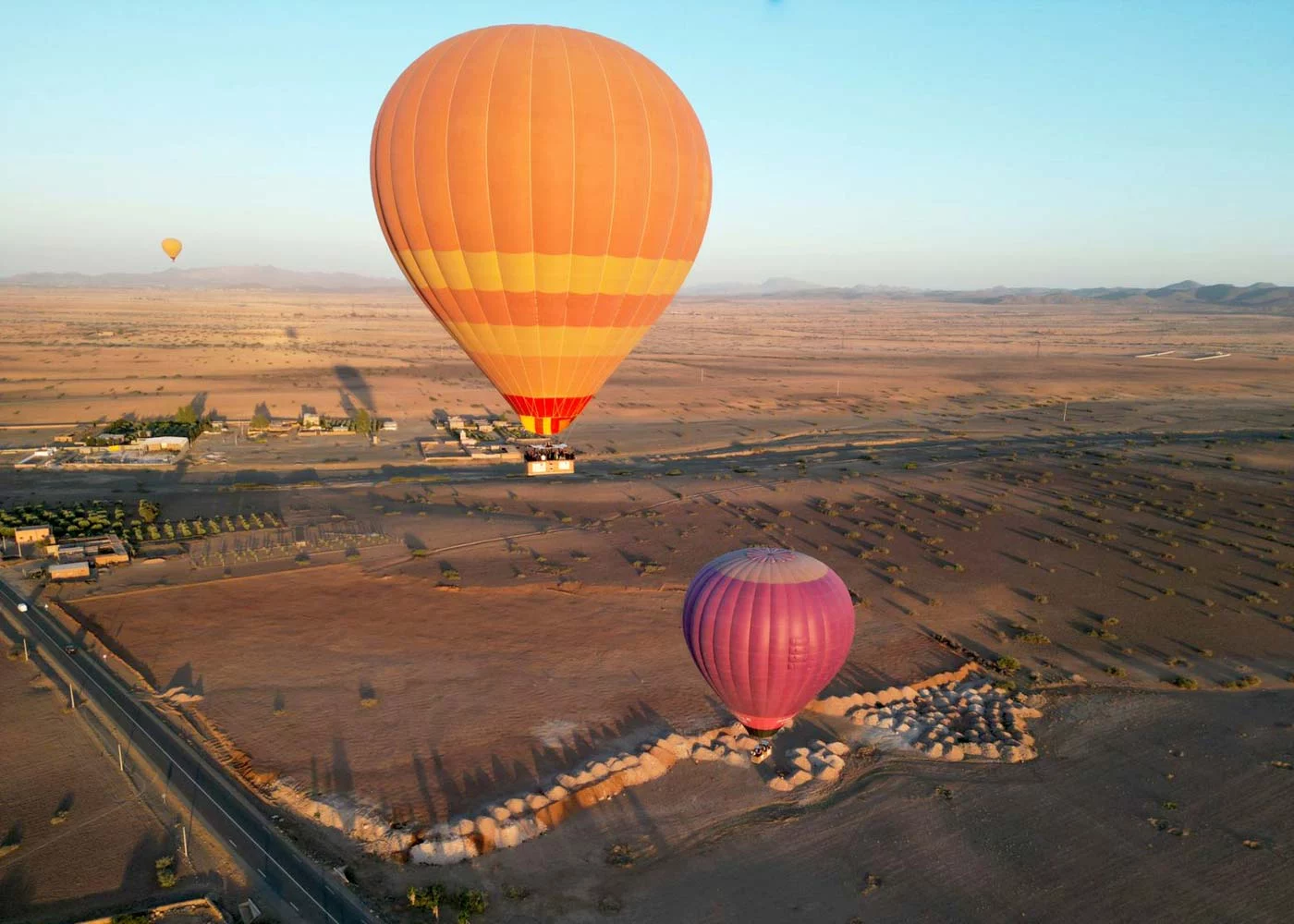
- Hot-air balloon ride over the Agafay Stone Desert at sunrise
- Hiking tour in the High Atlas with lunch with an Amazigh family
- Half-day excursion to the Ourika Valley and the Setti-Fatma Waterfalls
- Craft workshop in Marrakesh: calligraphy, pottery, Zellij or carpet weaving
- Paragliding from the Aguergour launch site above Lake Lalla Takerkoust
The journey is bookable from 7 nights and can be individually tailored in terms of duration, route and experiences.
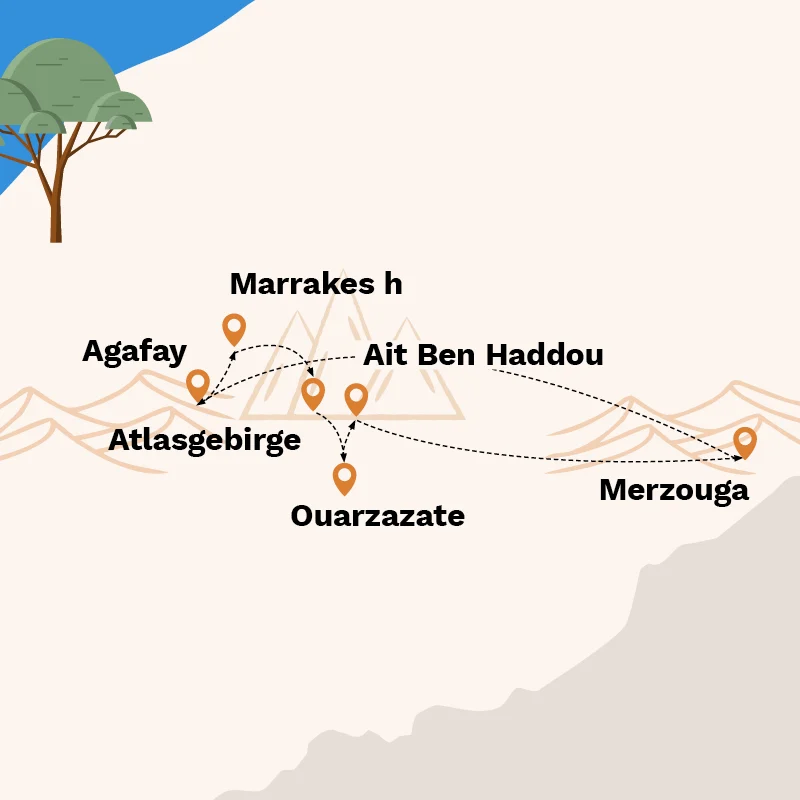
Marrakesh – Ouarzazate – Merzouga – Agafay – Marrakesh
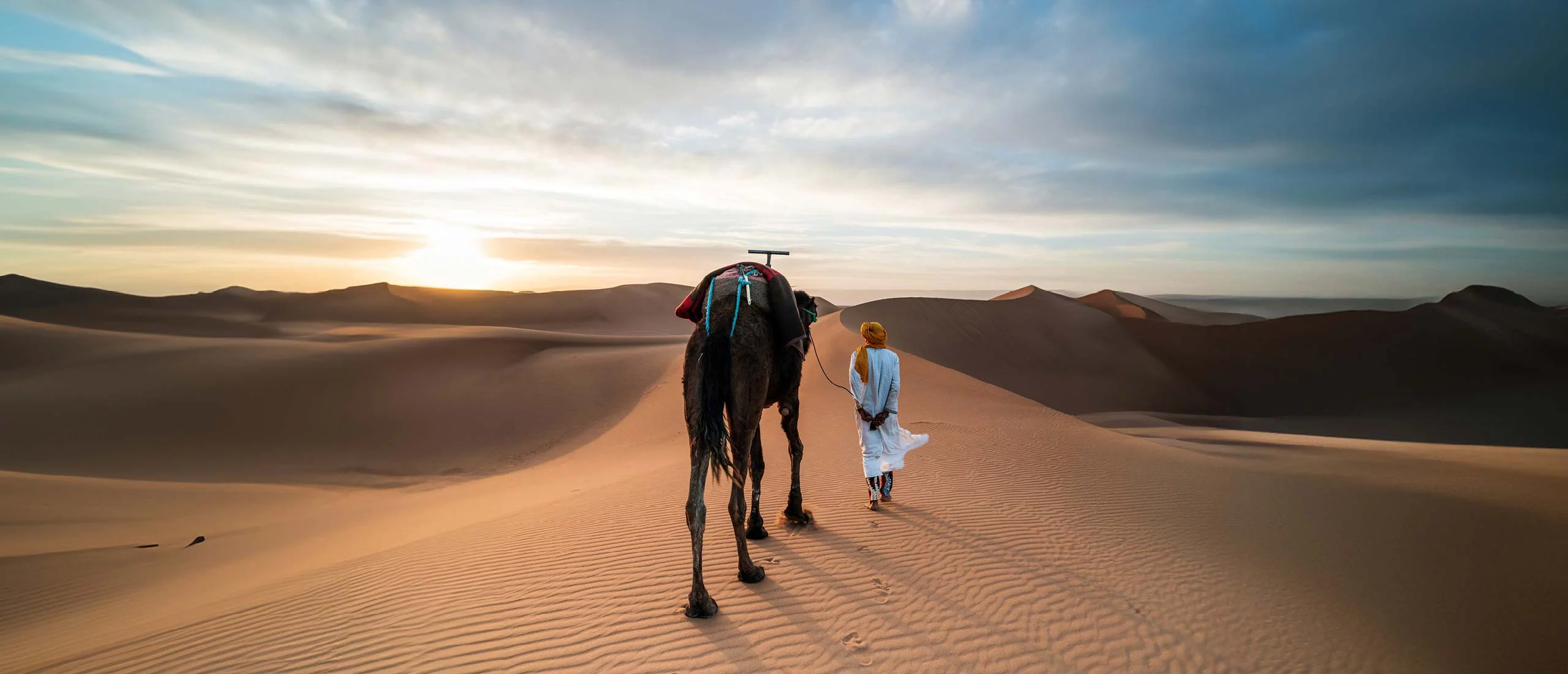
The desert camp at Erg Chebbi is reached over the final few kilometres by 4×4 vehicle or camel.
Temperatures in the desert drop significantly after sunset – pack warm clothing for the evenings.
All transfers are by private, air-conditioned vehicle with a private chauffeur – no fixed group schedule.
Most stages take between 3 and 5 hours; the route from Ouarzazate to Merzouga and the return journey via the Draa Valley are longer.
Passport with sufficient validity; visa requirements and recommended vaccinations should be checked depending on nationality.
Frequently asked questions
The journey can be booked from seven nights. We tailor the exact distribution of nights to your travel style, desired experiences and preferred pace.
The route includes several longer stages. The journey towards Merzouga in particular takes time. However, you travel privately with a private chauffeur, can plan individual stops and experience the changing landscape as part of the journey.
Yes, provided age, interests and pace of travel are taken into account. For families, we plan longer stages particularly carefully and can integrate additional stops or nights in the south.
March to May and September to November are generally particularly pleasant. In high summer, the Sahara can become extremely hot; in winter, nights can be significantly cooler.
We select the camp to suit your desired level of comfort and the individual offer. Facilities and locations vary from camp to camp, so the exact category booked is described transparently in your travel proposal.
Erg Chebbi is a large sand-dune landscape on the edge of the Sahara. Agafay is a dry landscape of stone and hills near Marrakesh. This journey deliberately includes both – as two completely different desert experiences.
Yes. Duration, overnight locations, return route and additional Private Pur Life Experiences are individually arranged. The route defines the character of the journey; your specific itinerary is created in your personal travel proposal.
For a first taste, yes: a camel ride at sunset, dinner at the camp, Gnaoua music by the fire, a star-filled sky and sunrise all fit into one night. However, a second night takes the pressure off the morning departure and allows you to enjoy a dune drive, buggy ride or sandboarding at a more relaxed pace. It is the most frequently booked extension of this journey.
Destinations, accommodation, inspiration
Destinations
accommodation
inspiration
Marrakesh
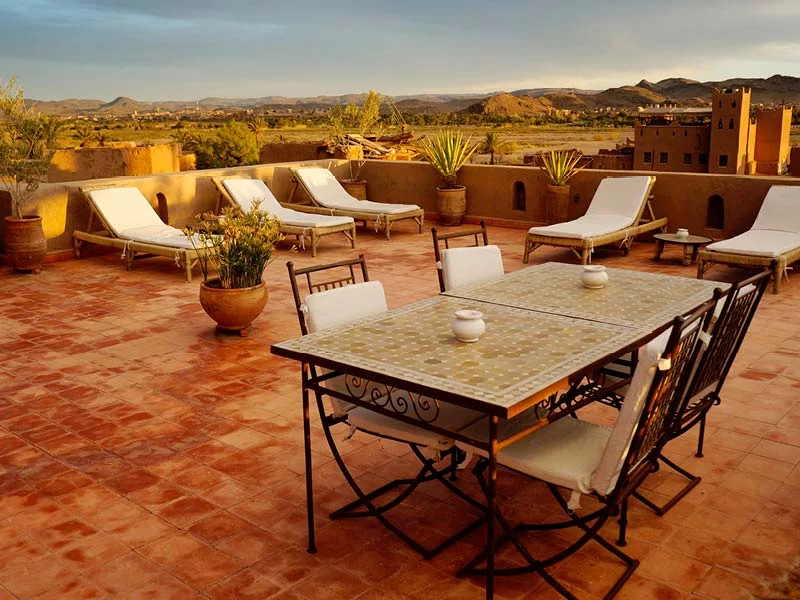
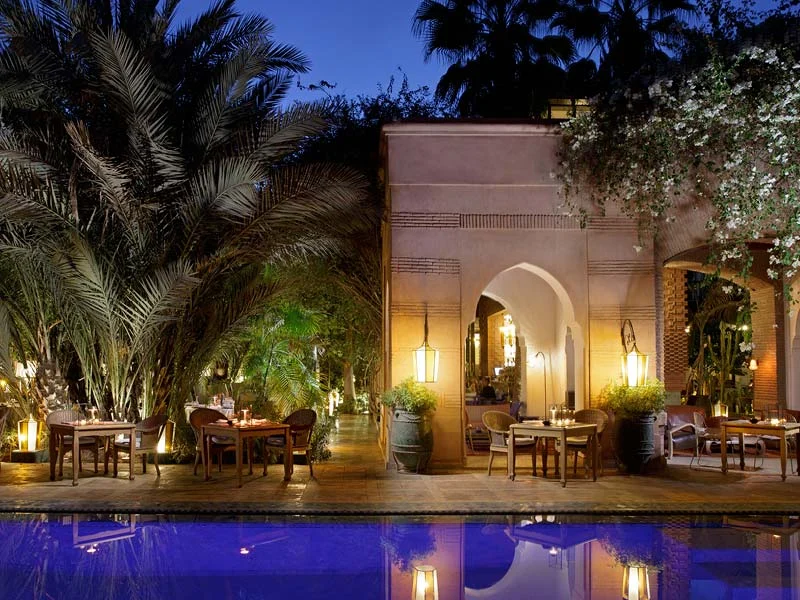
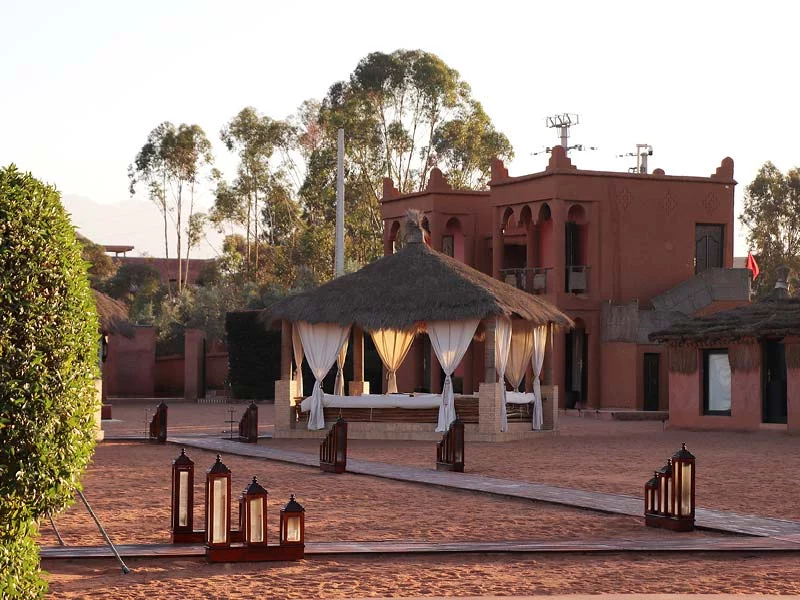
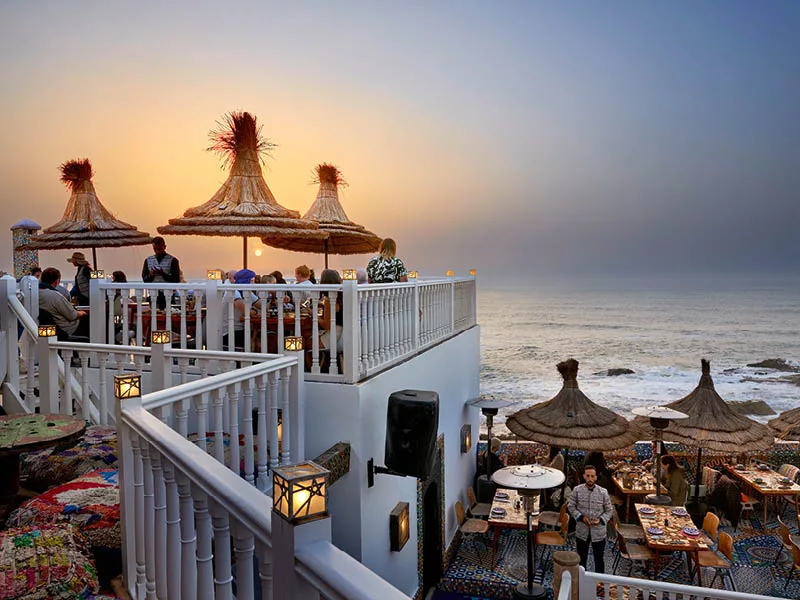
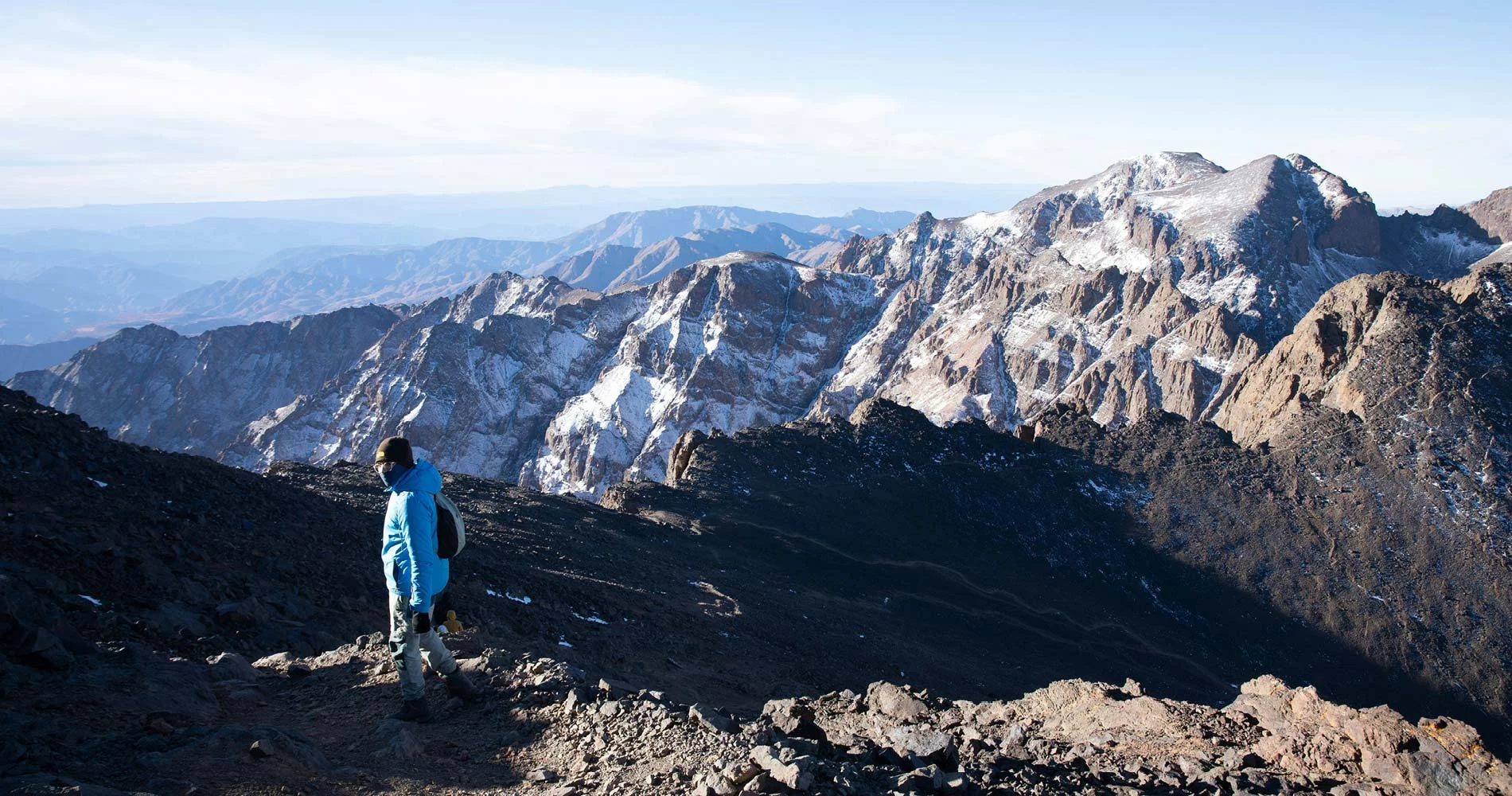
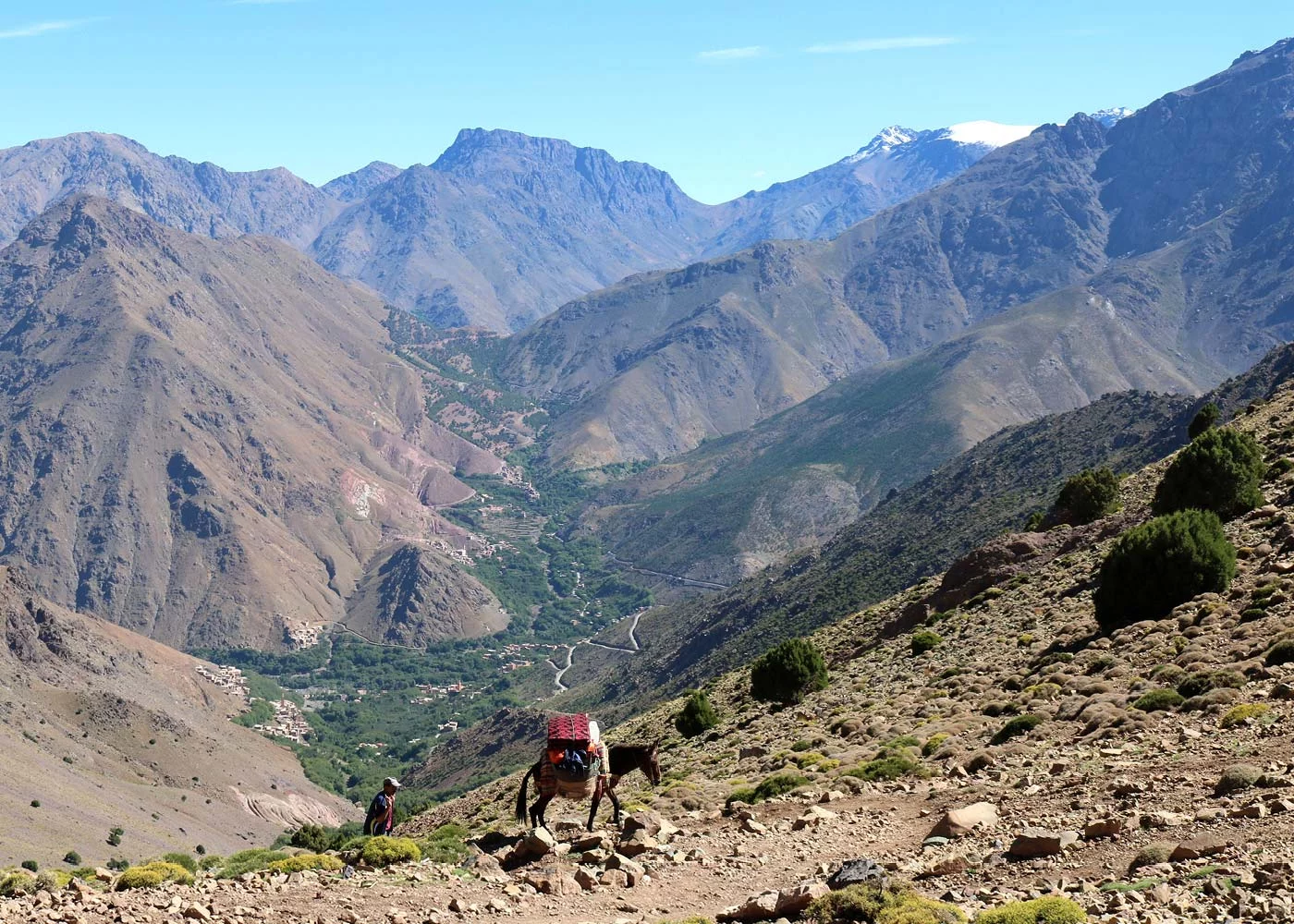
Your private guide will accompany you to one of the most beautiful trekking villages in the Atlas Mountains: Ait Souka. From here you will enjoy breathtaking views of Jebel Toubkal (4,167 m), the highest mountain in North Africa. During the hike you will reach altitudes of around 2,000 metres while passing through picturesque Berber villages. The highlight of the day is lunch with a local Berber family.
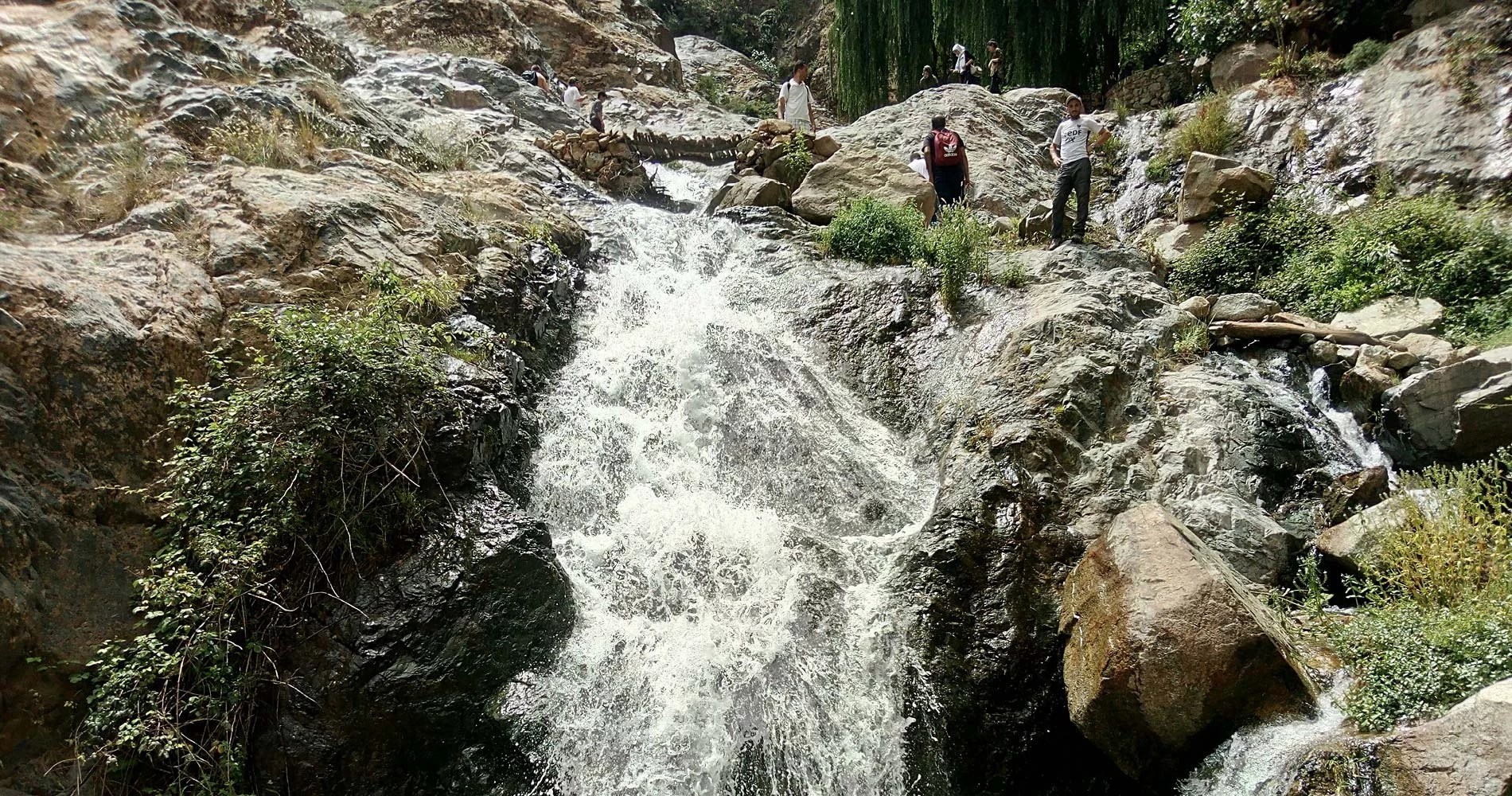
The Ouzoud Waterfalls are among the most spectacular natural sights in Morocco. The water cascades down 110 metres in three impressive tiers, surrounded by olive groves and reddish rock cliffs. The area is ideal for hiking and exploring. Highlights include a visit to the Imi n'Ifri natural cave with its red stalactites, watching the local macaque monkeys, swimming opportunities and optional boat rides. Travel time from Marrakesh is approximately three hours.
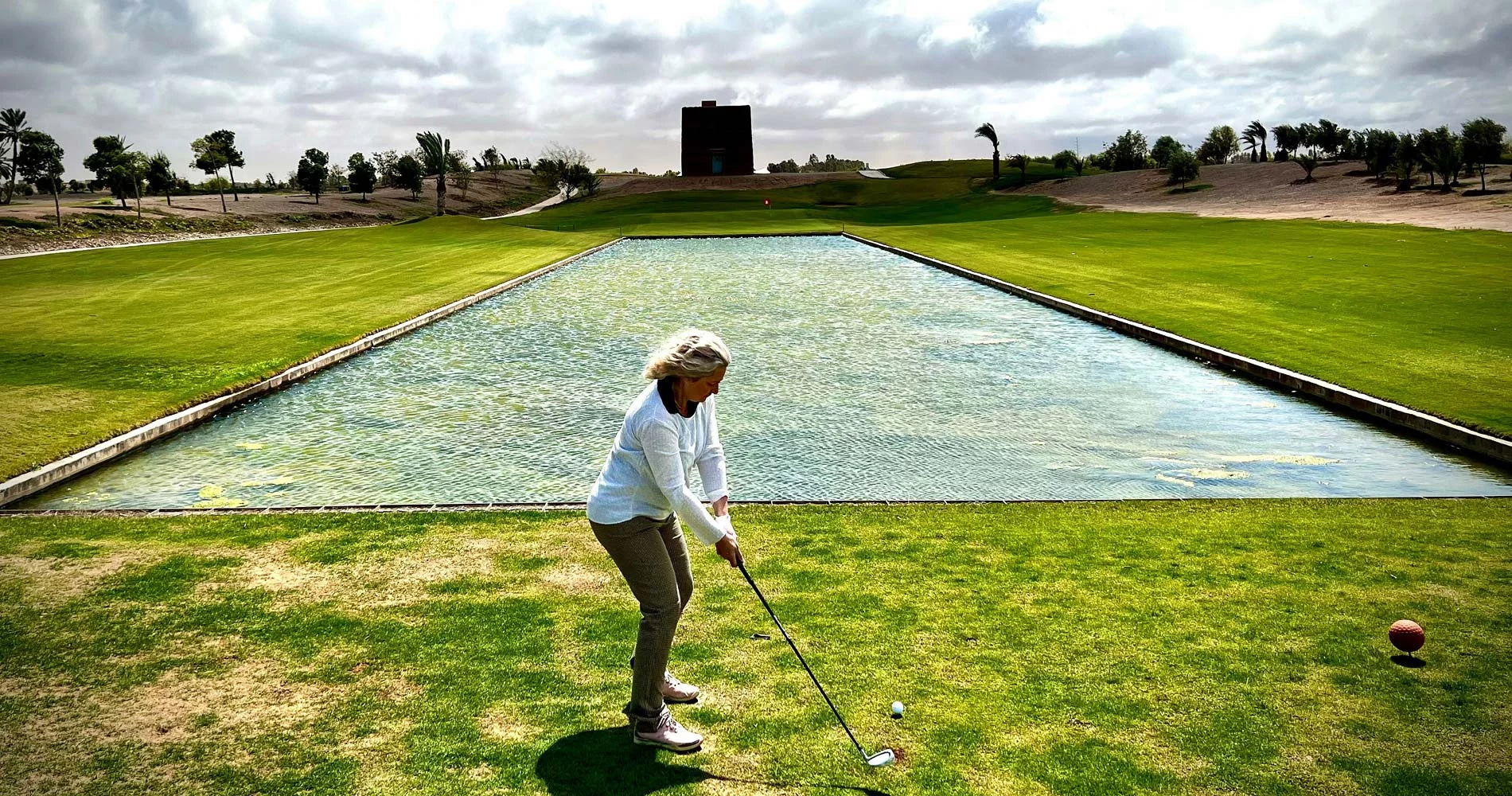
Golfing in Marrakesh is easy and spectacular. The city offers an excellent selection of courses, including the historic Royal Golf Marrakesh (27 holes), Palmeraie Golf (27 holes), the impressive Amelkis Golf Club (27 holes) and Samanah Golf Club (18 holes). Play between palm trees with breathtaking views of the High Atlas Mountains and desert landscapes.
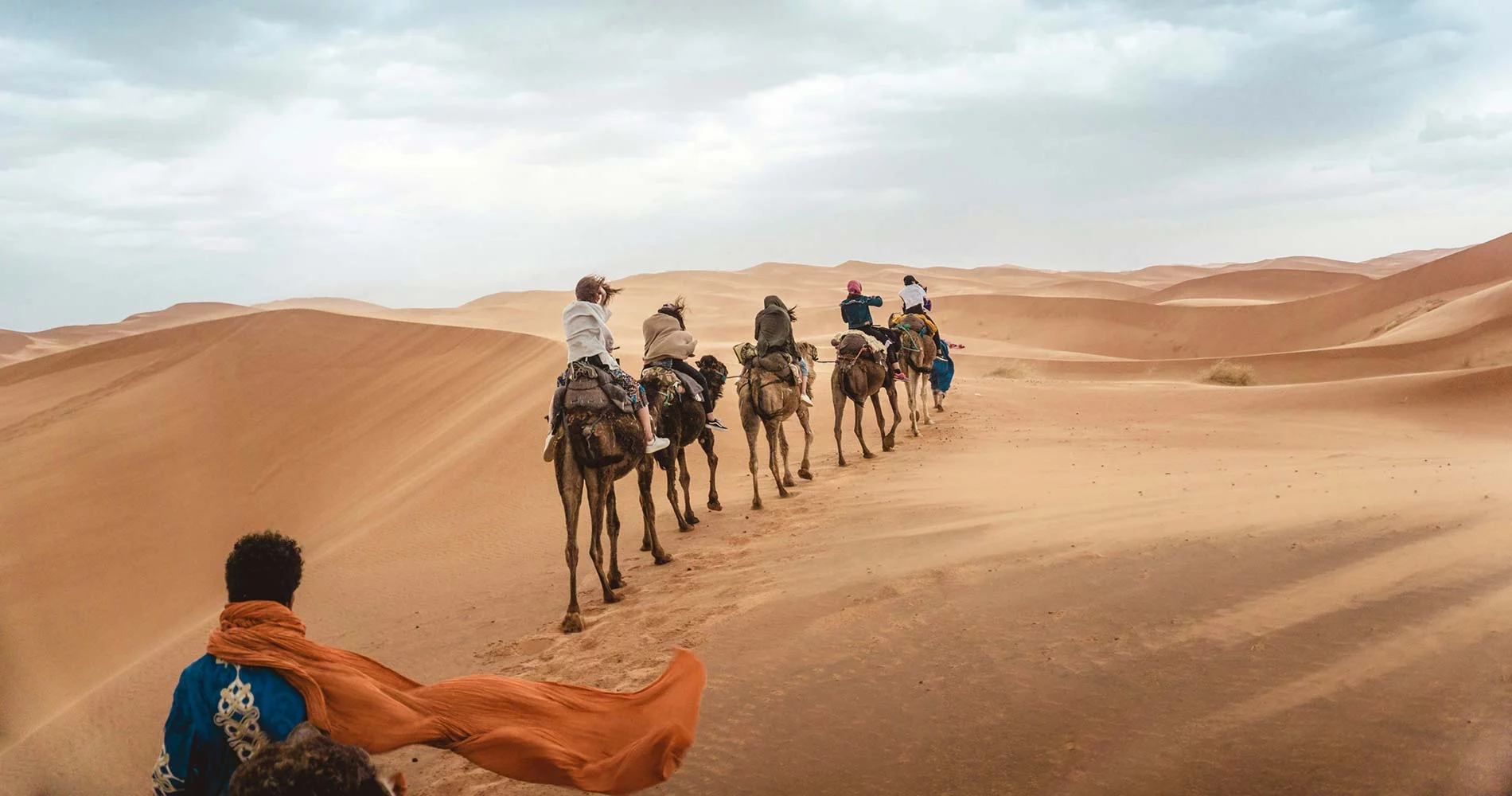
Riding a camel or dromedary is one of Morocco's most traditional and charming ways to explore the landscape. Your guide will take you on a half-day or full-day excursion off the usual tourist paths to discover hidden places and authentic encounters with local communities.
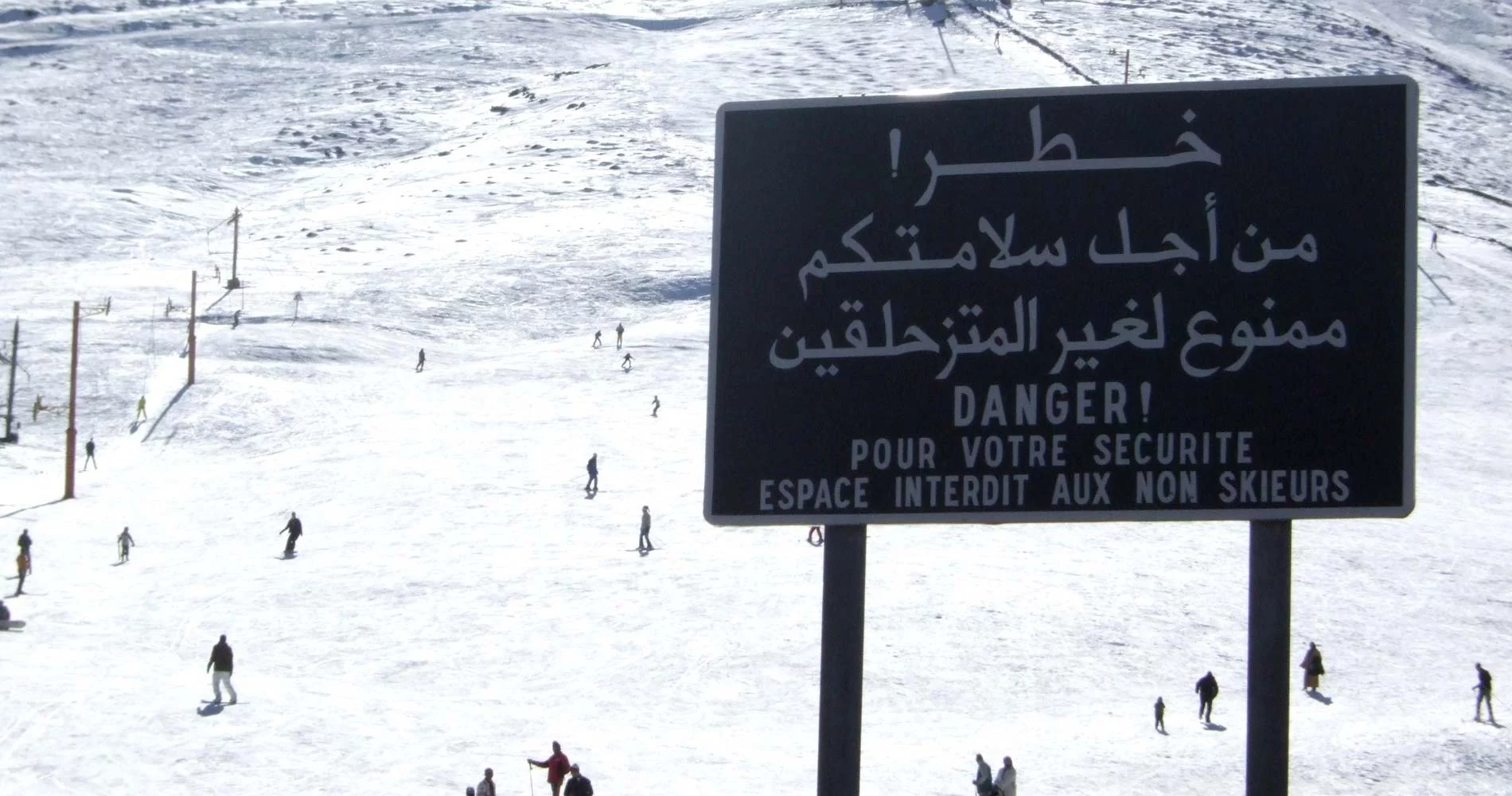
Skiing with views of the Sahara desert? It is possible in Oukaimeden, located about 75 km from Marrakesh. From December to April, ski slopes between 2,500 and 3,200 metres altitude offer a unique winter sports experience. Spend the day skiing in the mountains and return in the evening to Marrakesh's vibrant nightlife.
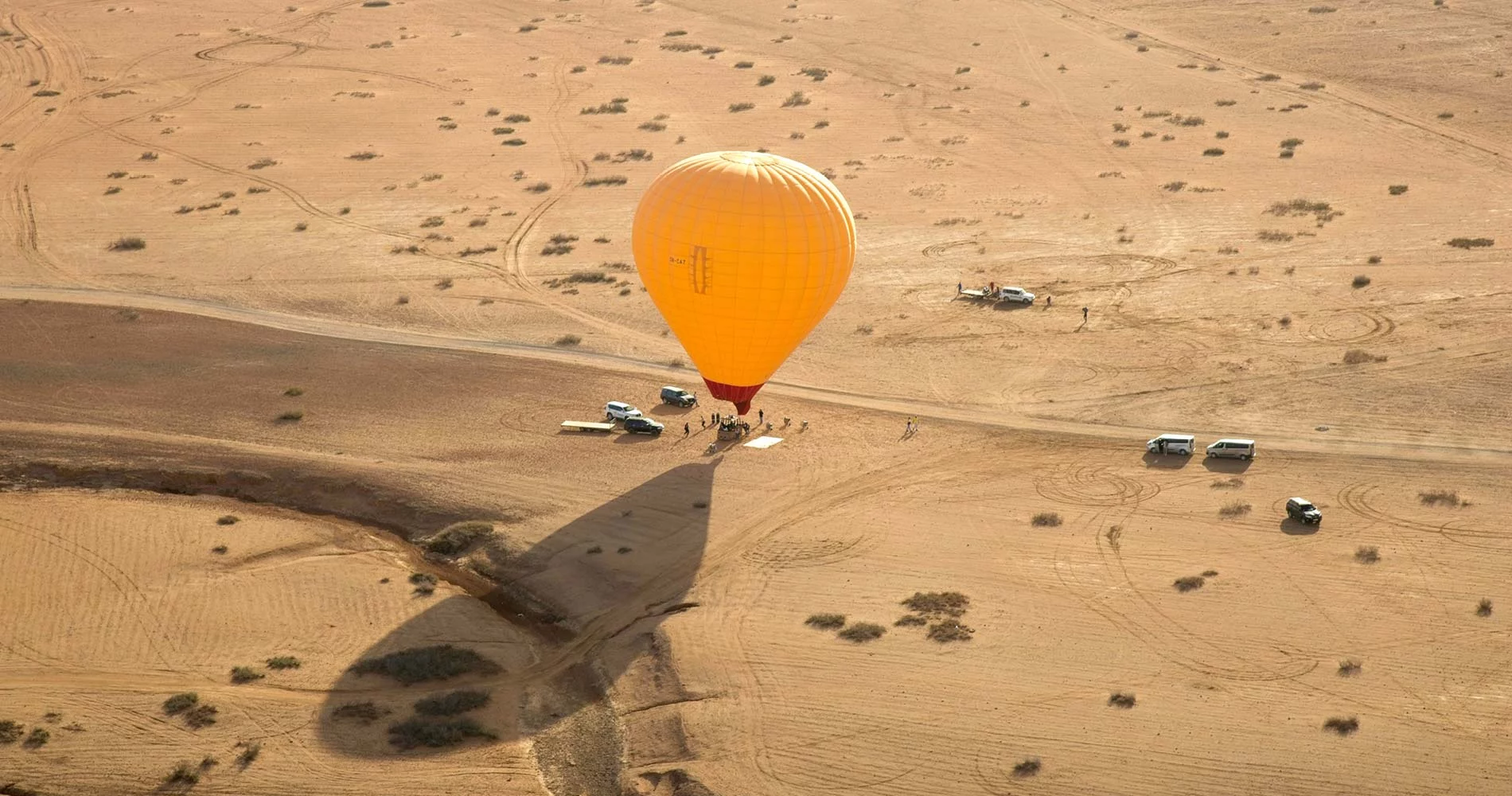
A must for adventurers and curious travellers: a hot air balloon flight over the imperial city. From the sky, watch the colourful cityscape of Marrakesh fade into vast desert landscapes and the peaks of the Atlas Mountains. A truly breathtaking experience.
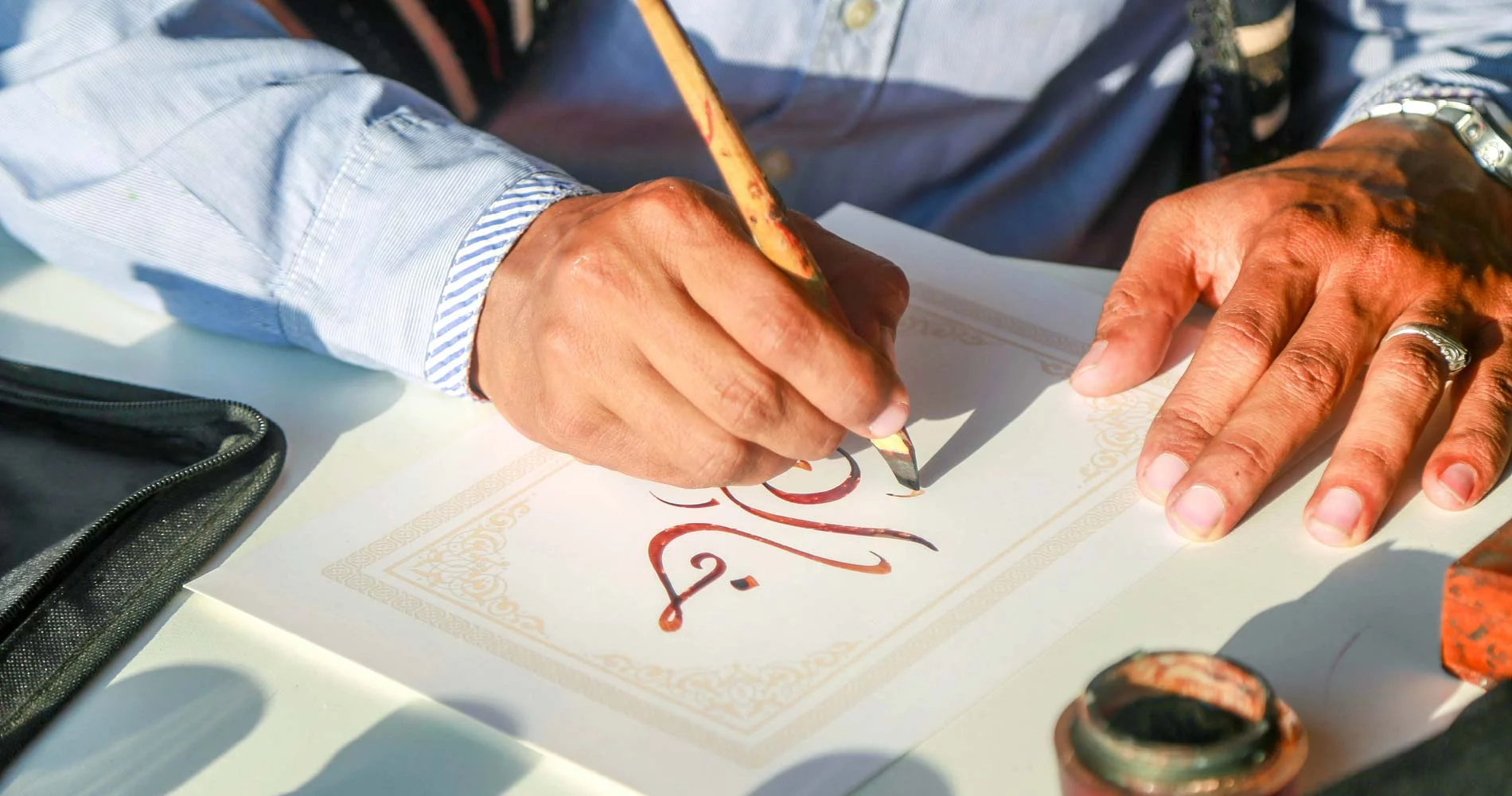
Discover the beauty of Arabic craftsmanship during a creative workshop lasting two to five hours. Choose from experiences such as Arabic calligraphy, pottery, mosaic art, wood carving, jewellery design, basket weaving, brass work, embroidery, leather craft or Berber carpet weaving, and gain insight into Morocco's rich artisan traditions.
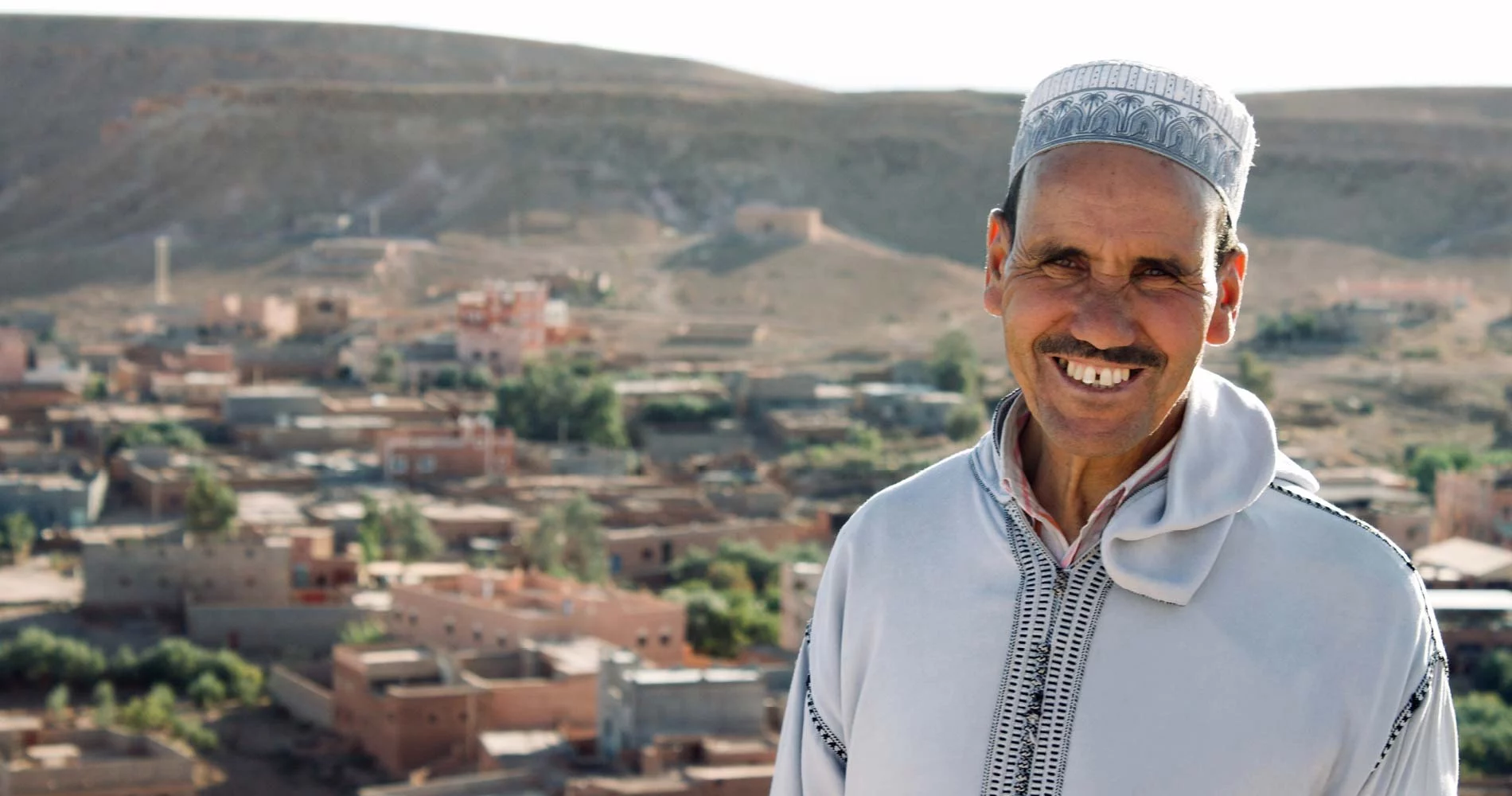
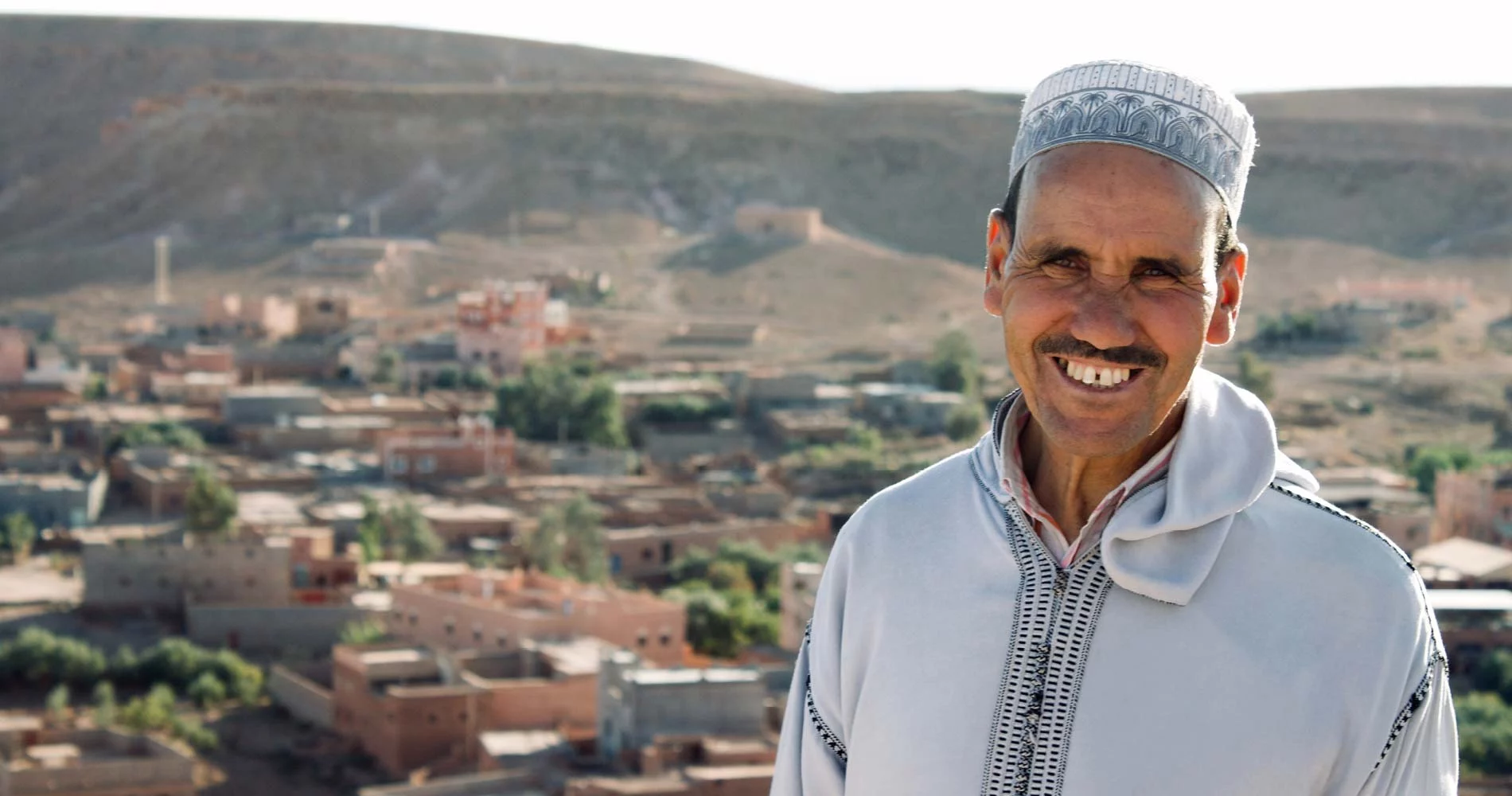
Encounters with local people are often the most memorable moments of any journey. Your private guide will open doors usually closed to travellers. Share a meal in the home of a Berber family and experience the warmth and generosity of Moroccan hospitality.
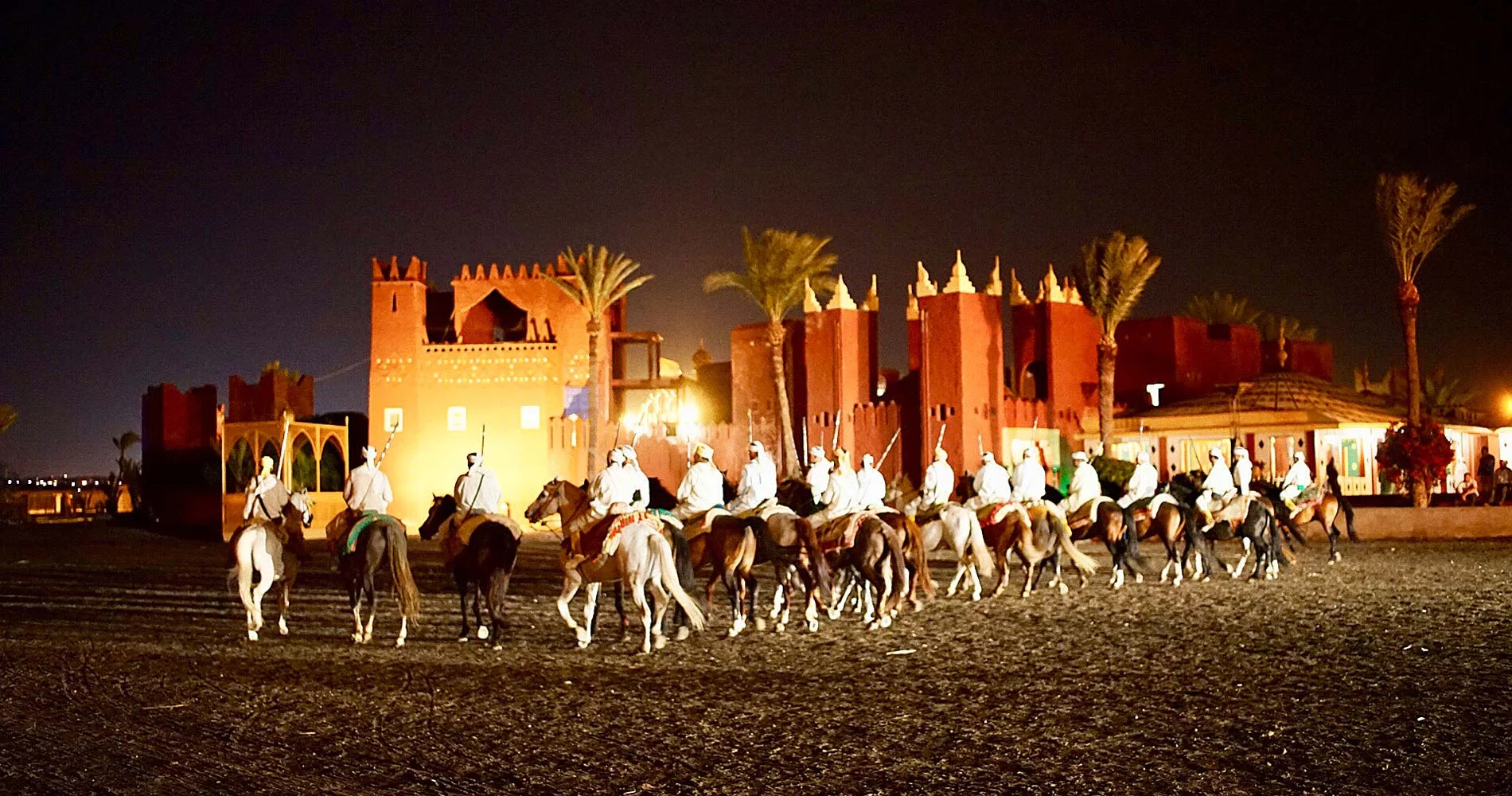
Experience Moroccan culture in a magical One Thousand and One Nights setting. In a traditional Berber tent you will enjoy an opulent dinner accompanied by a spectacular show featuring belly dancers, acrobats, horse riders, fireworks and traditional Moroccan music. A memorable evening of entertainment and hospitality.
Ouarzazate
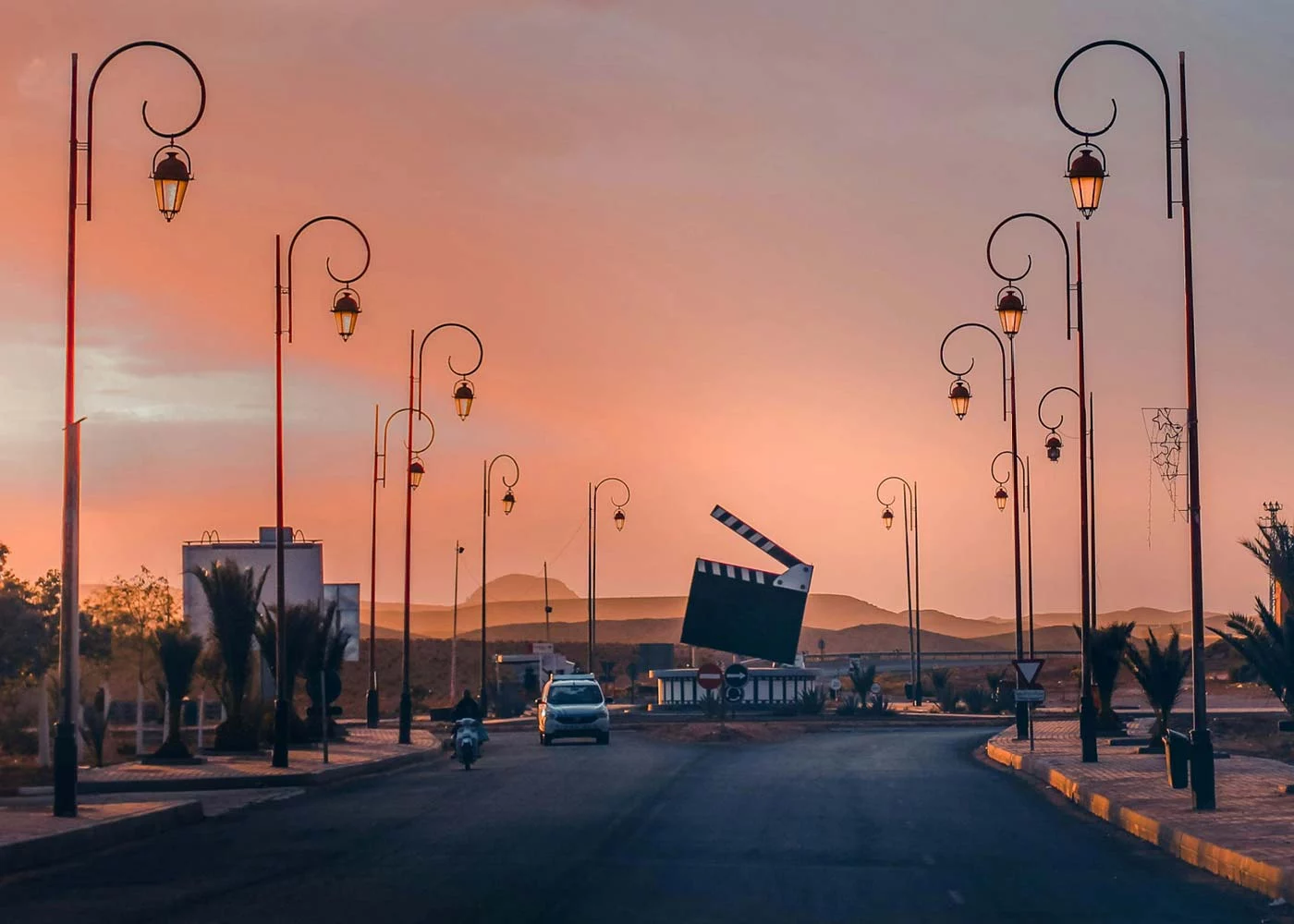
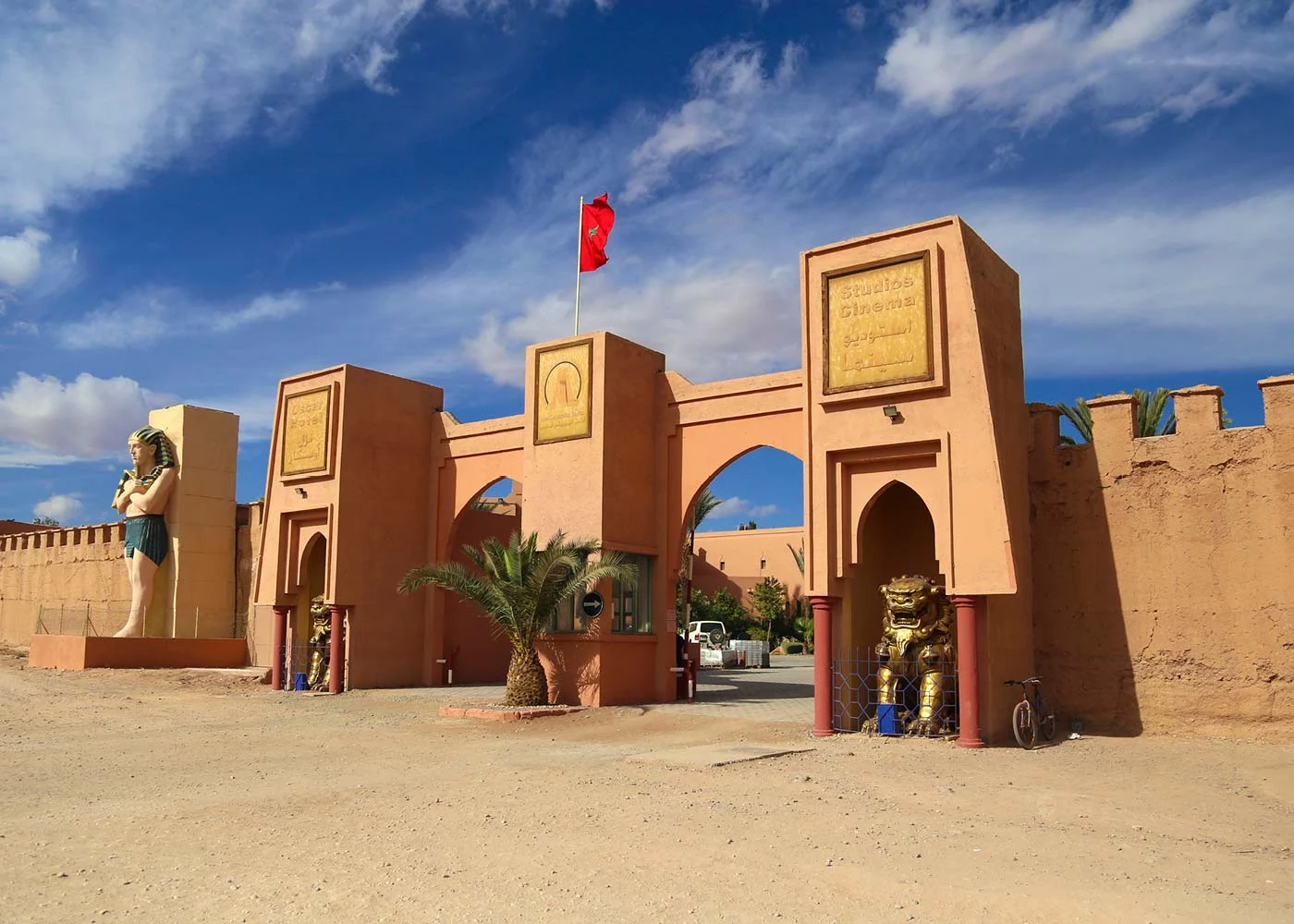
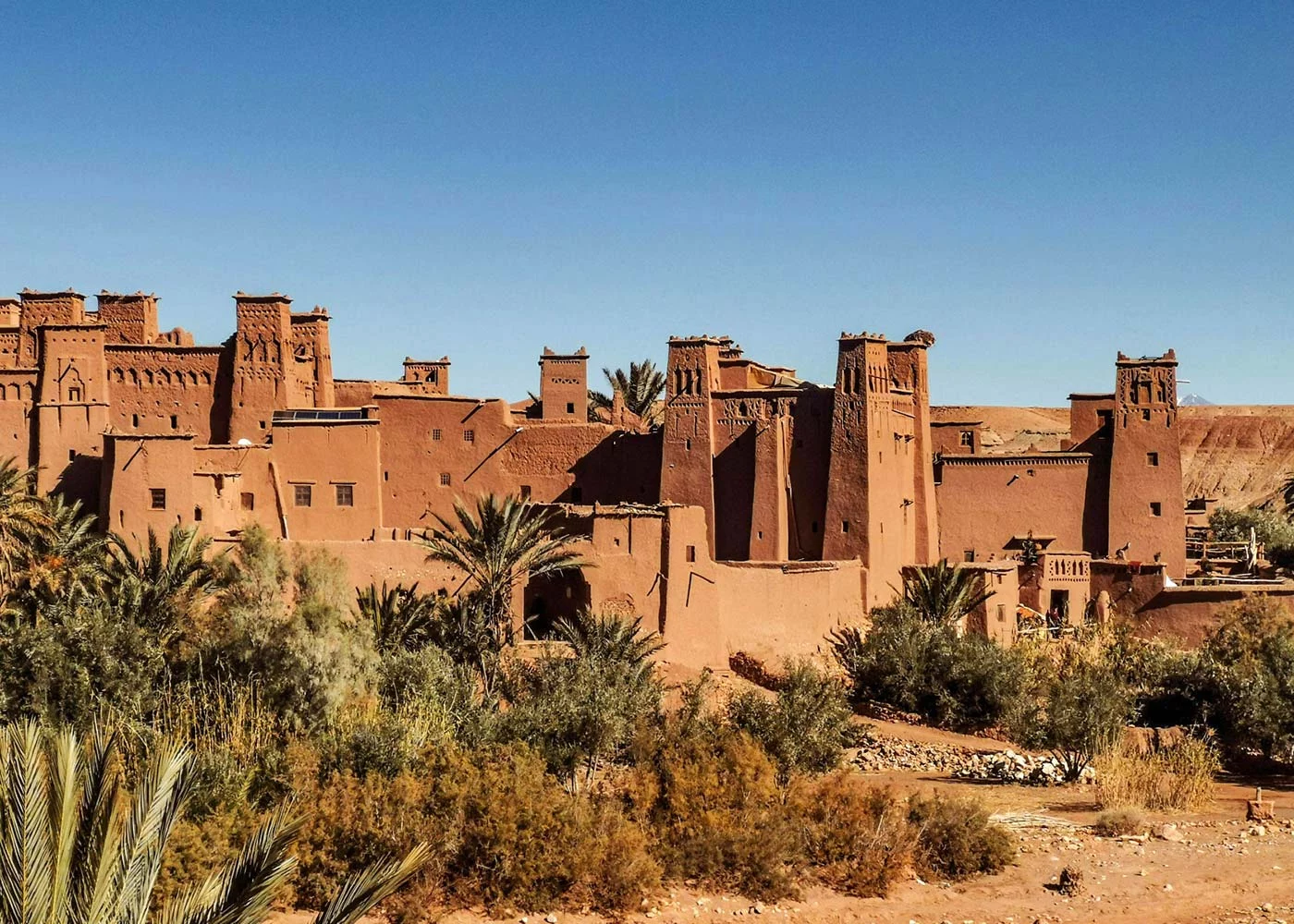
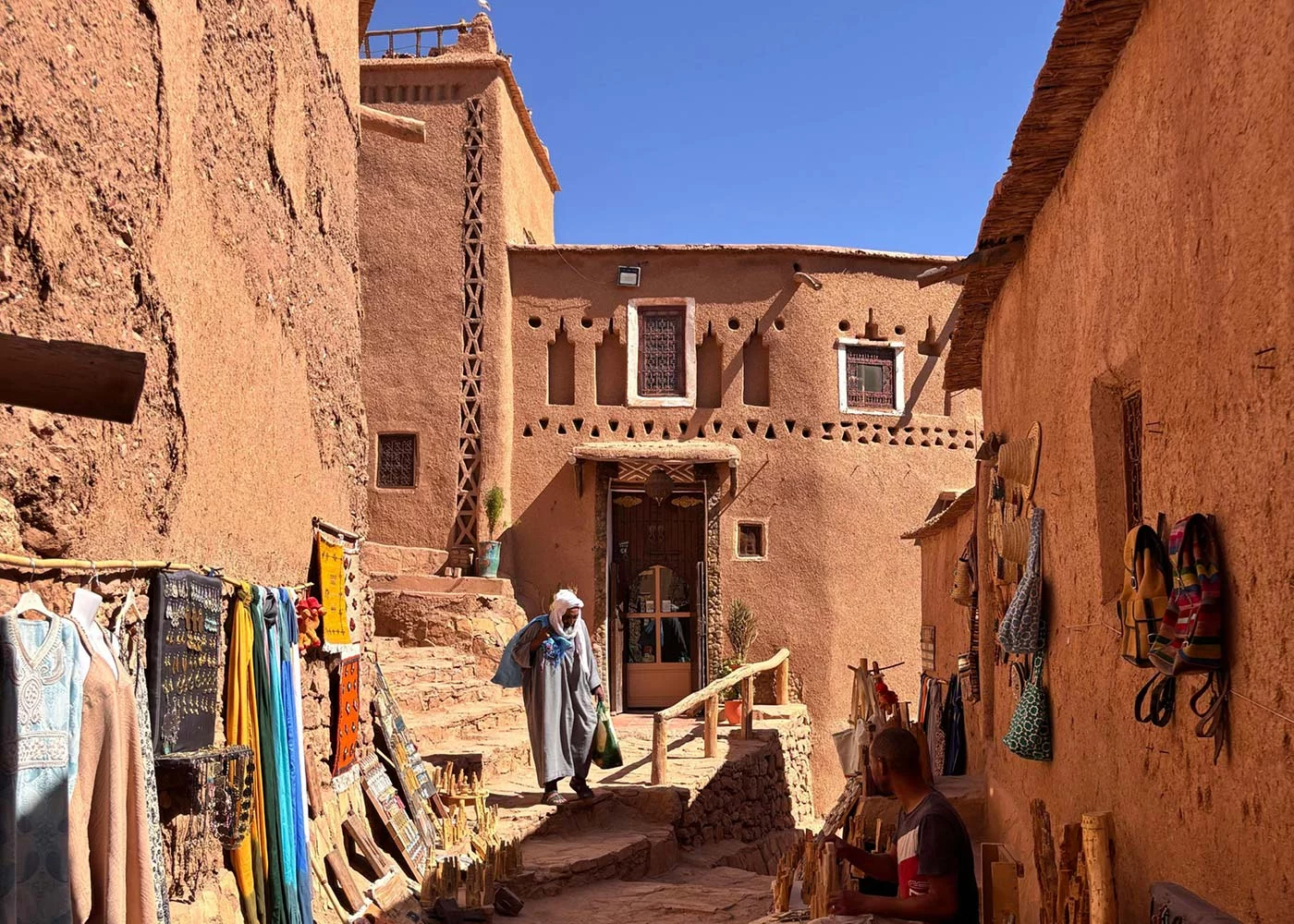
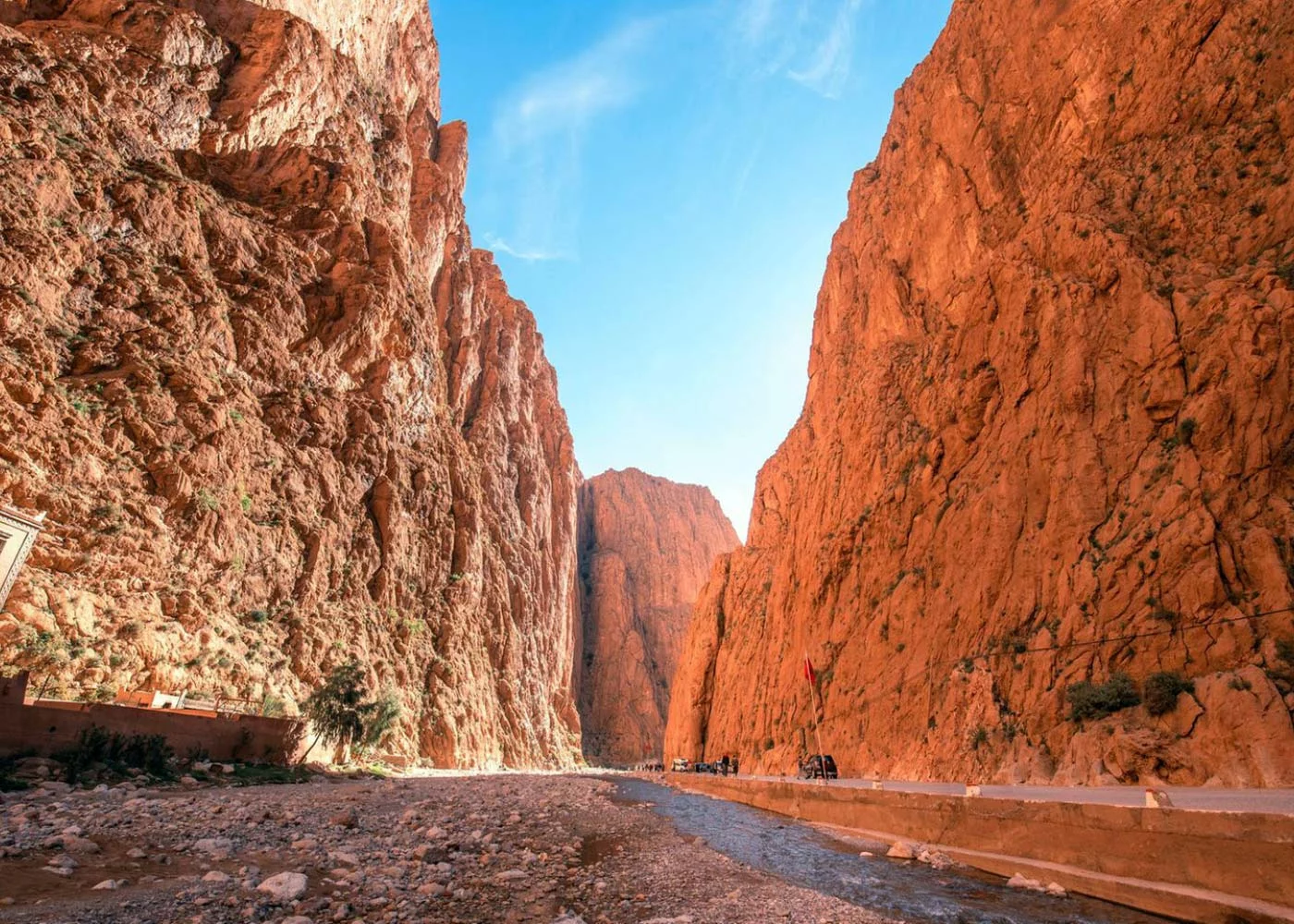
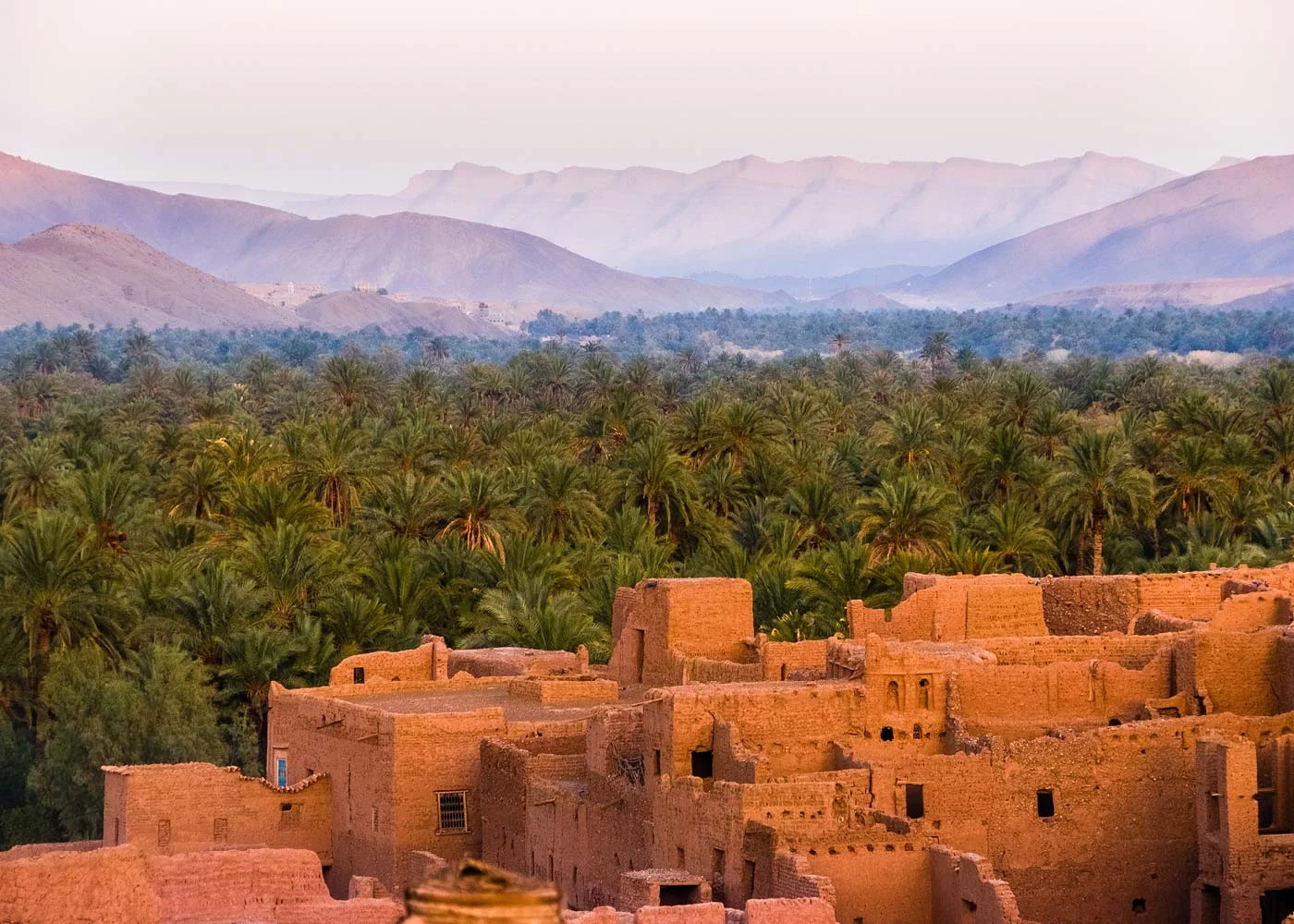
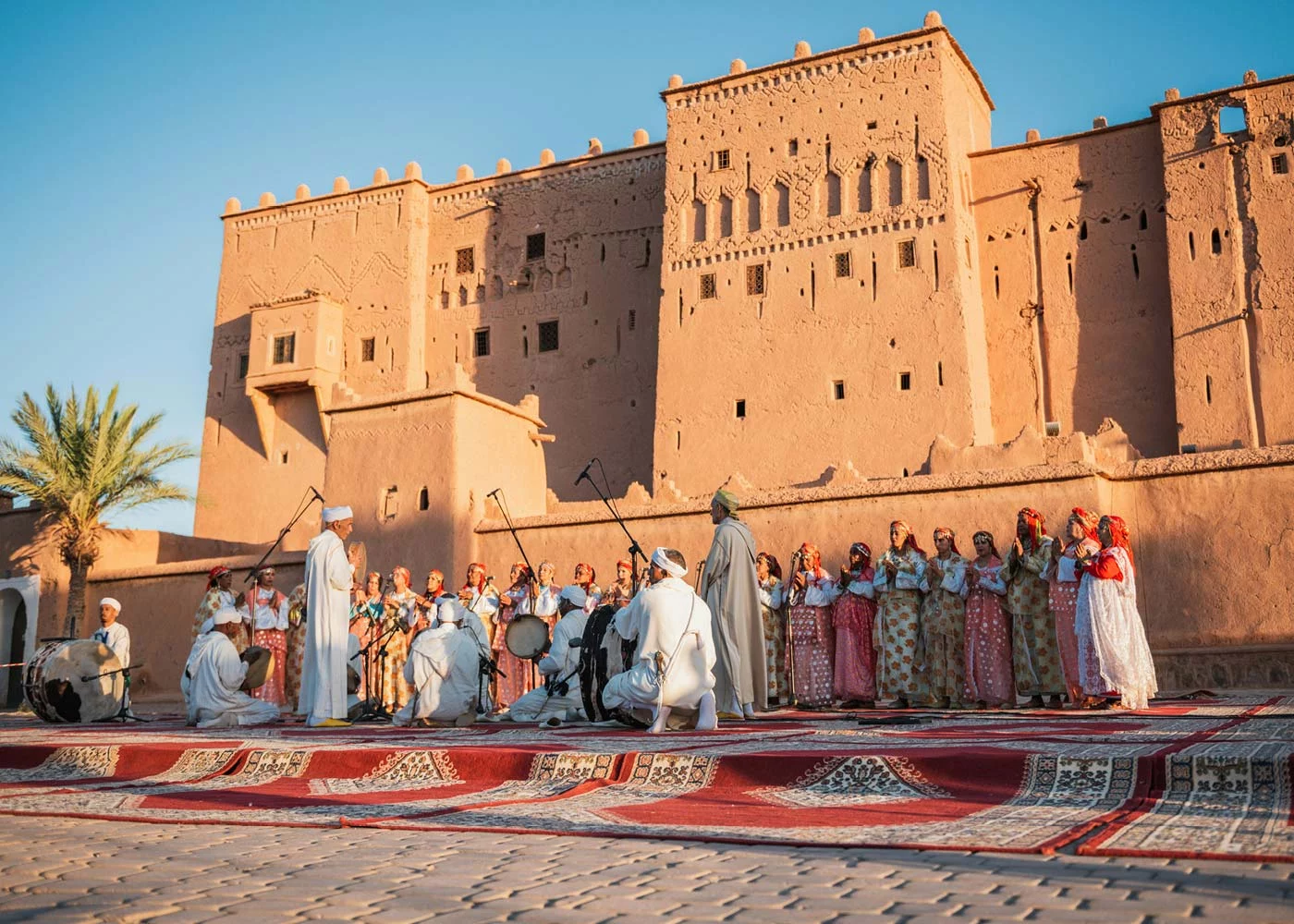
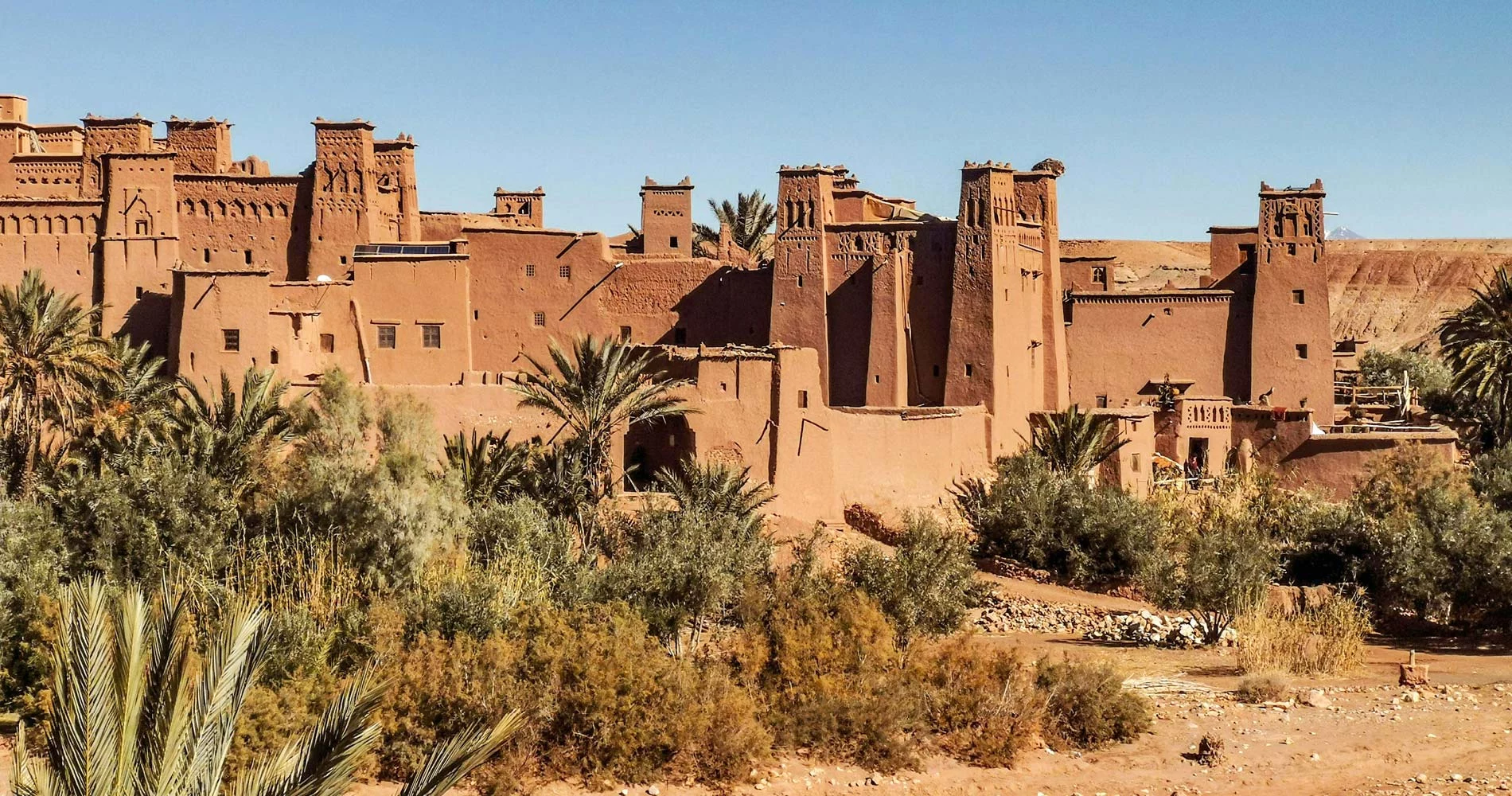
A visit to Ait Ben Haddou, perhaps Morocco's most impressive kasbah, is an absolute must. This fascinating earthen village lies about 30 km from Ouarzazate, the centre of Morocco's film industry, and is beautifully set at the foot of a hillside at around 1,300 metres above sea level. The historic site is a UNESCO World Heritage Site and has served as a filming location for famous productions such as Game of Thrones and Lawrence of Arabia.
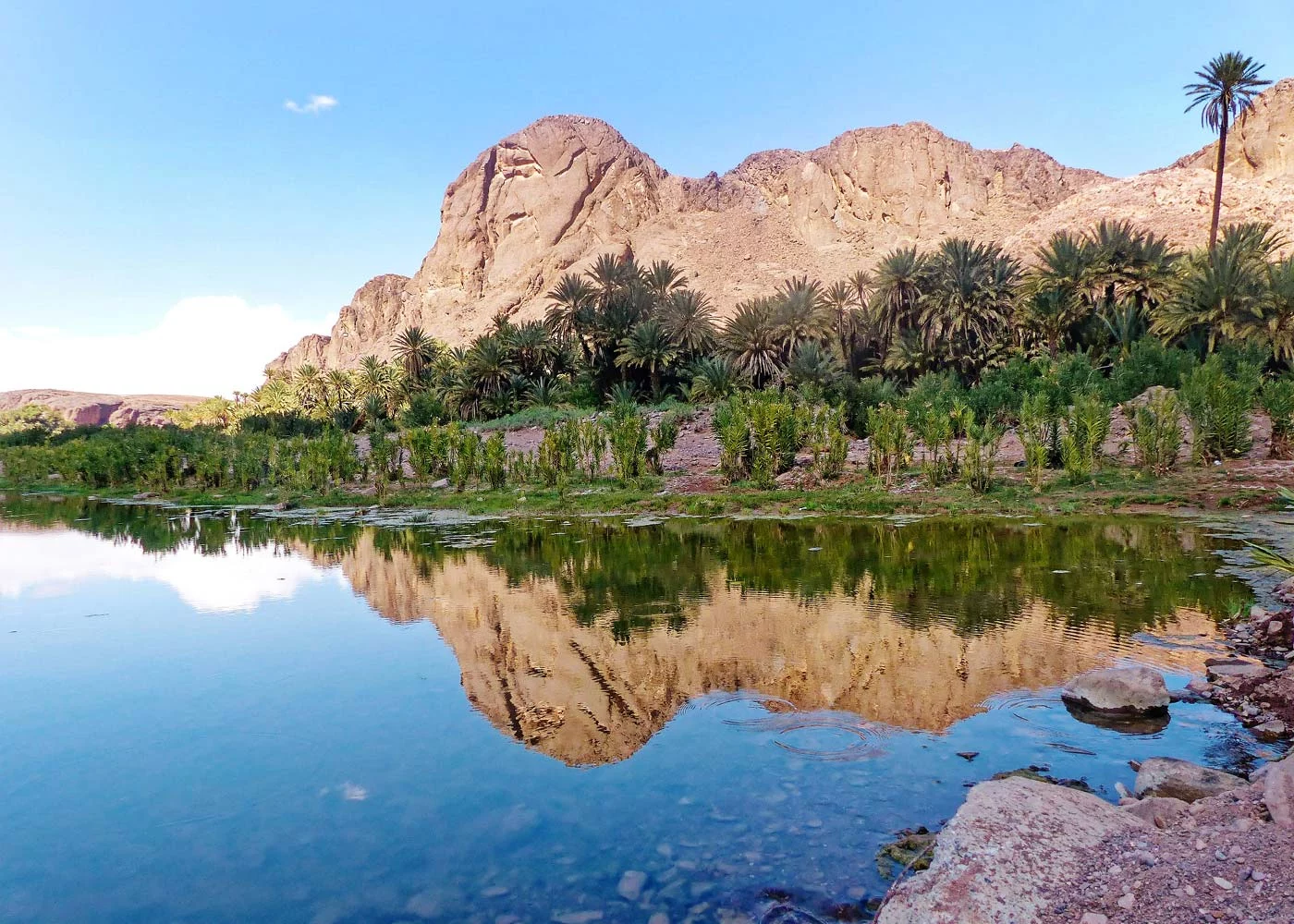
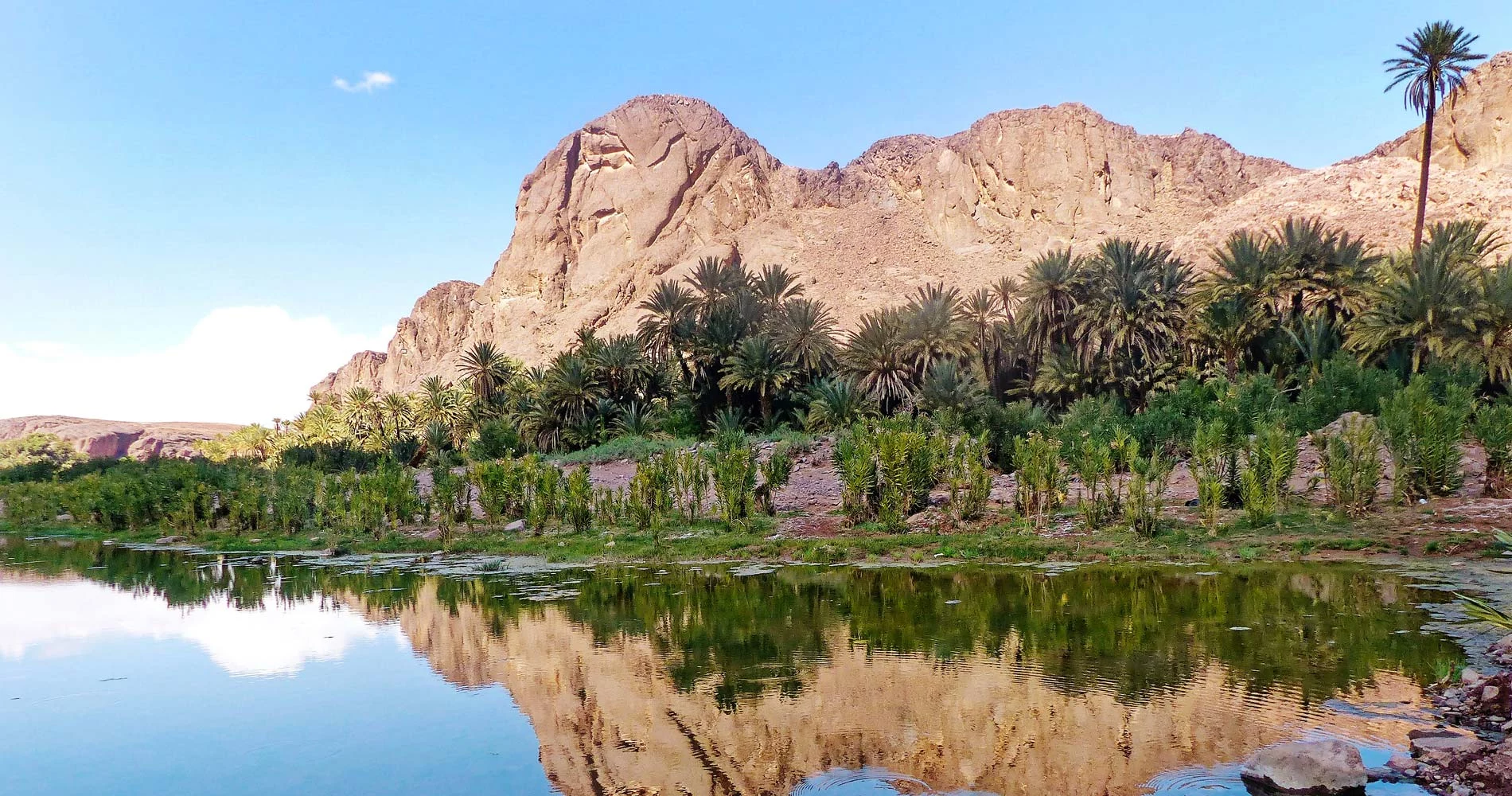
The picturesque Fint Oasis, located about 20 km from Ouarzazate, is especially beautiful in the early morning or evening light. In the Berber language, "Fint" means "hidden." Your personal guide will take you into this secluded valley, where palm groves and traditional earthen Berber houses create a setting that feels like stepping back in time.
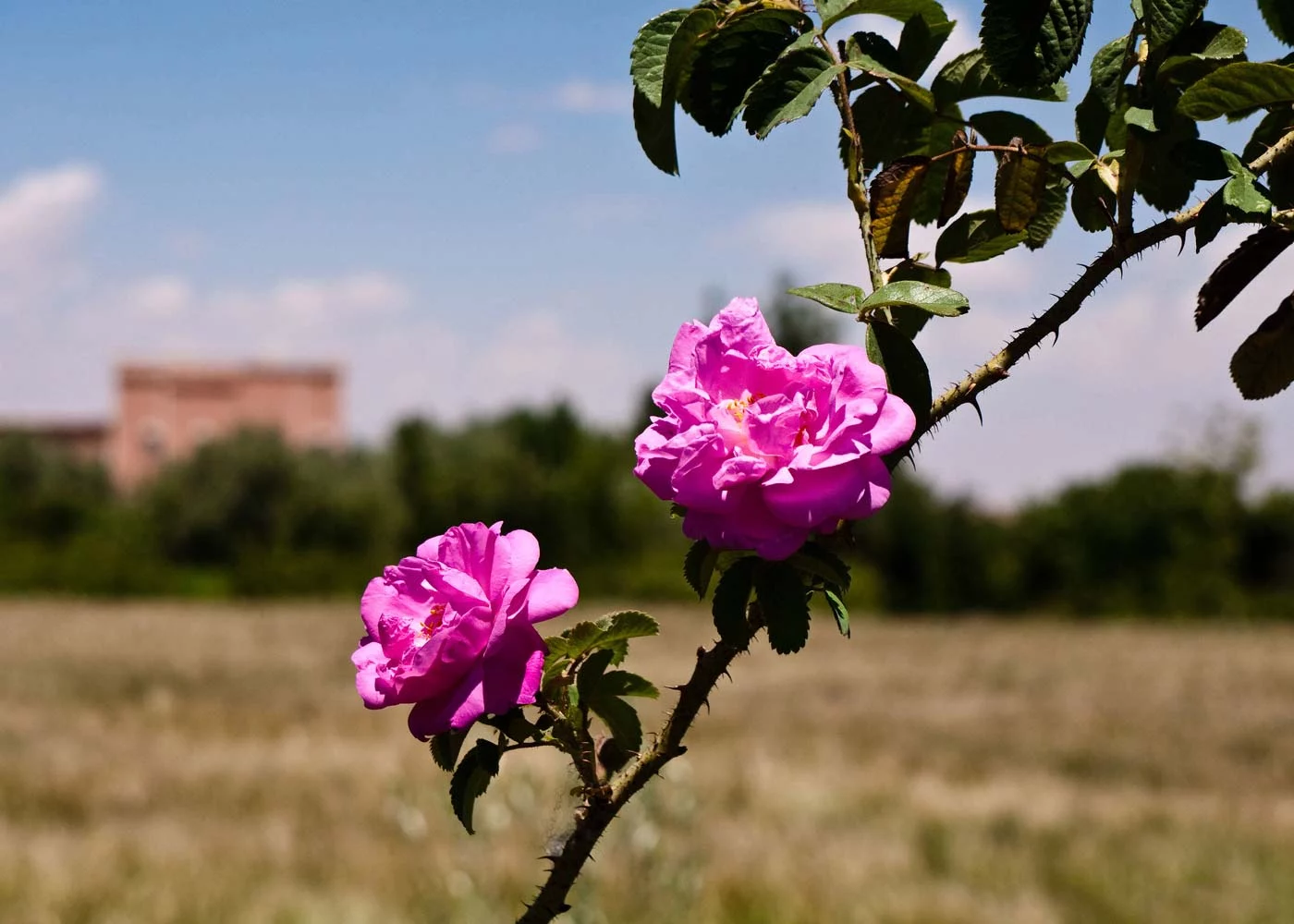
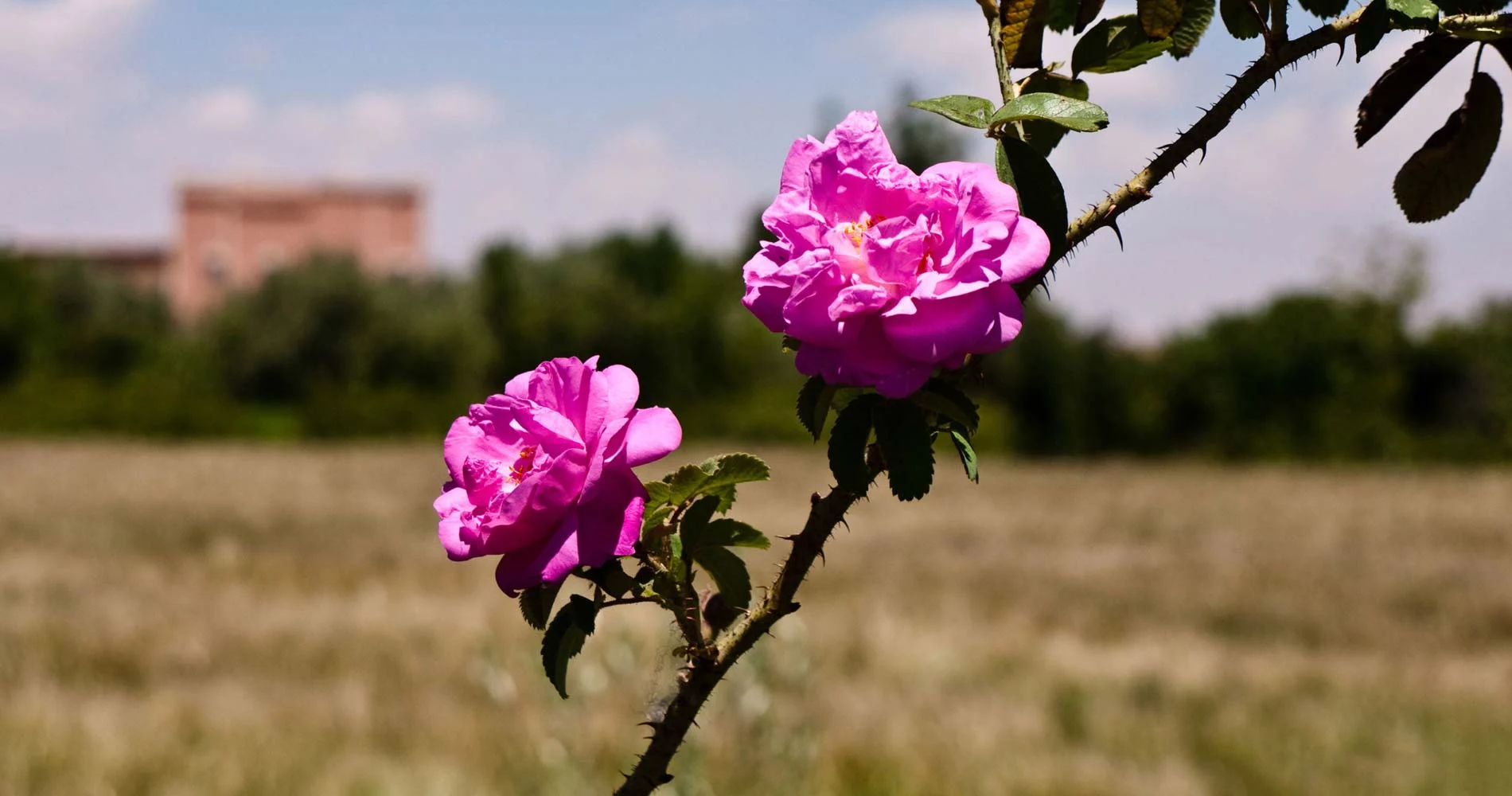
Located about 95 km northeast of Ouarzazate (approximately 1.5 hours by car), the Valley of Roses bursts into bloom each spring when thousands of roses cover the landscape. Enjoy the fragrance of the flowers, lush gardens and the maze of valleys and gorges. In Kelaat M'Gouna, visit a traditional distillery to learn how precious rose oil is produced and discover a variety of rose-based products.
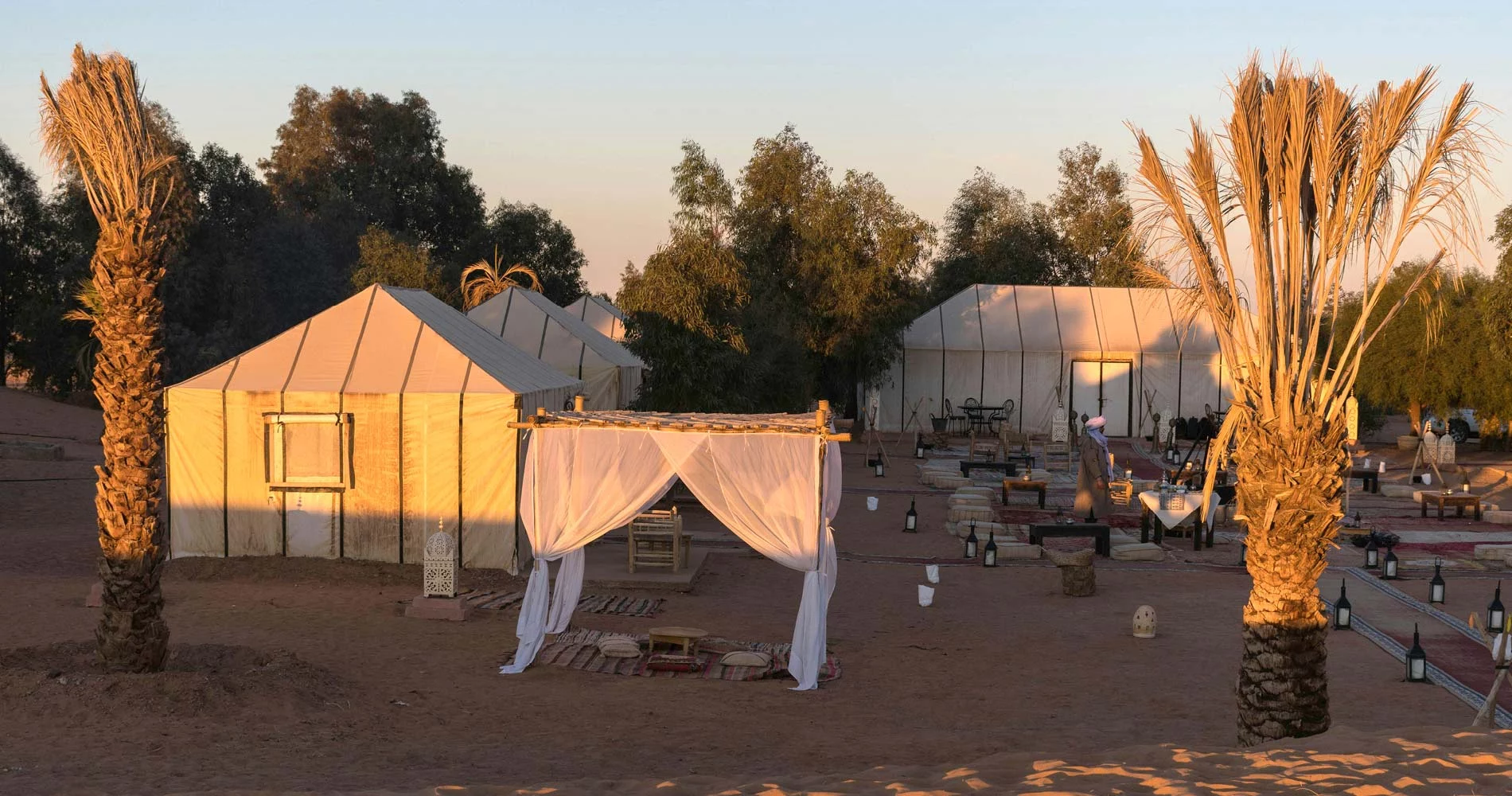
Experience a true desert adventure in the vast dune sea of Erg Chebbi near Merzouga. From Ouarzazate (370 km, about 5–6 hours by 4×4), begin a guided camel trek at sunset into the dunes. Spend the night in a luxury Berber desert camp with heated tents, a traditional tajine dinner, and a spectacular star-filled sky. The next morning, watch the sunrise over the dunes and enjoy a quad ride before returning to Ouarzazate in the afternoon.
Merzouga
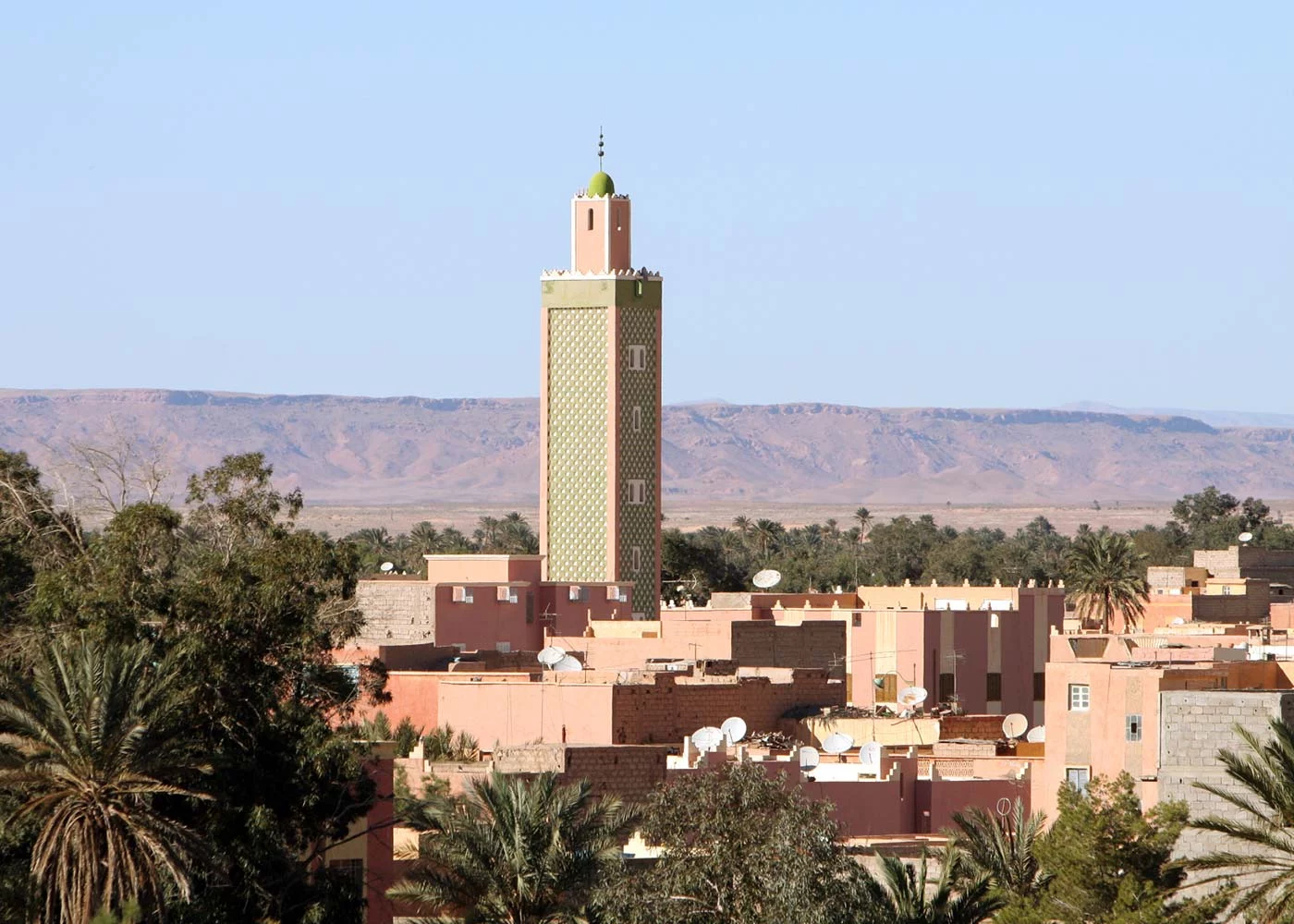
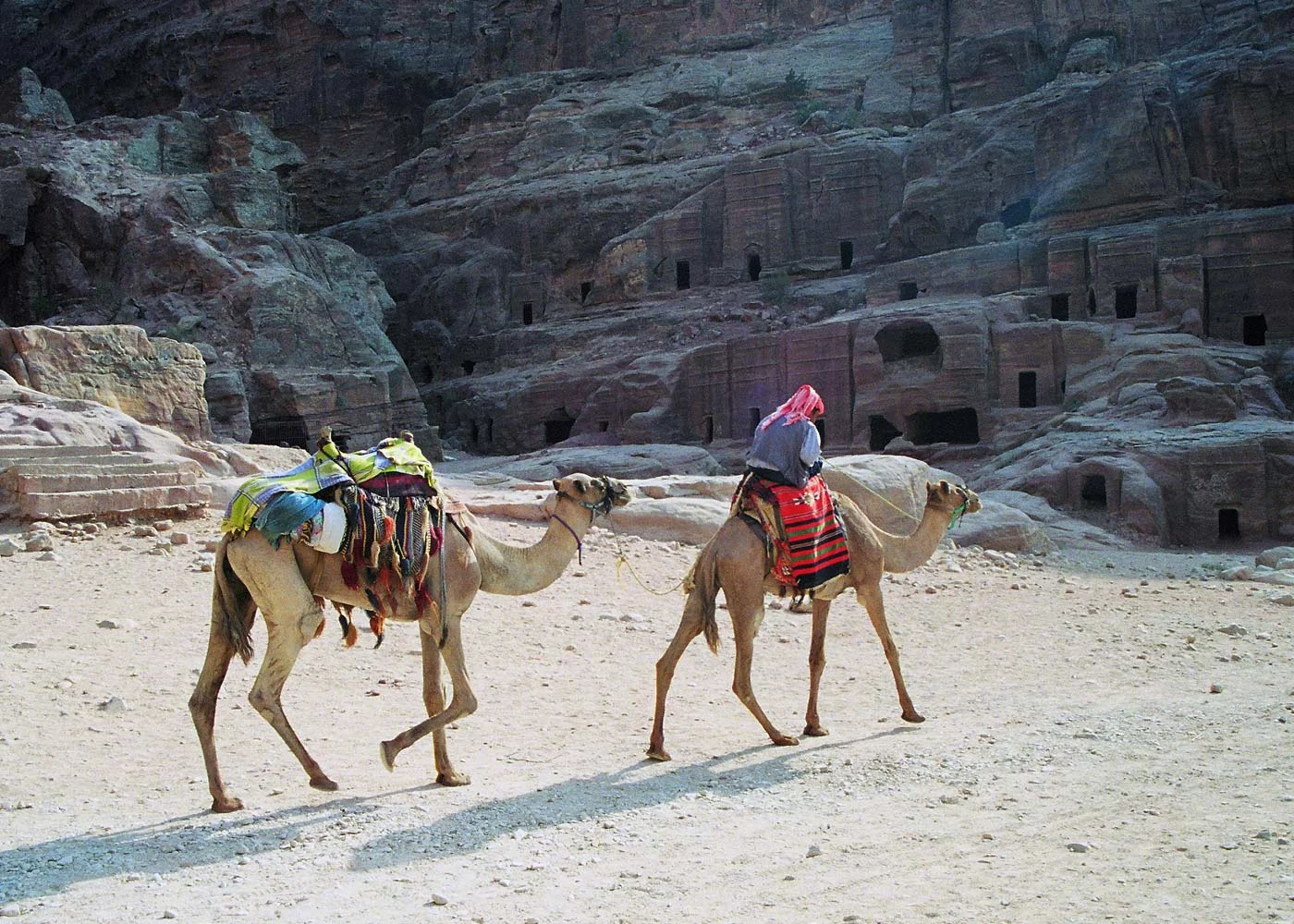
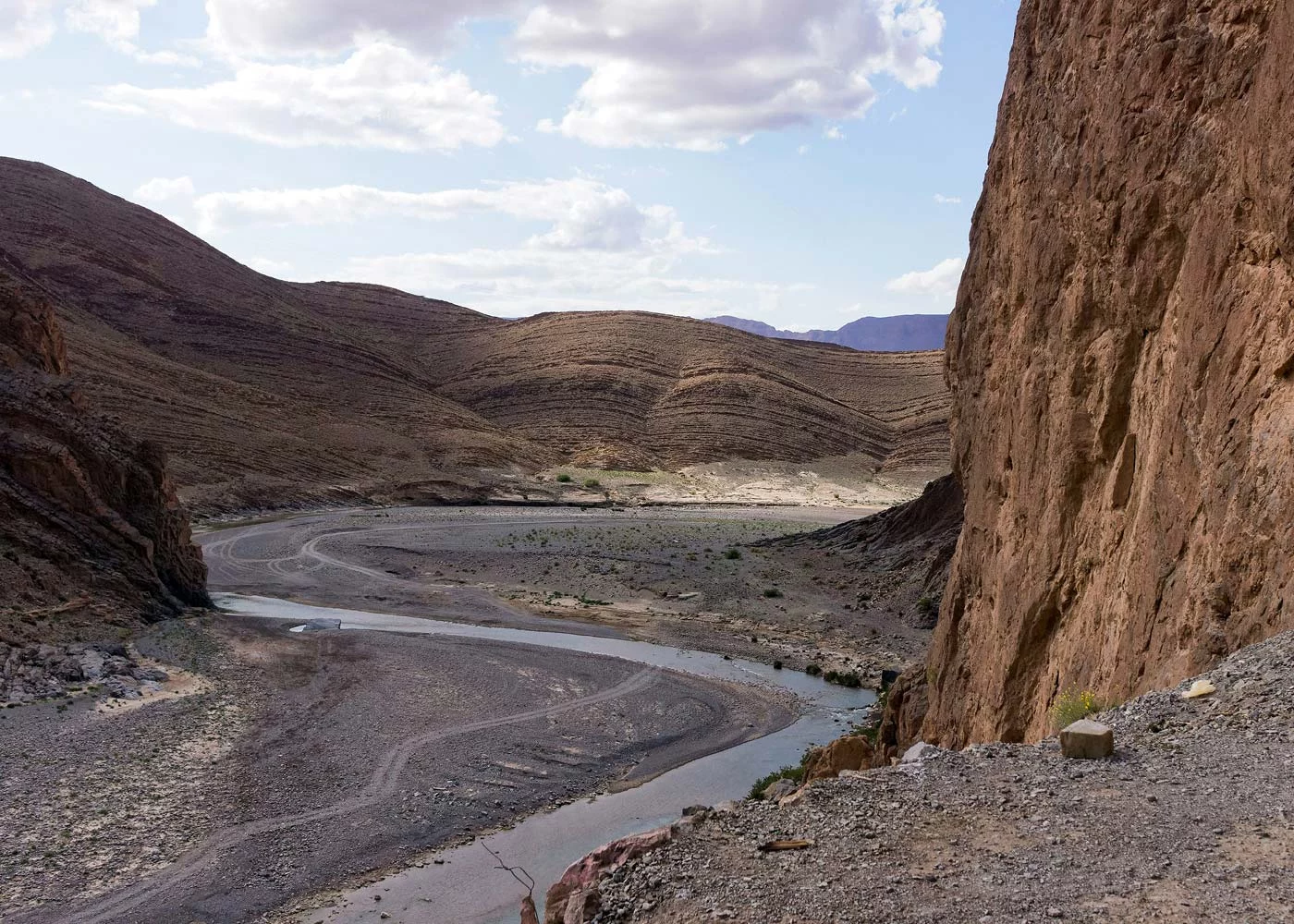
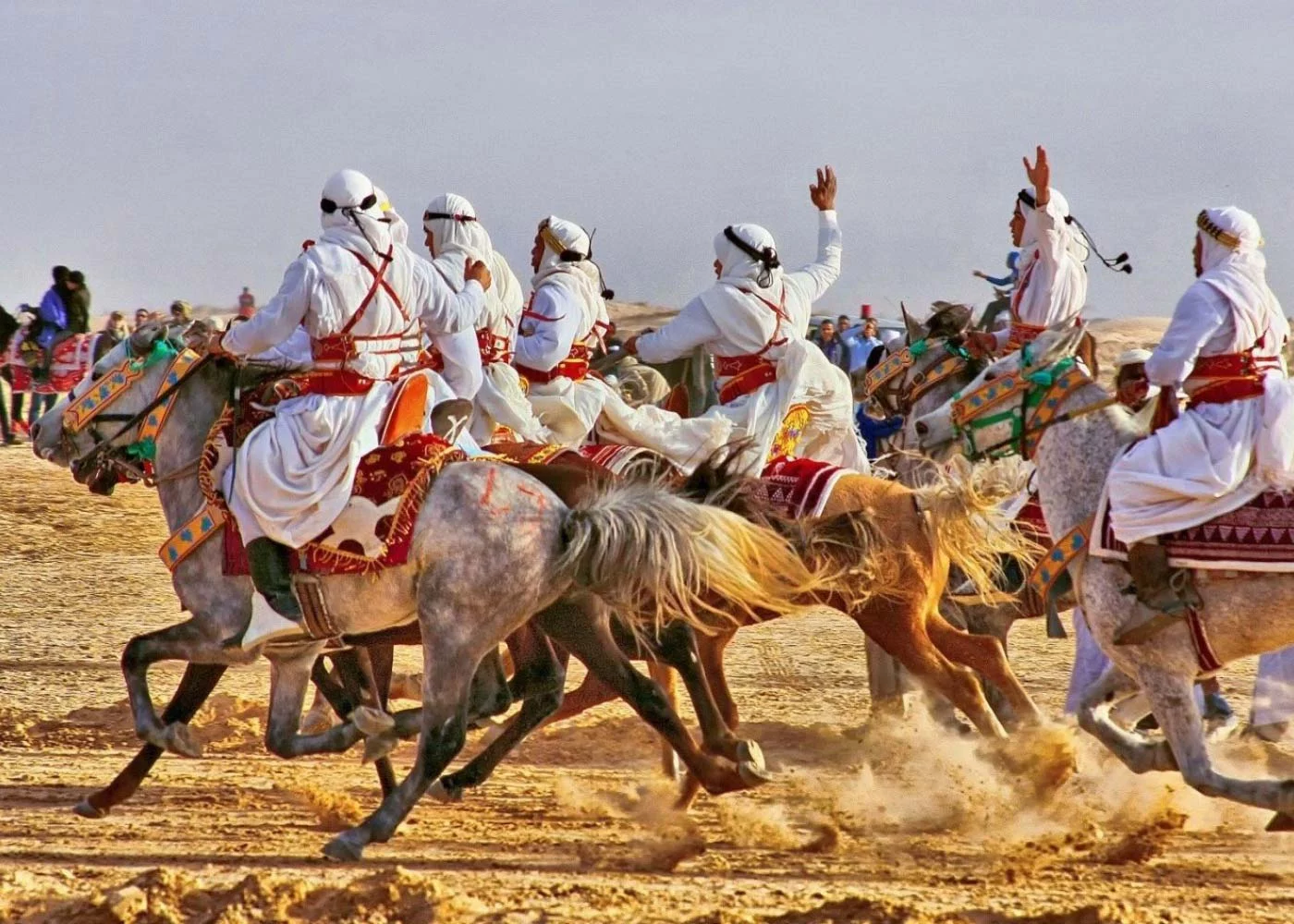
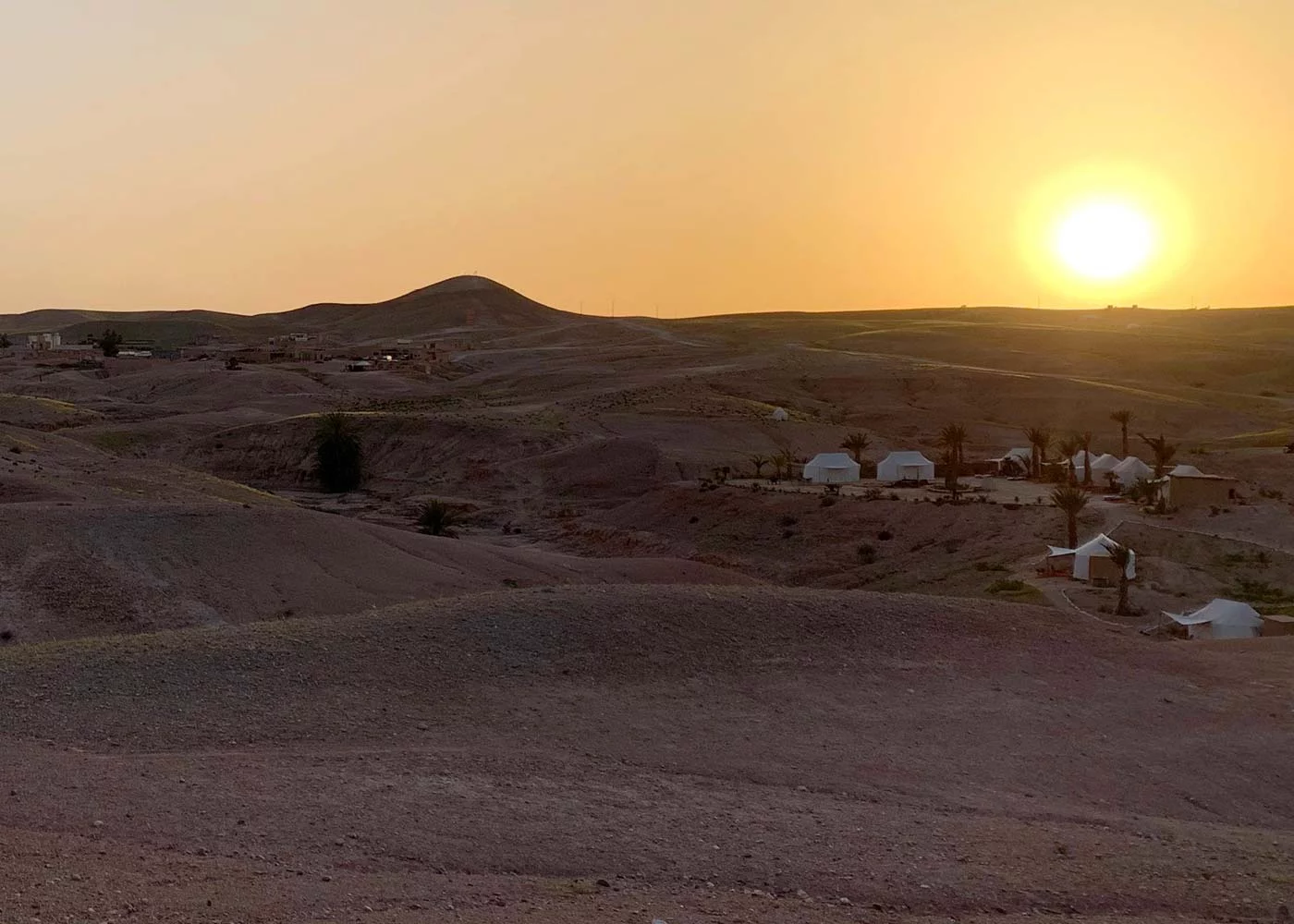
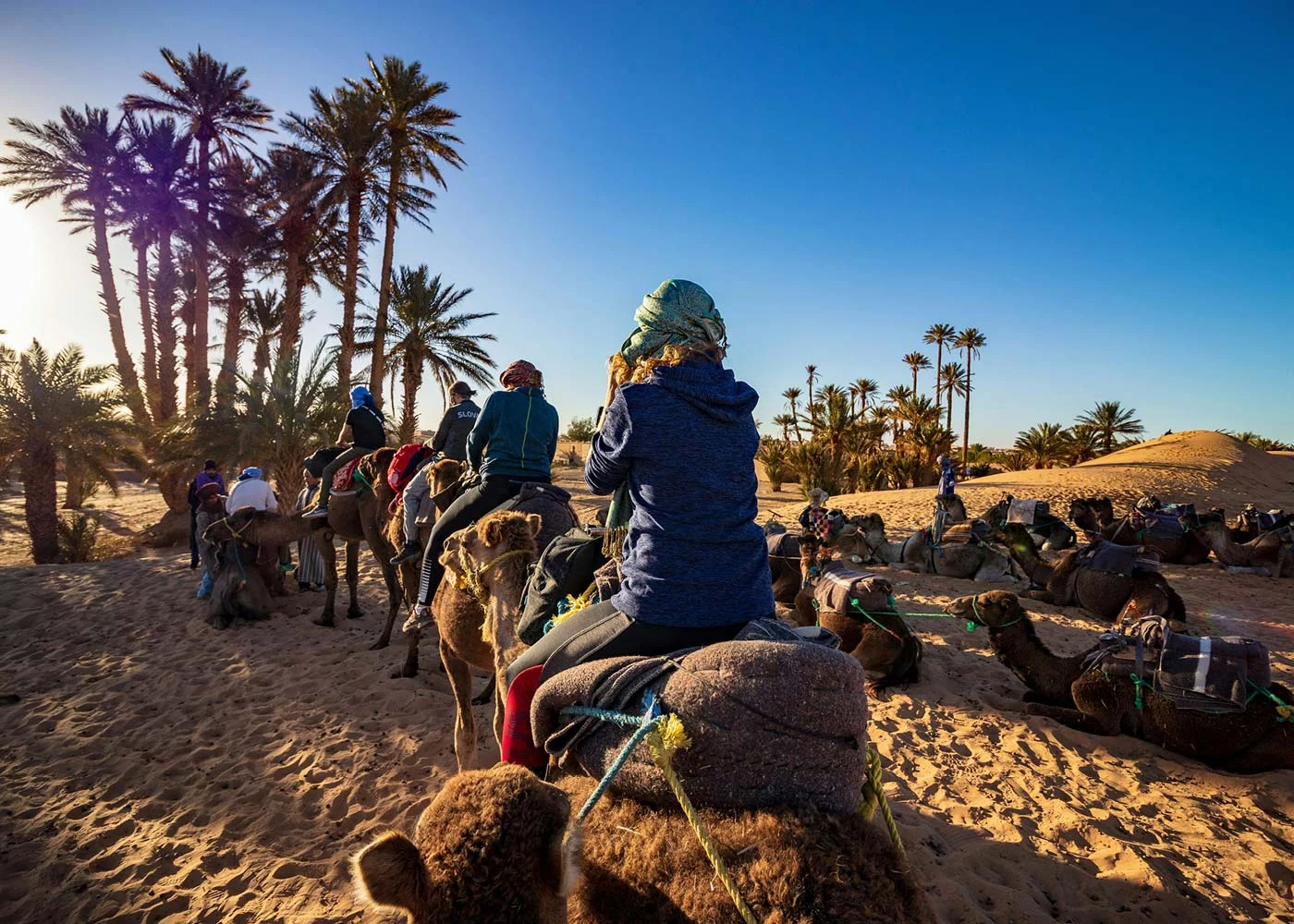
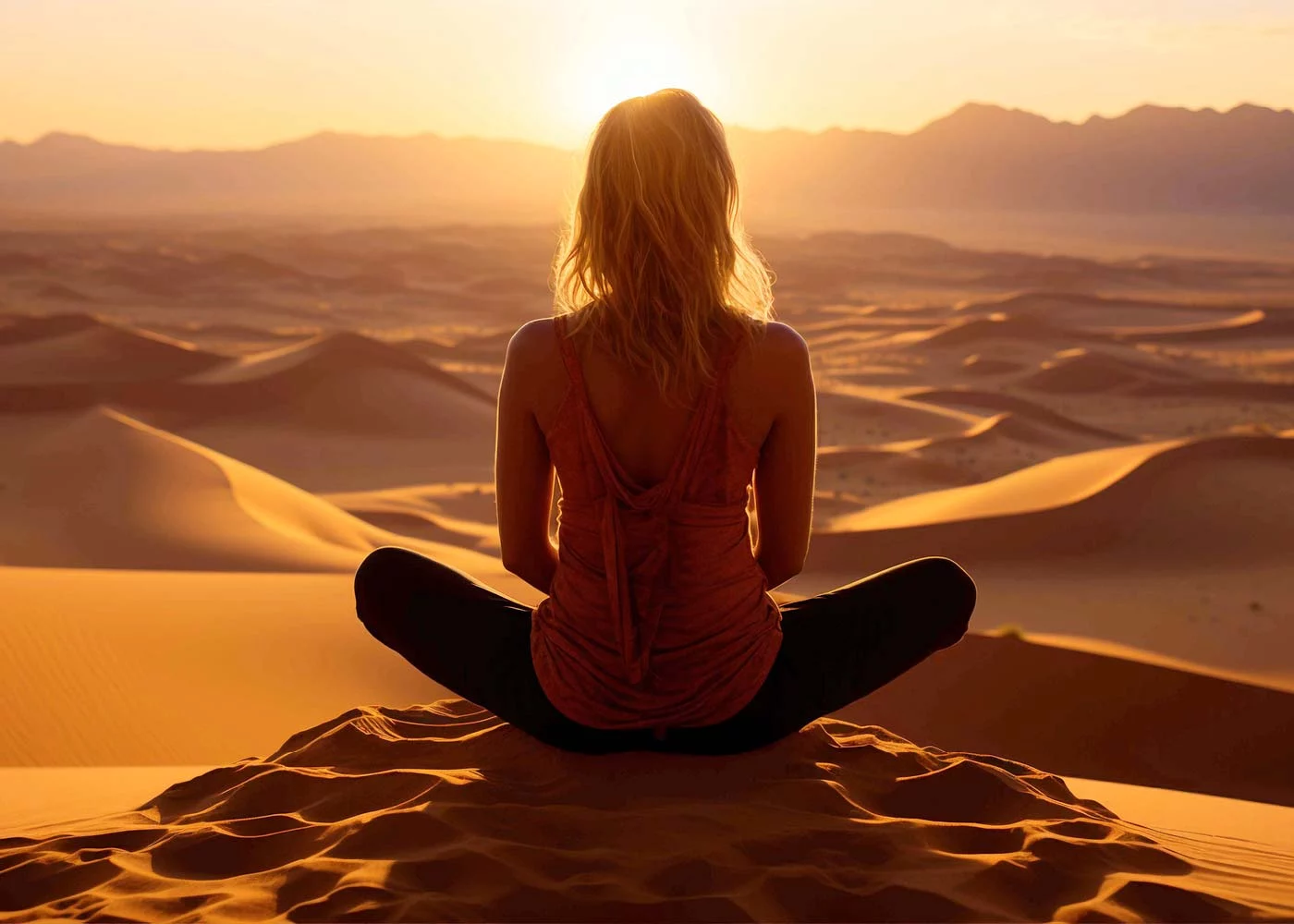
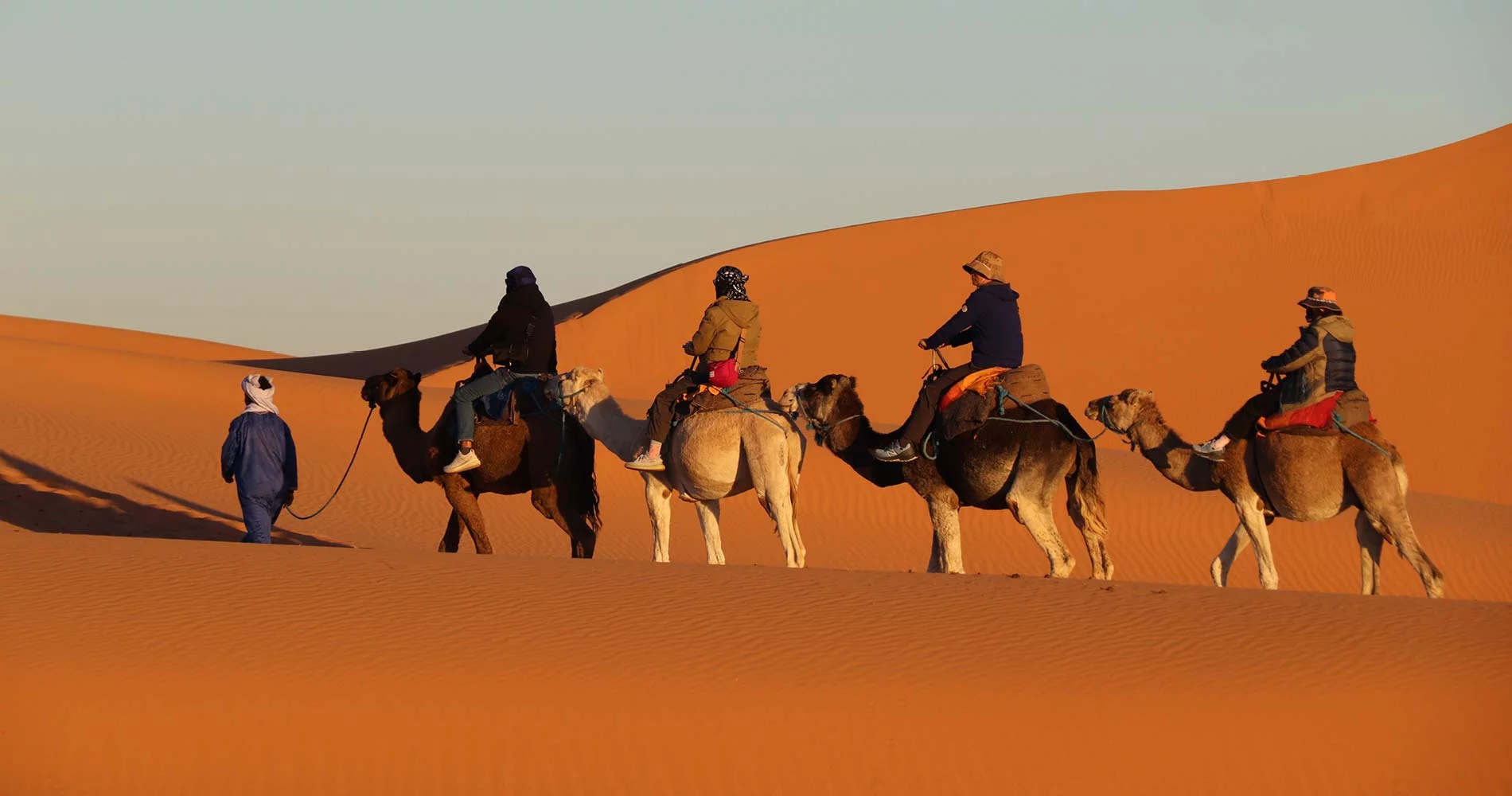
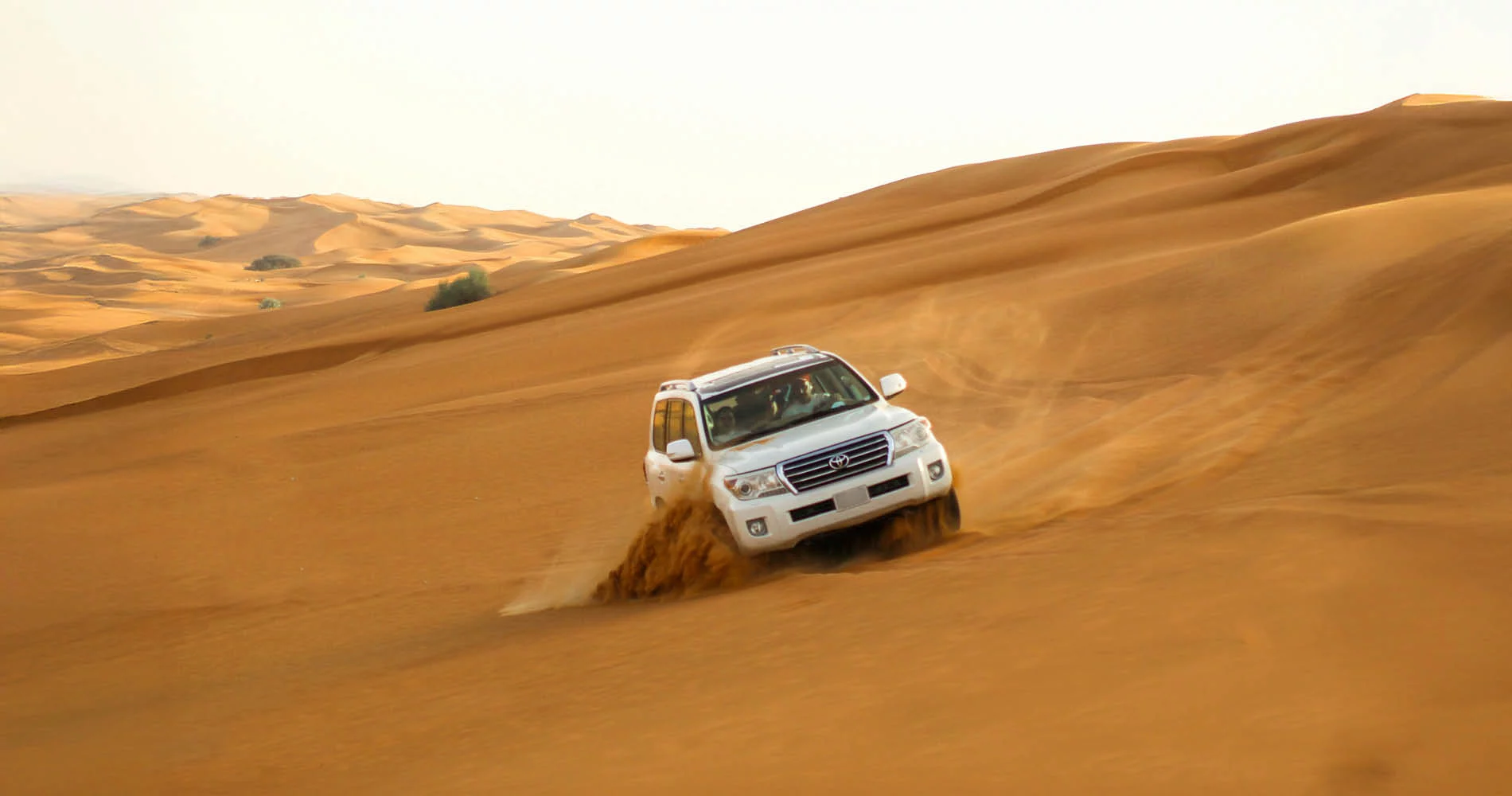
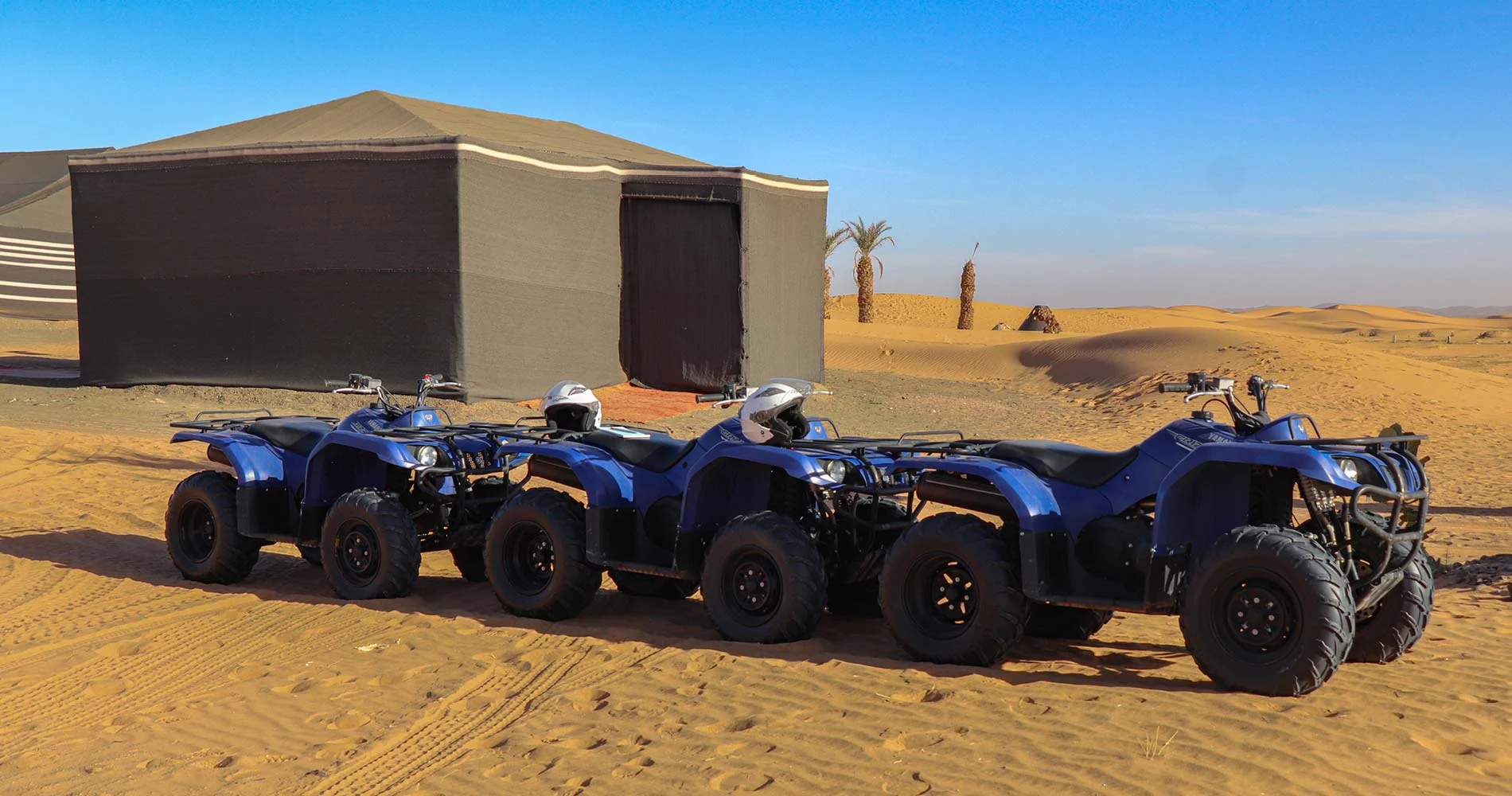
Riding a camel through the vast dunes of the Sahara is a truly majestic experience. On a guided camel trek, you will explore the desert landscape at a traditional pace while watching the colours of the dunes change with the light. The experience often includes one or several nights in a desert camp deep in the Sahara.
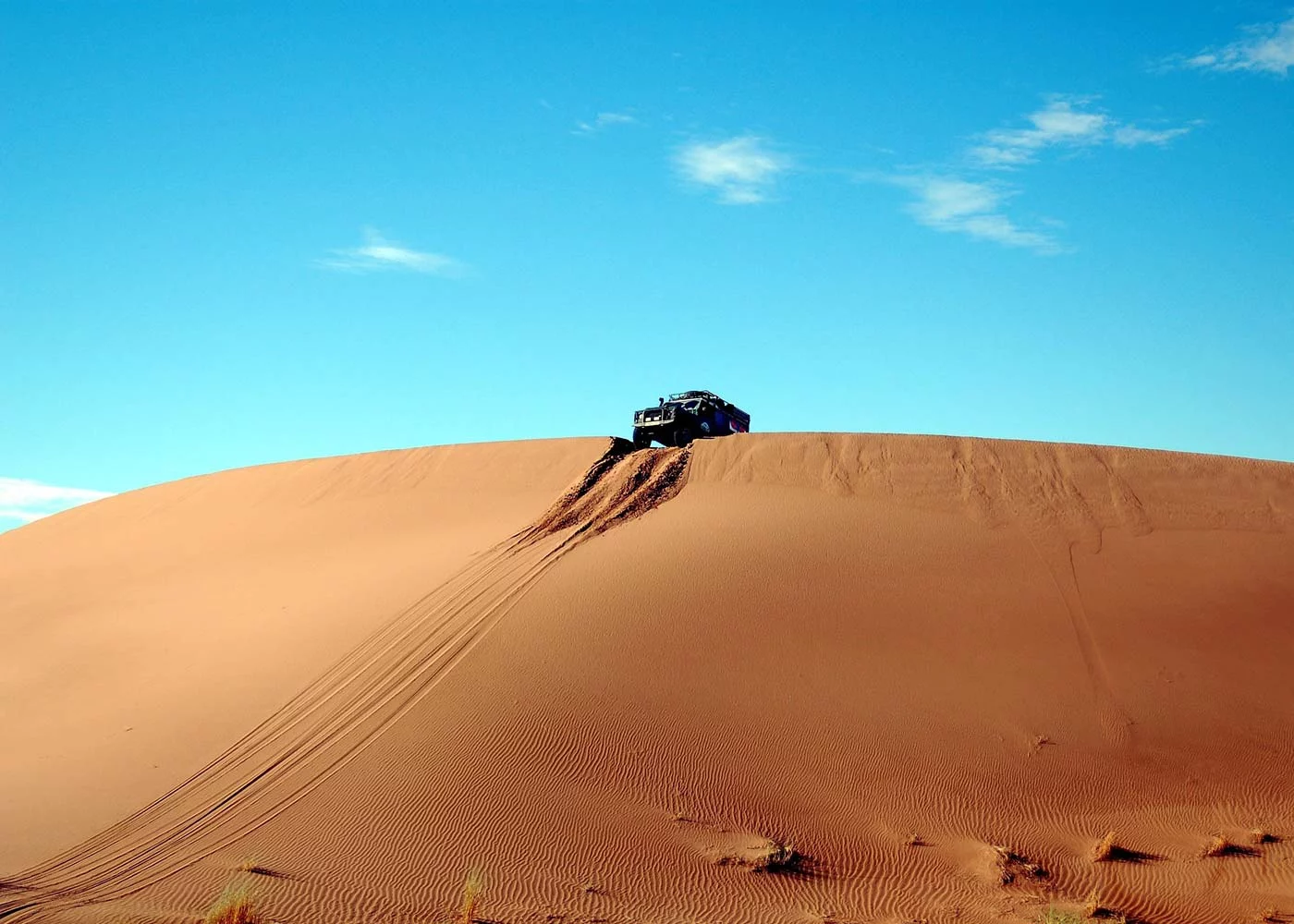
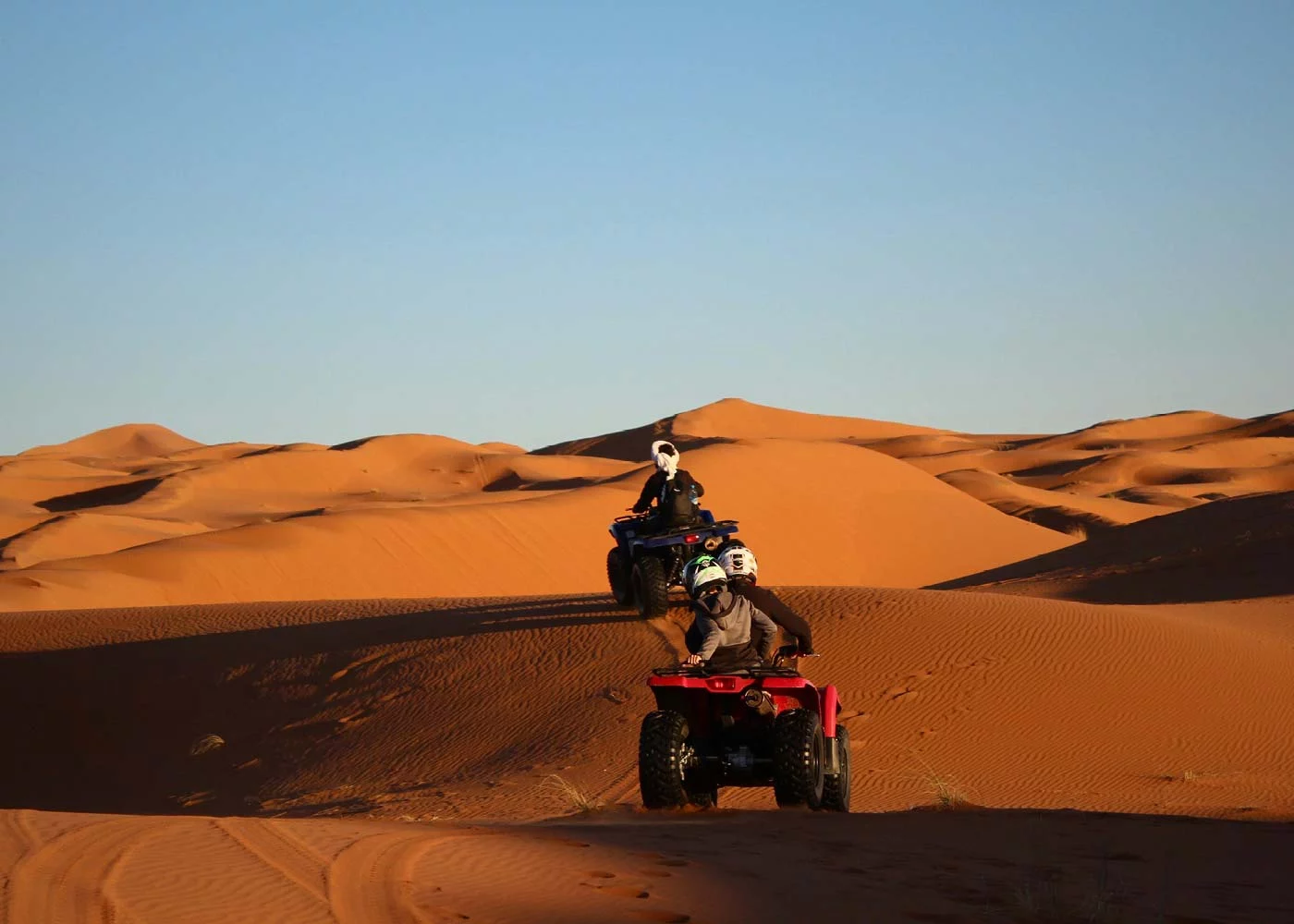
Under expert guidance, race across the ever-changing dunes by quad or buggy. Navigate challenging desert terrain, climb both low and high dunes and experience the thrill of this adventurous desert safari. An exciting activity that tests your skills and courage – and guarantees an adrenaline rush.

Experience the thrill of a Paris–Dakar–style desert ride. With an experienced driver, explore the dunes of the Sahara on a 2-hour, half-day or full-day excursion. Along the way, visit the village of Khamlia, known for its Gnawa music tradition, and discover palm groves with their ancient irrigation systems known as khettaras.
Agafay
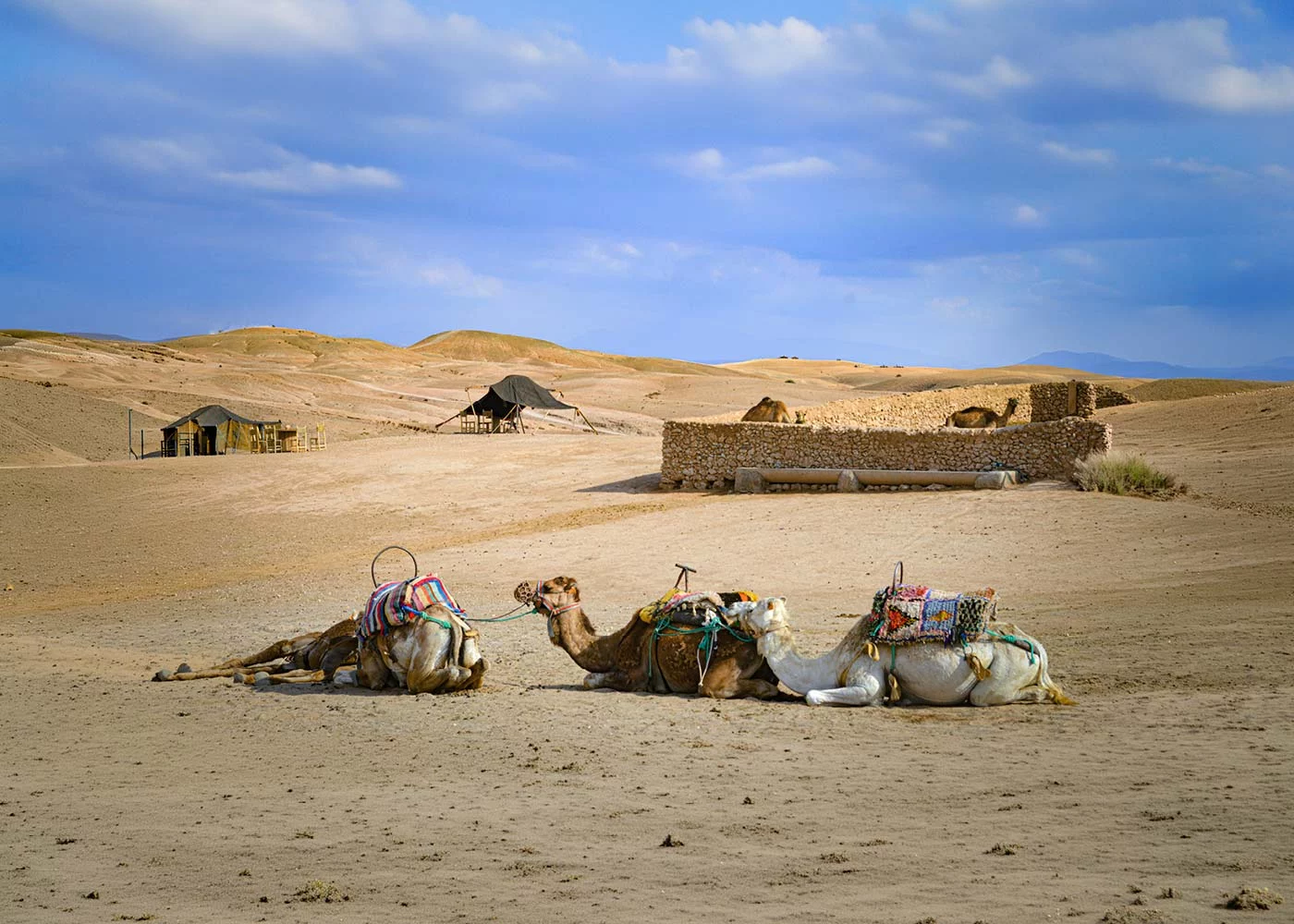
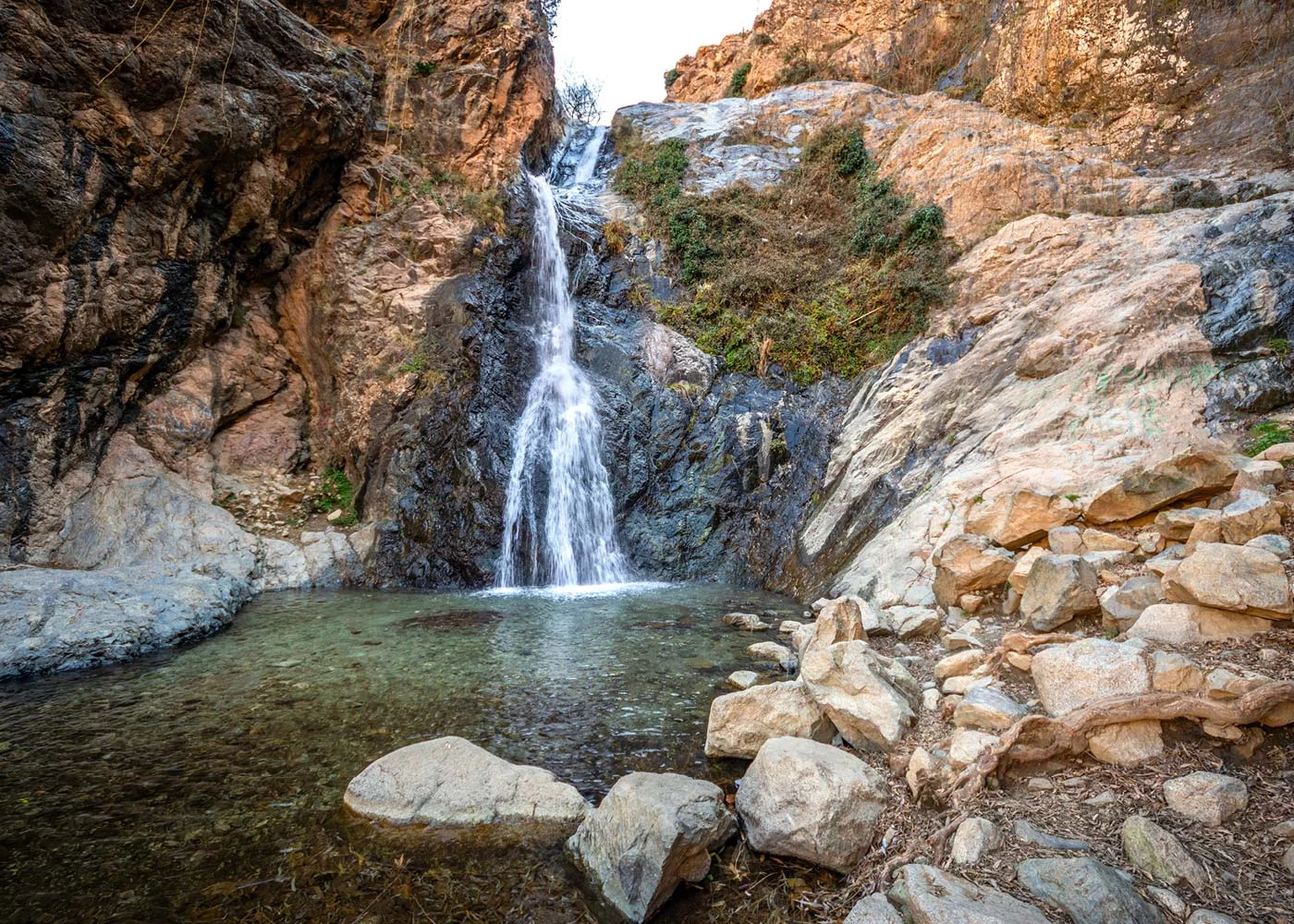
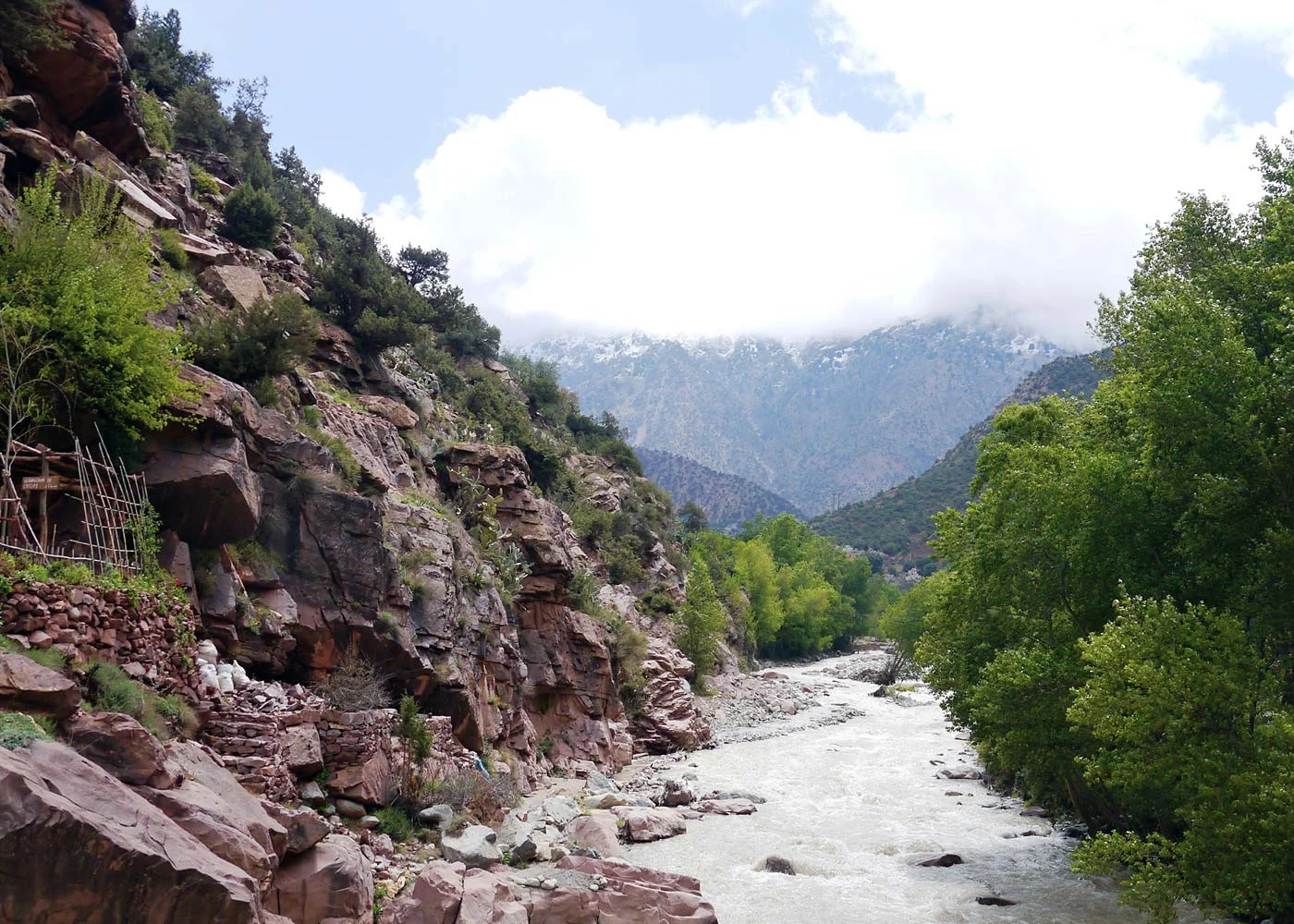
From your Agafay camp, travel to the beautiful Ourika Valley (approx. 50–60 km, 1–1.5 hours by 4×4). Together with your guide, explore traditional Berber villages and visit a local argan oil cooperative. The highlight of the excursion is the Setti Fatma waterfalls, a series of seven cascades with natural pools perfect for cooling off. Enjoy panoramic views of the High Atlas Mountains and lunch in a traditional kasbah.
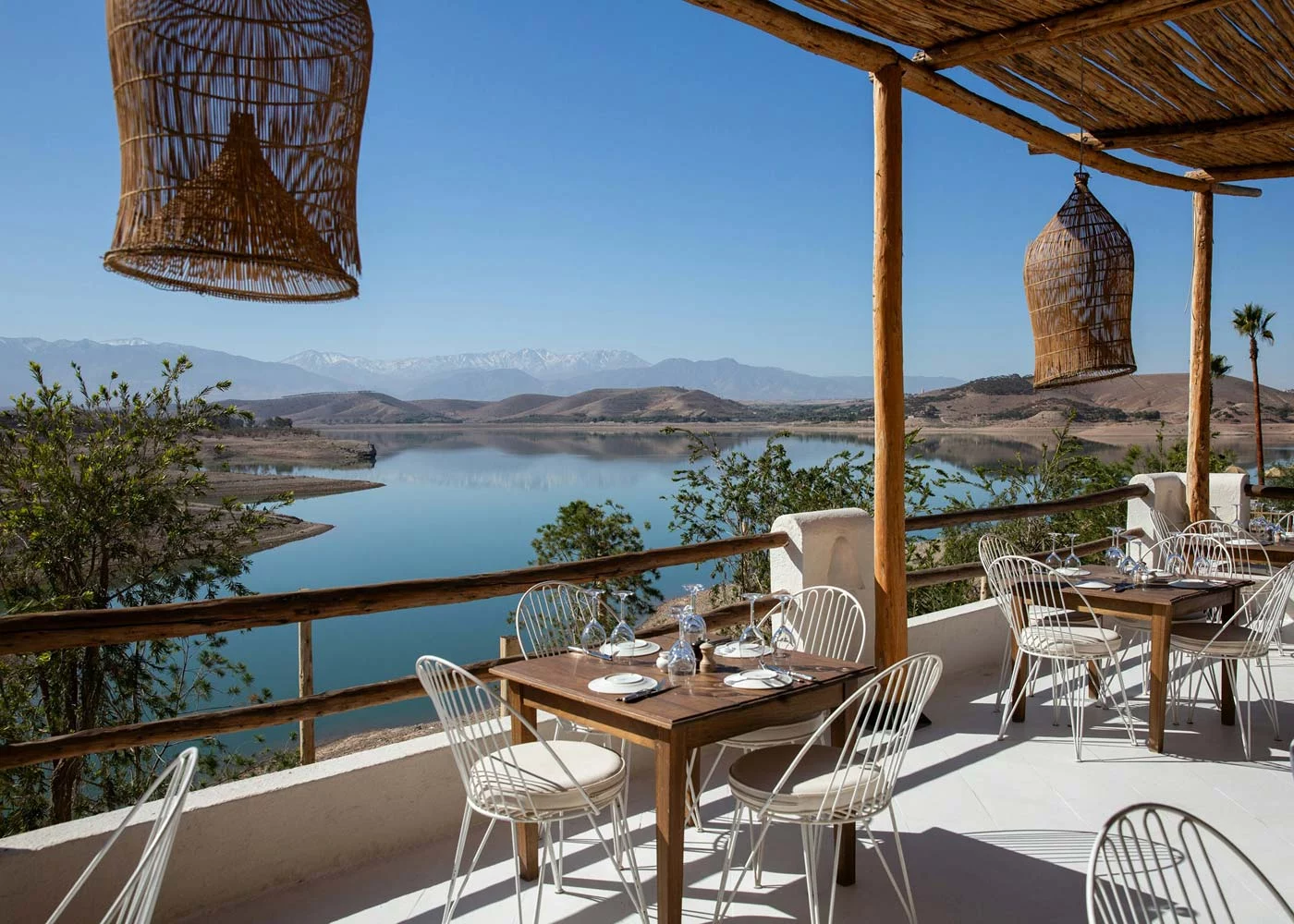
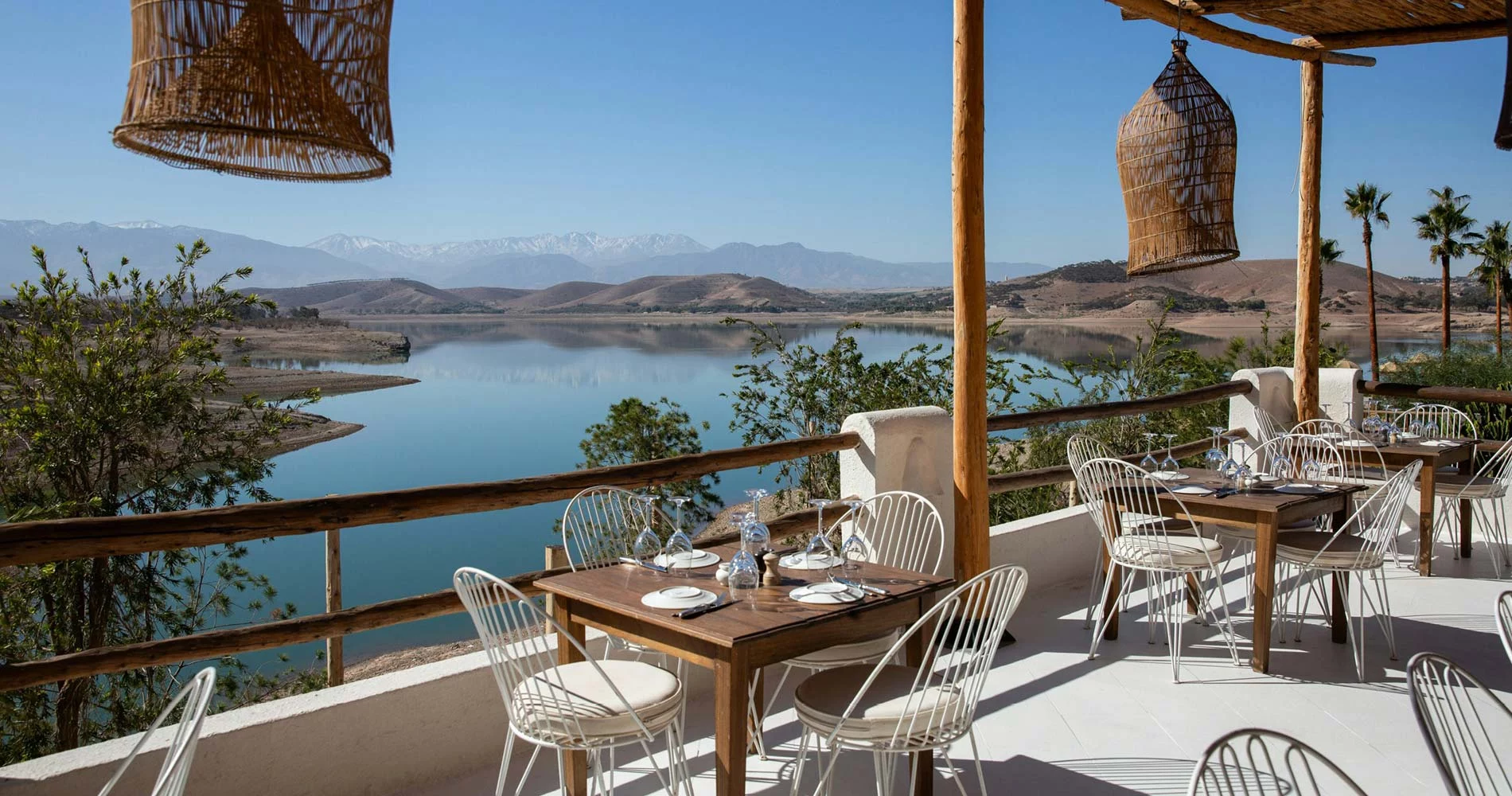
Around Lake Lalla Takerkoust (approx. 20–40 km from the Agafay camps), gentle trails follow the shoreline and surrounding hills, offering beautiful views of the Atlas Mountains. These routes are ideal for one- to two-hour walks. Along the lake you will also find cafés and opportunities for outdoor and water sports such as jet skiing, kayaking and stand-up paddling, as well as quad tours around the lake and towards Agafay.
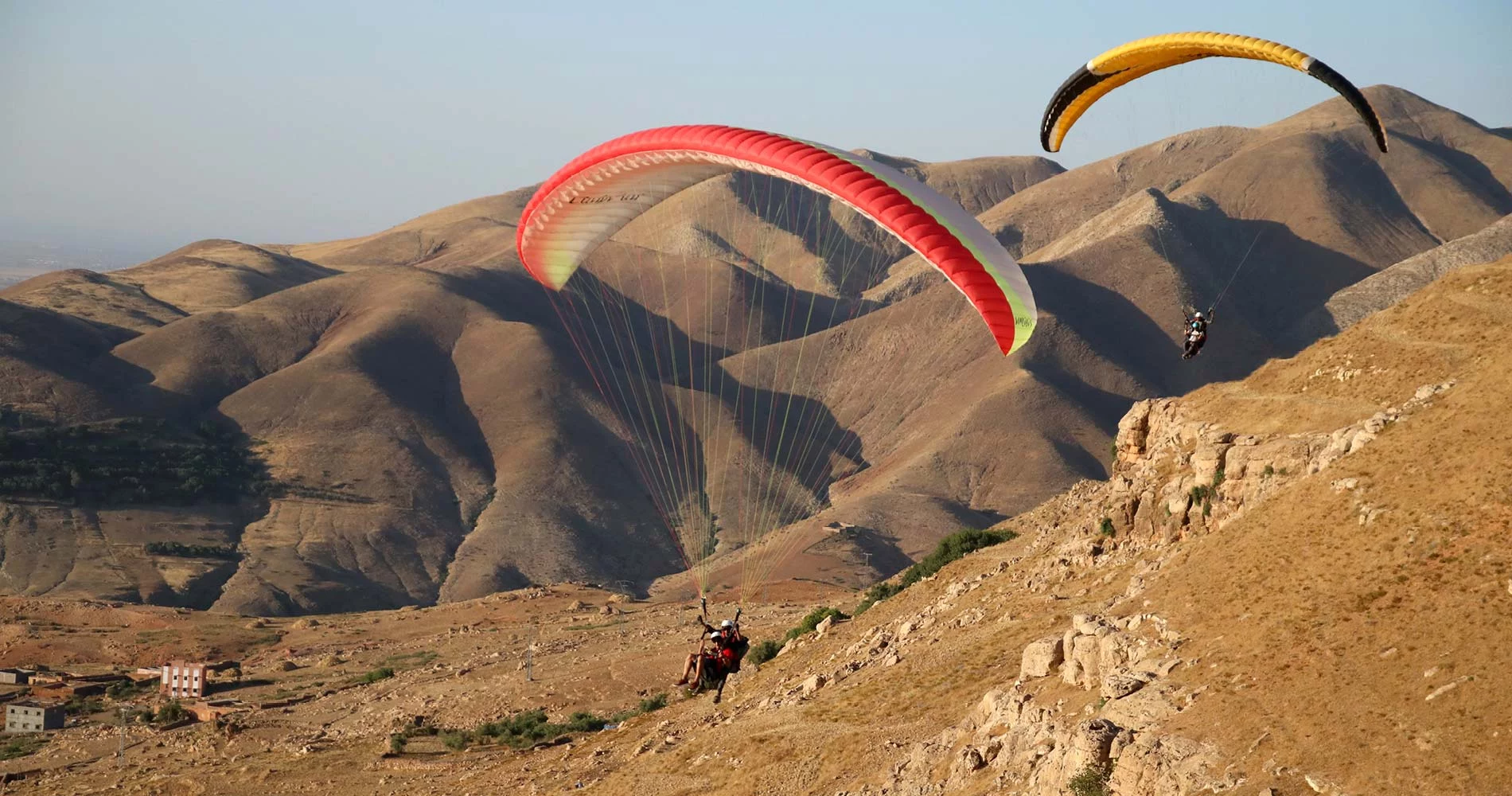
A unique experience: glide for 15–30 minutes above the desert and the Lalla Takerkoust reservoir with views of Jebel Toubkal in the High Atlas Mountains. About 1–1.5 hours from your desert camp lies a well-known paragliding spot at the northern edge of the Atlas. Your tandem flight begins from the Aguergour slope, with launch points between 950 and 1,250 metres, soaring over the Kik Plateau, Berber villages and valleys.
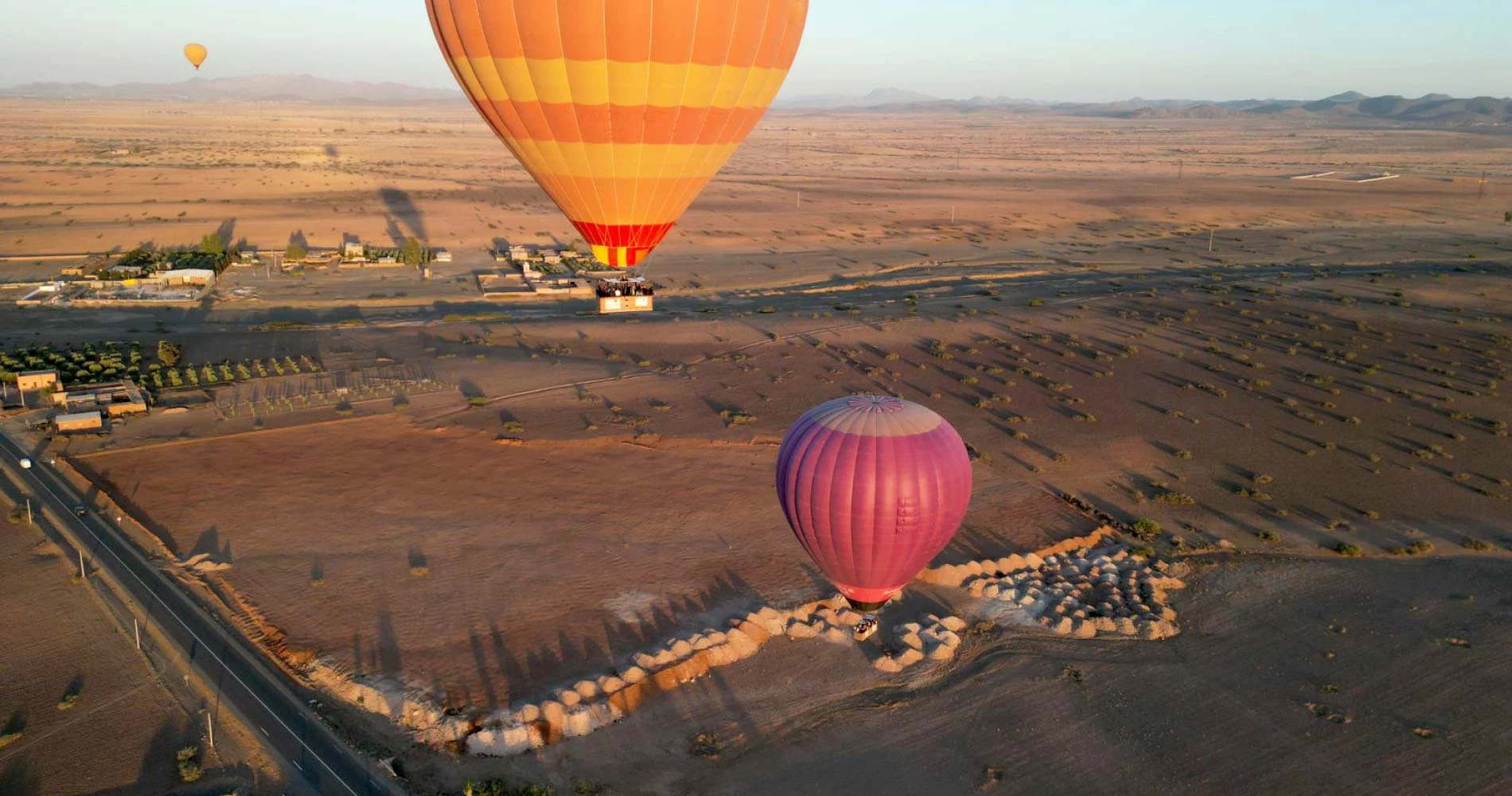
A must for the curious and adventurous: a hot air balloon flight over the royal city of Marrakesh. From above, your view drifts from the vibrant colours of the city to the vast desert landscapes and the Atlas Mountains. An unforgettable experience.
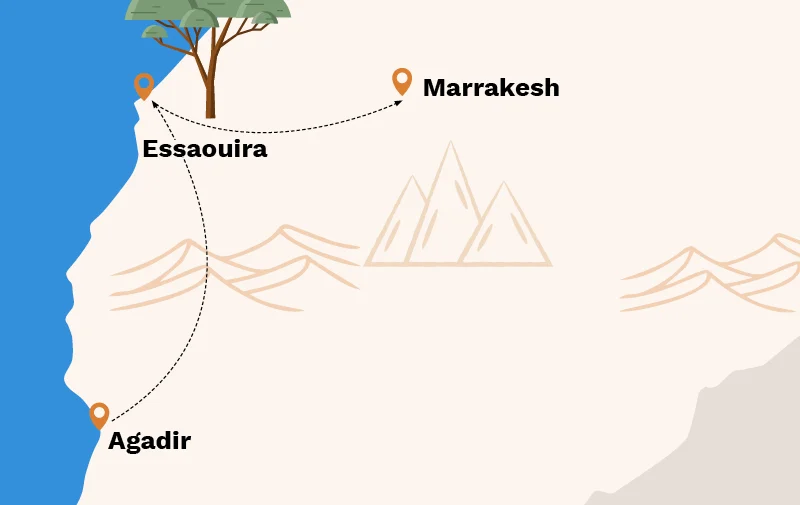
A city trip that makes the diversity of a Morocco holiday tangible. From Agadir over to Essaouira to Marrakesh.
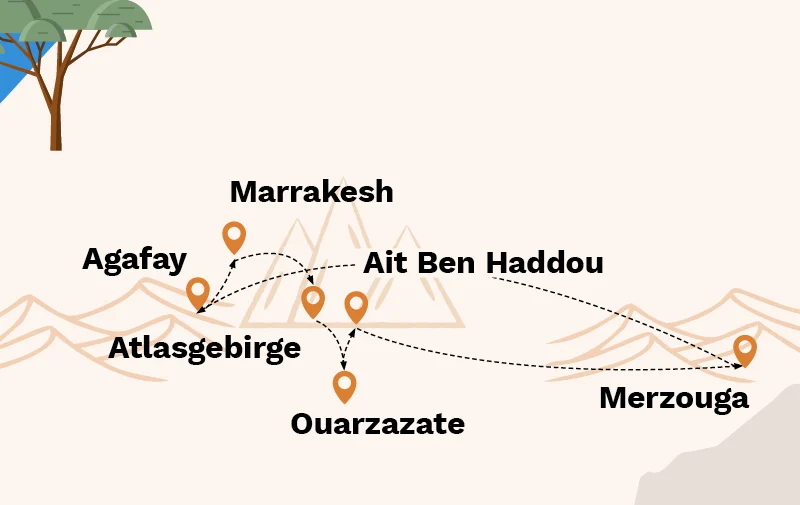
Experience a private round trip through kasbahs, oases and the fascinating vastness of the Sahara.
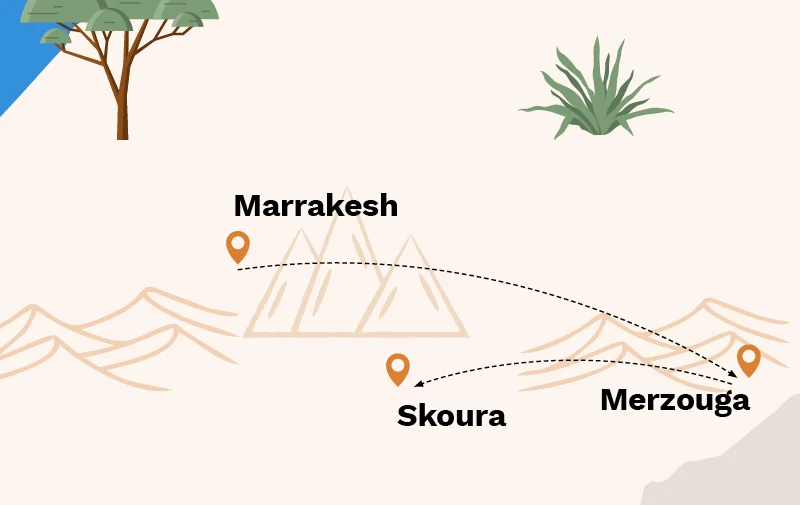
Route of a Thousand Kasbahs from 5 Nights: Marrakech, Skoura & Sahara
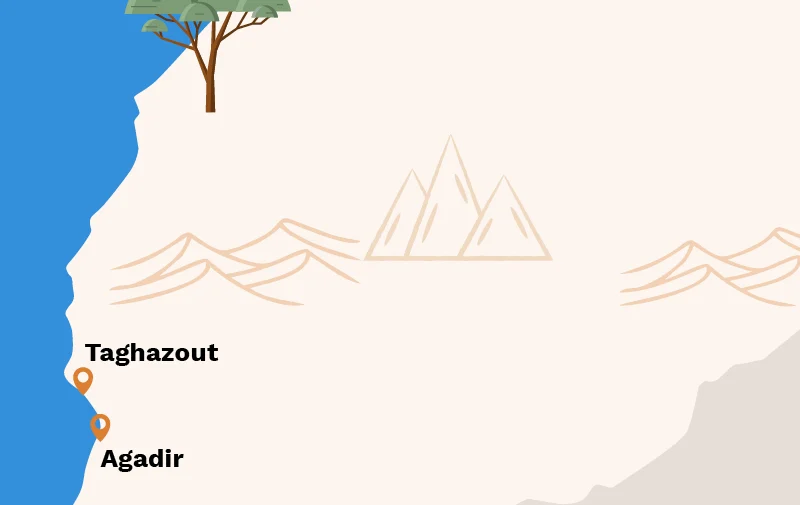
Adults Only beach holiday in Agadir & Taghazout: unforgettable experiences on the Atlantic.
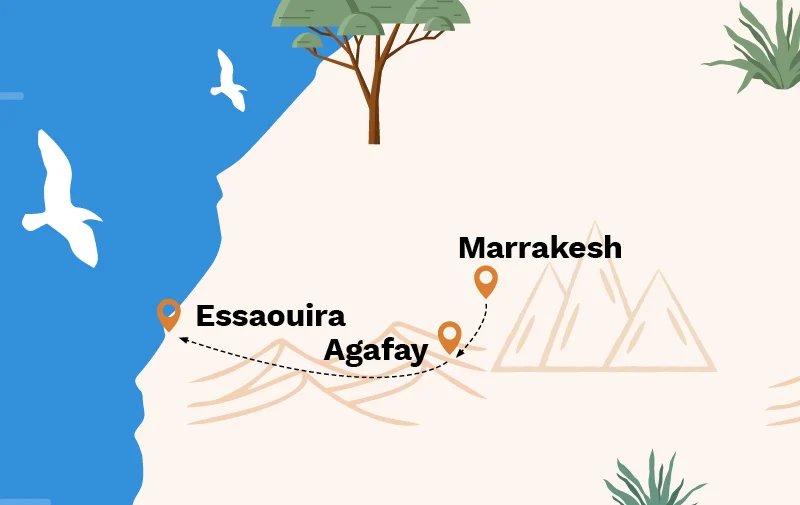
Art Journey Morocco from 4 Nights: Marrakech, Agafay & Essaouira
Back to your natural rhythm at the Silent Nature Retreat – Adults-only
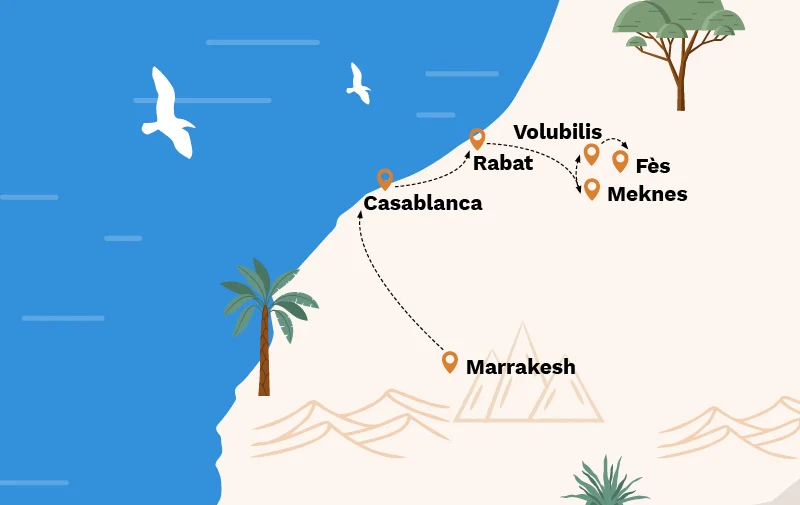
Luxury round trip from 7 days: Experience Morocco’s four imperial cities plus Casablanca in luxury
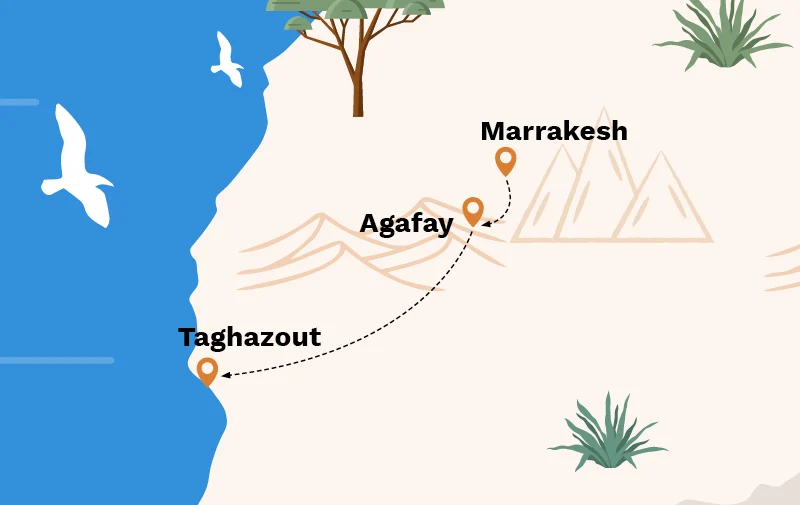
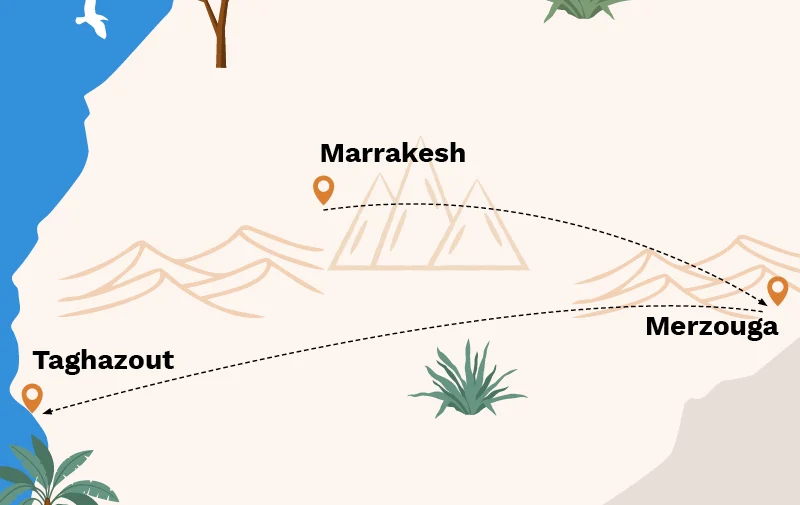
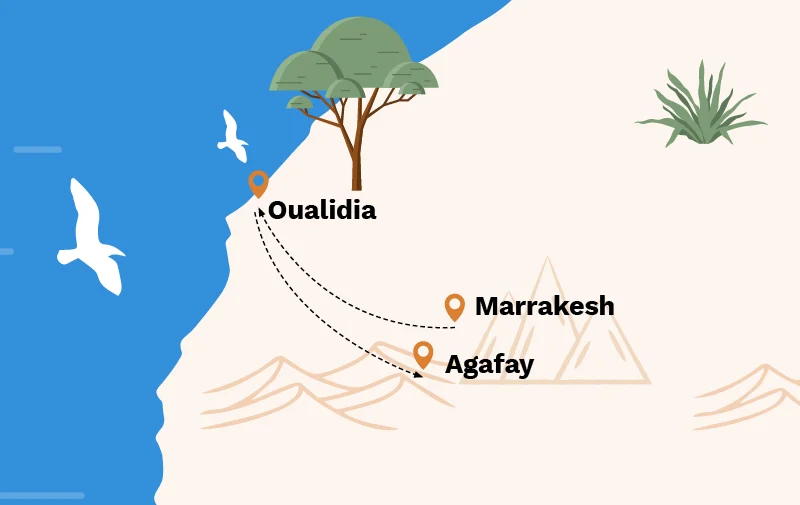
A private culinary journey through Morocco from 6 nights: fine dining in Marrakech, oysters on Oualidia’s lagoon and a panoramic dinner in the Agafay
Experience Morocco's four Imperial Cities authentically: craft, encounters, history & a personal chauffeur.
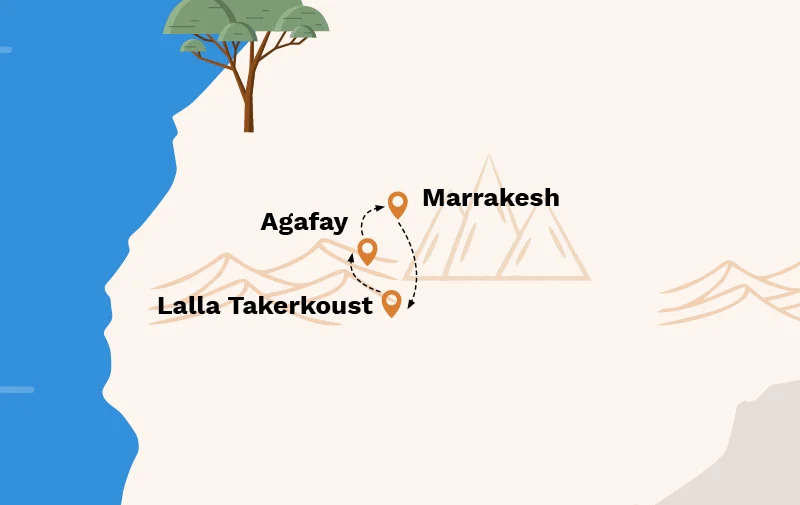
Marrakesh meets the peace of the Agafay desert: luxury riad, desert camp & private chauffeur
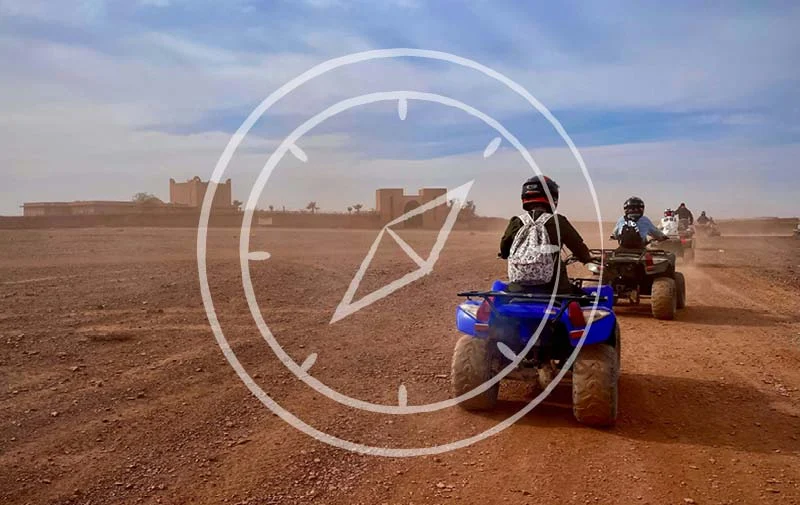
Desert Drive Agafay – 4x4, buggy, quad and e-bike meet authentic Amazigh encounters, individually arranged near Marrakesh.
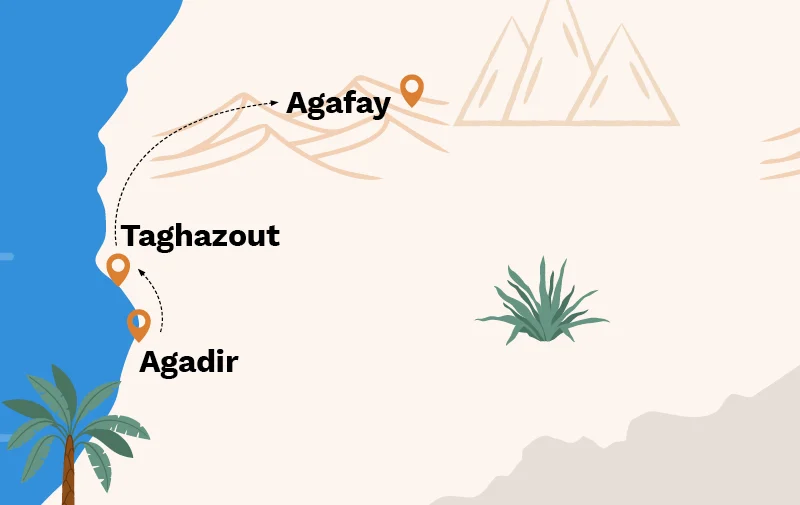
Agafay & Atlantic from 4 Nights: Experience the Stone Desert and Coast in Private
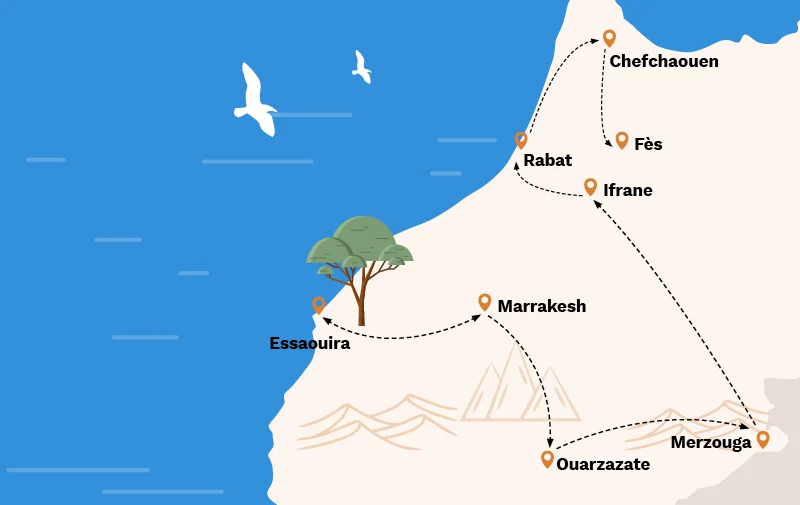
Grand Tour of Morocco from 12 Nights: Atlantic Coast, Sahara & Imperial Cities
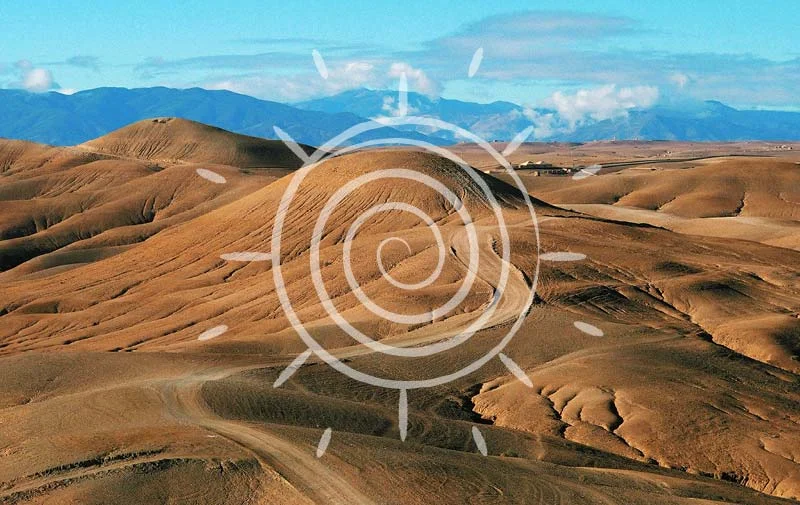
Saints of Agafay Retreat in Morocco's stone desert near Marrakech: desert hikes, Lalla Takerkoust and starlit nights – for calm, balance and new perspectives.